

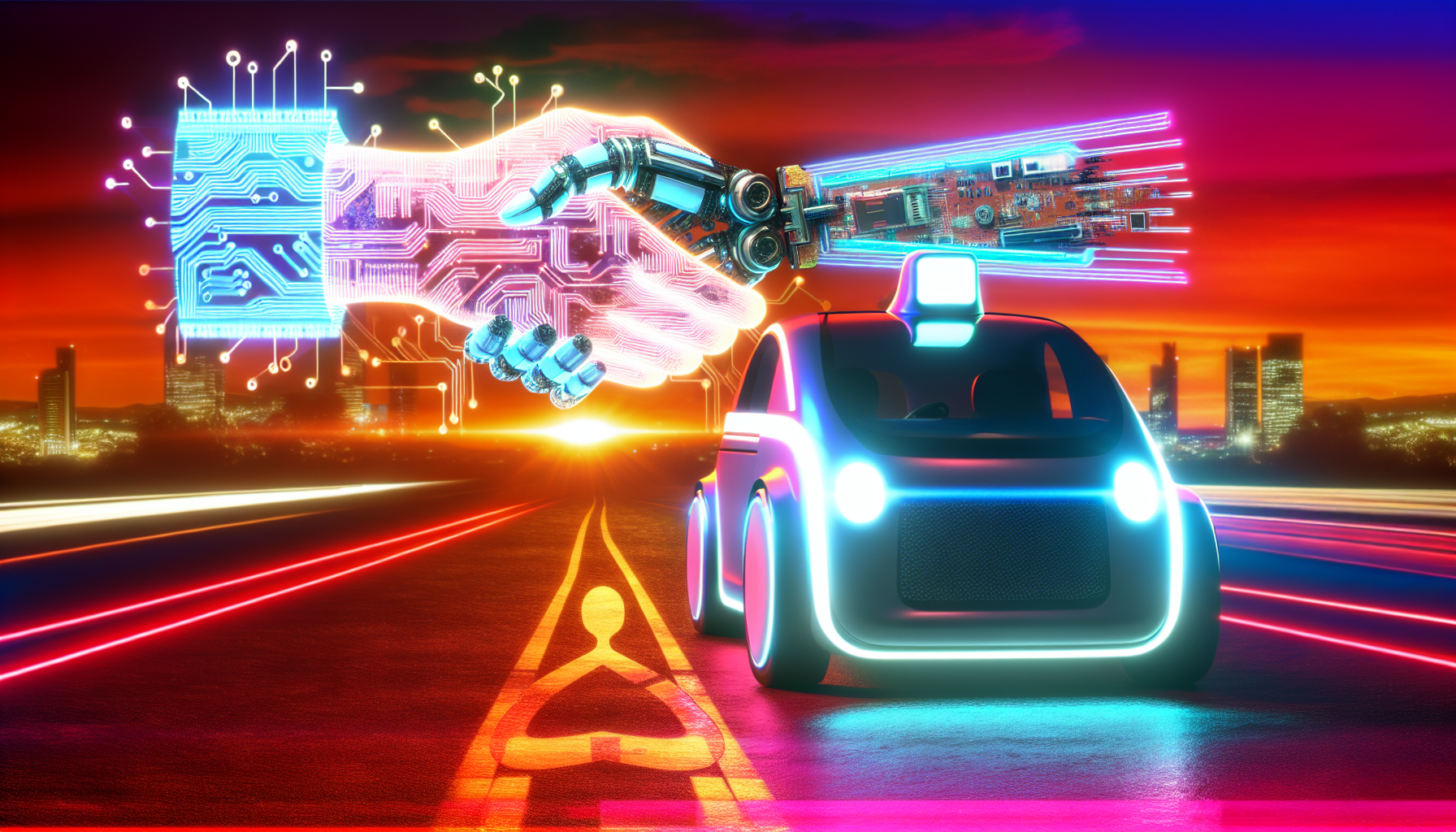
In a groundbreaking announcement, Nvidia has revealed a strategic partnership with Uber to supply its advanced computing platforms for the ride-hailing giant’s upcoming fleet of robotaxis. This collaboration is poised to significantly accelerate the deployment of autonomous driving technology, marking a pivotal moment in the evolution of transportation.
Transforming the Future of Transportation
The partnership between Nvidia and Uber highlights the increasing reliance on artificial intelligence (AI) and advanced computing to enhance vehicle capabilities. As autonomous vehicles become more prevalent, the need for real-time data processing and safety systems has never been more critical. Nvidia’s cutting-edge AI chips are designed to address these needs, providing the computational power necessary for the safe operation of self-driving vehicles.
Nvidia’s Role in the Robotaxi Market
Nvidia has long been recognized as a leader in AI and computing technologies, particularly in the realm of graphics processing units (GPUs). The company’s expertise in machine learning and AI makes it an ideal partner for Uber, which is at the forefront of developing autonomous transportation solutions. With this partnership, Nvidia positions itself as a key player in the rapidly expanding robotaxi market.
Uber’s ambition to create a fleet of autonomous vehicles is not merely a technological challenge; it represents a shift in how urban mobility is perceived and executed. The integration of Nvidia’s AI chips into Uber’s robotaxis will facilitate:
- Real-time decision-making: The ability to process vast amounts of data instantaneously allows the vehicle to react to dynamic traffic conditions and unforeseen obstacles.
- Enhanced safety features: Advanced safety systems powered by Nvidia’s technology can predict and prevent potential accidents, making rides safer for passengers and pedestrians alike.
- Improved navigation: AI-driven navigation systems will enable robotaxis to optimize routes, reducing travel time and increasing efficiency.
Challenges Ahead for Autonomous Vehicles
While the partnership presents exciting opportunities, the journey towards fully autonomous robotaxis is fraught with challenges. Regulatory hurdles, public acceptance, and technological limitations remain significant obstacles that both Nvidia and Uber must navigate. The deployment of autonomous vehicles raises important questions about liability, safety standards, and the ethical implications of AI in transportation.
Moreover, as the technology evolves, competition in the robotaxi market is intensifying. Other tech giants and automotive manufacturers are also racing to develop their own autonomous solutions, which could impact Uber’s position in the market. Companies like Waymo, Tesla, and traditional automakers are investing heavily in their autonomous capabilities, making it essential for Uber and Nvidia to stay ahead of the curve.
The Future of Mobility
Despite these challenges, the collaboration between Nvidia and Uber signals a significant step towards the future of mobility. As urban populations continue to grow, the demand for efficient, safe, and reliable transportation solutions will only increase. Robotaxis could play a vital role in alleviating congestion and reducing carbon emissions associated with traditional vehicle ownership.
Moreover, the integration of AI and machine learning into transportation systems has the potential to transform not just how we travel, but also how cities are structured. With the advent of robotaxis, urban planners may begin to rethink transportation infrastructure, leading to more pedestrian-friendly environments and reduced reliance on personal vehicles. For more on this, see the AI chip competition.
Conclusion: A New Era of Transportation
The partnership between Nvidia and Uber marks a significant milestone in the advancement of autonomous vehicle technology. By leveraging Nvidia’s AI capabilities, Uber aims to enhance the safety and efficiency of its upcoming robotaxi fleet, paving the way for a future where self-driving vehicles are a common sight on city streets.
As this partnership unfolds, it will be crucial to monitor the developments in autonomous driving technology, regulatory changes, and public perception. The success of robotaxis could redefine urban transportation and set new standards for mobility in the 21st century. With Nvidia and Uber at the helm, the future of transportation looks promising, and the dream of seamless, autonomous travel is closer than ever to becoming a reality.


