

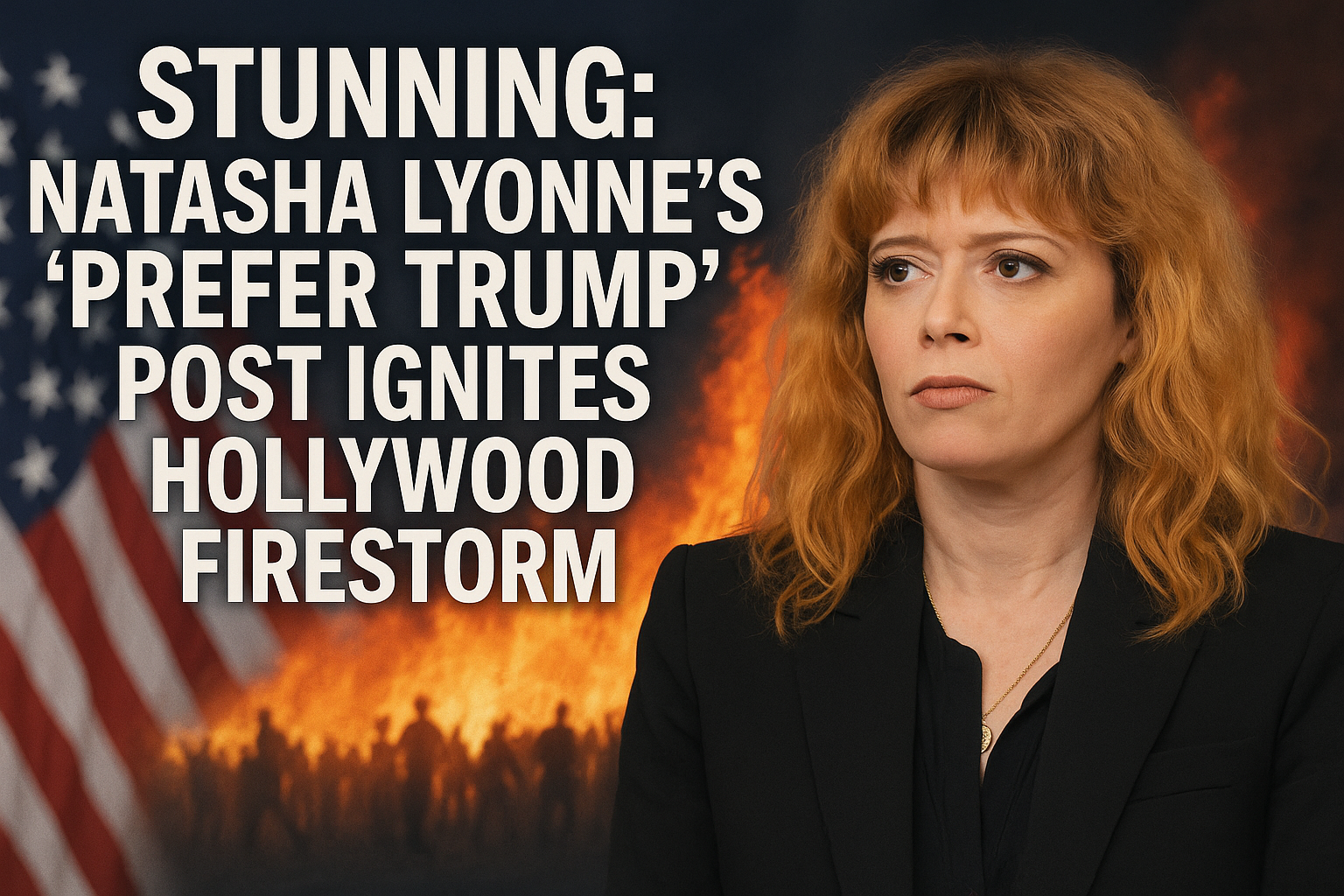
When Natasha Lyonne, the distinctive voice behind shows like Poker Face and Russian Doll, dropped a political bombshell on October 20, 2026, it wasn’t just a ripple; it was a seismic event. Her terse, yet potent, social media post – “Sketchy mofo – prefer trump” – unleashed a firestorm, instantly catapulting the actress into the center of a furious debate. This wasn’t a nuanced policy discussion; it was a direct, unexpected declaration that left many fans reeling and sparked what’s quickly become known as the Natasha Lyonne Trump controversy. It’s a prime example of how quickly celebrity opinions, especially when they defy expectations, can ignite widespread social media engagement and intense public scrutiny.
Lyonne’s comment, posted on X (formerly Twitter), was a quoted reply to a video featuring Vice President JD Vance. The video, from a Republican campaign rally held just a day prior on October 19, showed Vance making remarks about illegal border crossings. The context? Someone in the crowd had reportedly brought up the Jeffrey Epstein files – a detail that, in Lyonne’s estimation, made Vance’s subsequent comments “even scarier.” She went on to describe the current era as “Grimey times,” a phrase that evoked the dystopian visions of author Octavia Butler. For an actress known for her quirky, often subversive roles, this stark political pronouncement felt incredibly out of character to many, adding fuel to the already blazing Natasha Lyonne Trump controversy.
The Unexpected Pivot: Why Lyonne’s Stance Stunned Fans
To say Natasha Lyonne’s political alignment was largely assumed by her fanbase would be an understatement. Her work, often featuring complex, outsider characters, and her own public persona have long resonated with a demographic typically associated with more progressive viewpoints. Think about her breakout role in Orange is the New Black, or the critically acclaimed Russian Doll, which explored themes of existentialism and societal loops. These aren’t exactly typical stomping grounds for Trump supporters. (See: BBC coverage on celebrity political statements.)
So, when Lyonne posted her “prefer trump” comment, the shock was palpable. It wasn’t just a difference of opinion; it felt, for many, like a betrayal of the very ethos they associated with her. Fans immediately flooded social media, expressing everything from confusion and disappointment to outright anger. Many felt that her endorsement, however brief, lent credibility to a political figure they vehemently opposed. The internet, as it always does, became an echo chamber of outrage and disbelief, cementing the Natasha Lyonne Trump controversy as a major talking point.
It raises an interesting question about the parasocial relationships we form with celebrities. Do we, as fans, project our own values onto them? And when they deviate from those perceived values, do we feel personally let down? Lyonne’s statement certainly brought these dynamics to the forefront, highlighting the often-unspoken compact between artists and their audiences. This isn’t the first time a celebrity’s political leanings have surprised or alienated fans, but the directness of Lyonne’s statement, coupled with her particular public image, made this incident particularly jarring.
Decoding the ‘Grimey Times’ and Vance’s Remarks
Lyonne didn’t just drop a bomb and run; she offered a sliver of context, albeit one that only deepened the intrigue. Her description of the current period as “Grimey times,” referencing Octavia Butler, suggests a deeper concern than a simple political preference. Butler’s works often explore themes of societal collapse, authoritarianism, and humanity’s struggle against itself. By invoking her, Lyonne implies a sense of impending doom or a profound disillusionment with the current state of affairs, transcending simple party lines. (See: New York Times article on celebrity activism.)
The specific incident that triggered her comment – Vice President JD Vance’s remarks on border crossings, made after the Jeffrey Epstein files were mentioned – is also crucial. Vance, a prominent figure in the Republican party, has been outspoken on immigration issues. The connection drawn by Lyonne between his comments and the Epstein files, however, is where things get truly murky. Was she implying a distraction tactic? A deeper conspiracy? Her brief “even scarier” assessment of Vance’s remarks suggests she found his response, or perhaps the underlying sentiment, particularly unsettling. This layered context complicates the narrative of the Natasha Lyonne Trump controversy, pushing it beyond a simple endorsement and into a more complex, albeit still cryptic, critique of the political landscape.
The Broader Implications of the Natasha Lyonne Trump Controversy
This incident isn’t just about one actress and her political views; it’s a microcosm of the larger challenges celebrities face in an hyper-connected world. Every tweet, every comment, every perceived alignment is scrutinized under a microscope, often leading to swift and severe backlash. For Lyonne, a seasoned performer with a distinct voice, this public reaction underscores the perils of sharing unfiltered political opinions, especially when they diverge from public expectation.
The Natasha Lyonne Trump controversy also highlights the increasing polarization within American society, where even a seemingly innocuous phrase can be interpreted as a declaration of war. It forces us to consider whether celebrities have a responsibility to align with their audience’s political values, or if their artistic contributions should be entirely separate from their personal beliefs. As the dust settles on this particular firestorm, it’s clear that the lines between personal and public, celebrity and citizen, are blurrier than ever, and navigating them successfully remains a formidable challenge for anyone in the public eye. (See: Research on social media's impact on public opinion.)
What started as a terse social media post quickly morphed into a national conversation, demonstrating the immense power of celebrity influence and the passionate reactions it can provoke. Whether Lyonne will elaborate further on her comments or retreat from the political fray remains to be seen, but one thing is certain: her “prefer trump” remark has indelibly marked her public narrative, leaving a lasting impression on fans and critics alike.
Trending Now
Frequently Asked Questions
What did Natasha Lyonne say about Trump?
Natasha Lyonne posted on X (formerly Twitter) stating, 'Sketchy mofo – prefer trump,' which sparked a significant controversy. Her comment was a reaction to a video featuring Vice President JD Vance, and it quickly ignited a debate among fans and the public.
Why did Natasha Lyonne's post cause a controversy?
Lyonne's political statement was unexpected, given her previous roles and public persona, which resonated with more progressive views. This abrupt shift in her stance shocked many fans, leading to widespread discussions and scrutiny on social media.
What was the context of Lyonne's tweet?
The tweet was a response to a video from a Republican rally where Vice President JD Vance discussed illegal border crossings. Lyonne's tweet referenced the video and included her concerns about the implications of Vance's comments, especially in light of the Jeffrey Epstein files.
How did fans react to Lyonne's political views?
Fans expressed a mix of shock and confusion over Lyonne's unexpected support for Trump. Many were taken aback, considering her previous roles and public image as aligned with progressive values, leading to a heated debate online.
What does 'Grimey times' mean in Lyonne's context?
'Grimey times' is a phrase used by Lyonne to describe the current political climate, evoking dystopian themes reminiscent of author Octavia Butler. This characterization of the times added depth to her controversial statement and resonated with her audience.
Have you experienced this yourself? We'd love to hear your story in the comments.


