

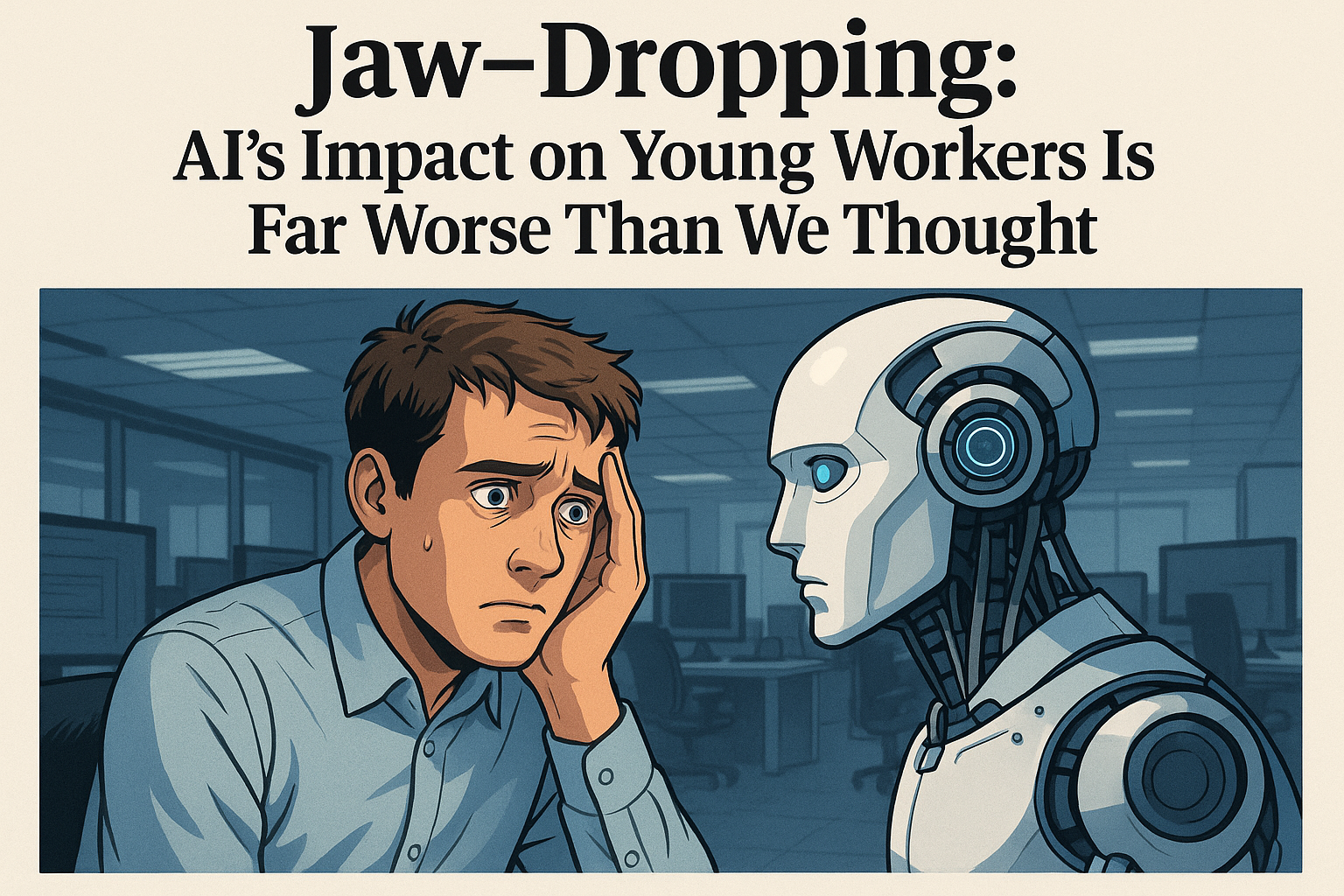
The buzz around artificial intelligence isn’t just about cool new tech anymore; it’s morphed into a genuine concern, even a palpable ‘AI shock,’ that’s rippling across the globe. We’re talking about a future that promises unprecedented productivity gains but also brings with it unsettling predictions of political instability and massive job displacement. It’s a hotly debated topic, and honestly, the anxiety is understandable. People are worried about their careers, their economic stability, and how this rapid, often surprising, technological shift will redefine our daily lives. There’s already a significant backlash building, and AI hasn’t even hit its full stride yet. So, how do we begin surviving AI impact when the ground beneath our feet feels like it’s shifting so fast?
It’s not just a theoretical discussion. We’re already seeing concrete signs of what’s to come. Consider what Bank of America CEO Brian Moynihan has openly stated: he anticipates staff reductions as AI becomes more integrated into their operations. This isn’t some niche startup; this is a major financial institution acknowledging that AI will fundamentally change its workforce needs. And if you think it’s just about repetitive, low-skill jobs, think again. Research indicates that some of the most vulnerable are actually young, highly educated workers, particularly those aged 22-25, in fields like software development and customer service. That’s a pretty unsettling thought for anyone just starting their career or trying to find their footing in a complex job market.
1. The Unsettling Reality for New Graduates: The AI Shockwave
It’s a tough pill to swallow, but the data doesn’t lie: the jobless rate for recent college graduates in both the US and China is already higher than the overall population. This isn’t just an unfortunate coincidence; it’s a trend that’s contributing to a growing sense of dissatisfaction among younger generations. Imagine spending years in higher education, accumulating debt, and then entering a job market where the very skills you honed might be rapidly automated or made less essential by AI.
This isn’t just about a few bad luck stories; it’s a systemic issue that’s brewing. When you see a significant portion of your peer group struggling to find meaningful employment right out of school, it naturally breeds frustration and a feeling of being left behind. The promise of a degree leading directly to a stable career is becoming increasingly tenuous, and AI is certainly playing a part in this unsettling shift. It’s a crucial aspect of surviving AI impact – understanding who is most affected.
2. Executive Outlooks: A Workforce Reduction Ahead
If you’re looking for a clearer picture of what’s coming, sometimes you just need to ask the people in charge. A 2024 World Economic Forum poll surveyed 10,000 global executives, and their responses paint a rather stark picture. A significant 41% of these leaders expect AI to actively reduce their workforces by 2030. That’s not a small percentage; it’s nearly half of the executive class anticipating fewer human employees within the next few years.
This isn’t just a vague prediction; it’s a strategic expectation from those who will be making the decisions. This outlook suggests a looming economic and social upheaval that we need to prepare for. It’s not just about individual job losses, but the potential for widespread shifts in employment structures that could impact entire communities and economies. This makes the challenge of surviving AI impact even more pressing. (See: AI's impact on jobs and economy.)
3. Vulnerable Sectors: Where AI Hits Hardest First
While AI’s influence will spread, certain sectors are feeling the heat more immediately. As mentioned, software development might seem like a secure bet, but even here, AI’s ability to generate code, debug, and automate testing routines means a shift in the human role. It’s less about brute-force coding and more about managing AI tools and designing complex systems.
Customer service is another prime example. Chatbots and sophisticated AI assistants are already handling a massive volume of inquiries, from basic FAQs to complex troubleshooting. While human oversight and intervention will remain crucial for truly sensitive or unique cases, the sheer number of frontline customer service roles is undoubtedly going to shrink as these AI systems become more capable and ubiquitous.
4. The Rise of ‘Prompt Engineering’: New Skills for a New Era
If traditional roles are at risk, what new opportunities are emerging? One fascinating area is ‘prompt engineering.’ This isn’t about coding in the traditional sense, but about understanding how to effectively communicate with AI models to get the best results. It’s an art and a science, requiring critical thinking, creativity, and a deep understanding of what AI can and cannot do.
Think of it as learning the language of AI. Professionals who can craft precise, insightful prompts to guide AI in generating content, analyzing data, or solving problems will be highly valuable. This skill set emphasizes human ingenuity in directing powerful AI tools, highlighting that surviving AI impact isn’t just about avoiding automation, but about mastering the new tools.
5. Embracing Lifelong Learning: The Only Constant
The days of learning one skill and riding it out for 40 years are long gone. In an AI-driven world, continuous learning isn’t just a nice-to-have; it’s a survival imperative. This means regularly updating your skillset, learning new software, understanding AI tools, and perhaps even pivoting to entirely new fields.
Universities, online platforms, and corporate training programs will play an increasingly vital role in upskilling and reskilling the workforce. The ability to adapt, unlearn, and relearn quickly will be the most valuable trait you can possess when navigating the complexities of an AI-transformed economy. (See: AI and its effects on young workers.)
6. The Human Touch: Empathy, Creativity, and Critical Thinking
While AI excels at data processing and repetitive tasks, it still struggles with genuine human empathy, profound creativity, and nuanced critical thinking, especially in morally ambiguous situations. These ‘soft skills’ are becoming incredibly hard skills in the age of AI. Roles that require deep emotional intelligence, innovative problem-solving, or complex ethical judgment are likely to remain firmly in the human domain.
Think about therapists, artists, strategic consultants, or leaders who inspire and motivate. These professions rely on uniquely human attributes that AI, for all its advancements, cannot truly replicate. Focusing on developing these innate human strengths is a key strategy for surviving AI impact.
7. Policy and Social Safety Nets: A Growing Need
Beyond individual strategies, the broader societal response to AI’s impact will be critical. Governments and international organizations will need to grapple with potential widespread unemployment and economic inequality. Discussions around universal basic income (UBI), retraining programs, and new social safety nets are likely to become more prominent and urgent.
The speed and scale of AI’s integration demand proactive policy-making to cushion the blow for those whose livelihoods are disrupted. Without thoughtful societal interventions, the ‘AI shock’ could indeed lead to the political crises some fear, making this a collective challenge, not just an individual one.
8. Entrepreneurship and Niche Markets: Spotting New Opportunities
Every major technological shift creates new problems to solve and new needs to fill. AI is no different. We’re already seeing a boom in AI-adjacent startups, from companies developing specialized AI models to those creating tools that help integrate AI into existing workflows. Entrepreneurship will be a powerful avenue for those looking to thrive, not just survive. (See: Research on AI and job displacement.)
Identifying niche markets where AI can enhance, rather than replace, human capabilities will be key. This might involve creating bespoke AI solutions for small businesses, offering AI auditing services, or even building communities and educational platforms around new AI technologies. The innovative spirit will find new ways forward.
9. The Ethical Imperative: Shaping AI’s Future
Finally, a critical, often overlooked aspect of surviving AI impact is our collective responsibility to shape its development. AI isn’t a neutral force; its design and application are influenced by human choices. Engaging in ethical discussions, advocating for responsible AI development, and ensuring that AI serves humanity’s best interests rather than just corporate bottom lines, is paramount.
This includes demanding transparency in AI algorithms, addressing biases, and ensuring that AI is used to augment human potential rather than diminish it. Our future with AI isn’t predetermined; it’s something we’re actively creating right now, and our ethical engagement will dictate much of its ultimate impact.
The AI revolution is here, and it’s not waiting for us to catch up. While the challenges are undeniable, particularly for young, educated workers, a proactive approach — focusing on uniquely human skills, continuous learning, and thoughtful policy — offers a path forward. It’s a daunting prospect, but one we must face head-on, collectively and individually, to build a future where AI empowers rather than displaces.
Trending Now
Frequently Asked Questions
How is AI impacting young workers?
AI is significantly affecting young workers, particularly those aged 22-25, in fields like software development and customer service. Many are facing job displacement and heightened joblessness rates compared to the overall population, creating anxiety about their economic stability and future career prospects.
What is the 'AI shock' phenomenon?
The 'AI shock' refers to the growing concern and anxiety surrounding the rapid integration of artificial intelligence into the workforce. It highlights fears of job displacement, political instability, and how AI will reshape daily life, especially for young workers entering the job market.
Why are recent graduates struggling to find jobs?
Recent graduates are facing increased challenges in the job market due to rising unemployment rates among their demographic. This trend is exacerbated by AI's integration into various industries, leading to a reduction in entry-level positions and heightened competition for available jobs.
What industries are most affected by AI job displacement?
Industries like finance, software development, and customer service are among the most affected by AI job displacement. Major companies, including Bank of America, are already anticipating staff reductions as AI technology becomes more prevalent in their operations.
How can young workers prepare for the impact of AI?
Young workers can prepare for the impact of AI by acquiring new skills, staying adaptable, and embracing continuous learning. Focusing on developing expertise in areas less likely to be automated and networking within their industry can also help them navigate the evolving job landscape.
Agree or disagree? Drop a comment and tell us what you think.


