

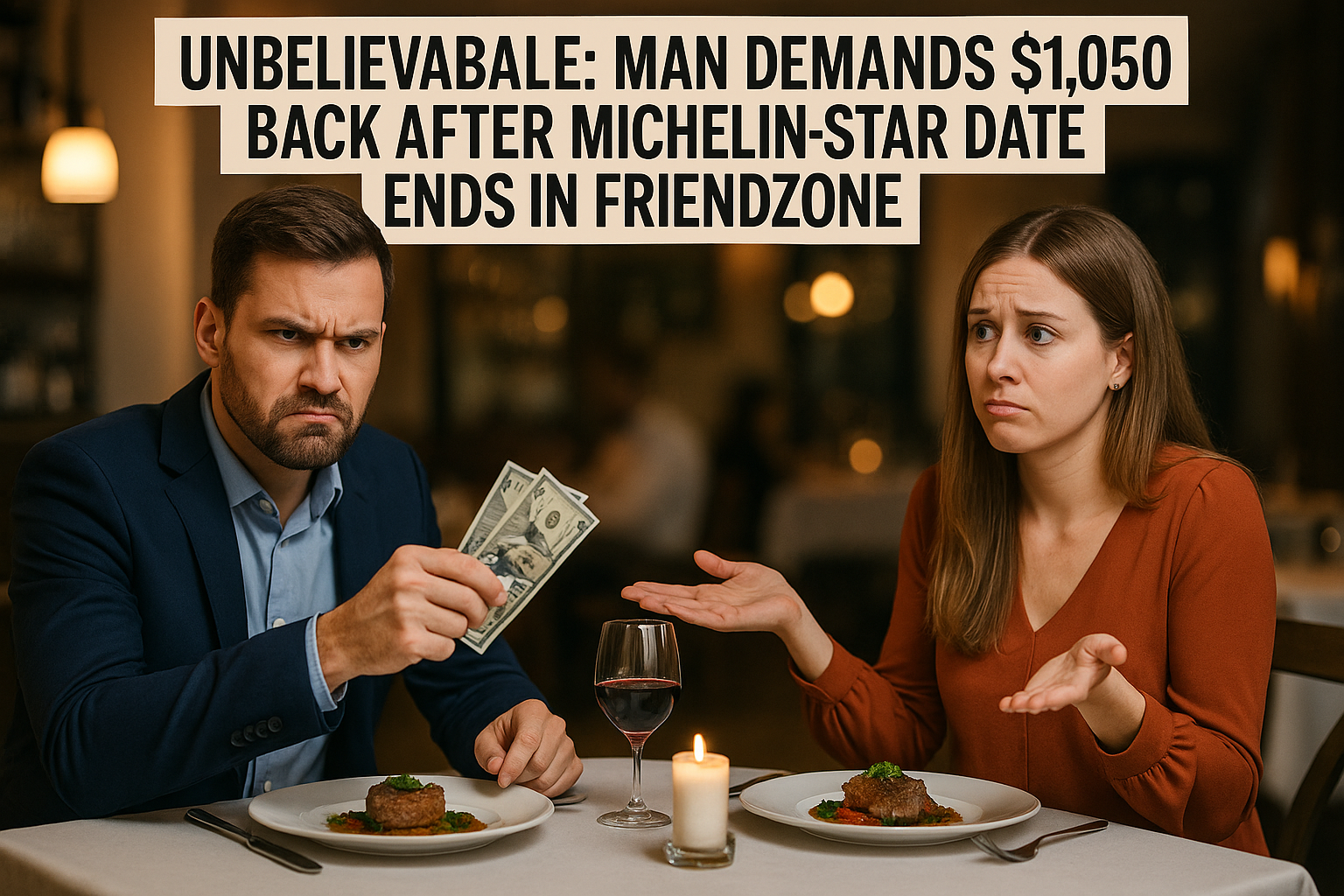
Imagine this: you’ve just enjoyed a truly opulent meal at a Michelin-star restaurant, the kind of place where the ambiance is as curated as the cuisine. The bill arrives, a staggering Rs 1 lakh (roughly $1,050), and your date, in a gesture that feels both grand and hopeful, covers it all. Fast forward a little, and you deliver the dreaded ‘let’s just be friends’ line. What happens next? For one woman, it was a demand for repayment, igniting a firestorm across social media and sparking a heated debate about modern dating, financial expectations, and the very concept of chivalry. This isn’t just another one of those awkward friendzone stories; it’s a financial fallout that’s got everyone talking.
The incident, which exploded on X (formerly Twitter), centers around a user named Raq (@raqisright). She shared screenshots of a conversation where her date, after being gently but firmly ushered into the friendzone, requested the substantial sum back. His reasoning? He’d invested in what he hoped would be a romantic future, and since that wasn’t happening, he felt entitled to his money. Raq, understandably taken aback, quickly labeled the situation ‘death of chivalry,’ a sentiment that resonated with many, while others sided with the man, arguing that a date isn’t a free meal ticket, especially at such an exorbitant price point. This highly charged exchange, which came to light around October 12, 2026, has become a flashpoint for discussing the uncomfortable intersection of romance and monetary value in our increasingly complex dating landscape.
When Lavish Dates Lead to Financial Demands
Let’s be honest: who pays on a first date, or even a third, has always been a nuanced dance. Historically, there was an unspoken expectation, particularly in heterosexual relationships, for the man to cover the bill. This was often seen as a sign of generosity, a way to impress, or simply a traditional courtesy. But times, and expectations, have evolved. We live in an era where gender roles are being continually redefined, and financial independence is a given for many. So, when a man shells out a grand for a single meal, anticipating a romantic return that never materializes, does he have a leg to stand on if he asks for the money back? (See: Associated Press news on dating trends.)
This particular incident pushes the boundaries because of the sheer amount involved. A casual coffee or even a moderately priced dinner might not provoke such a strong reaction, but Rs 1 lakh isn’t chump change for most people. It represents a significant investment, one that, in this man’s eyes, became a sunk cost when the romantic potential evaporated. Raq’s declaration that ‘chivalry is dead’ encapsulates the feeling of many who believe that once a gesture of payment is made, especially in a dating context, it should be just that: a gesture, freely given, without strings attached or future demands. It forces us to confront whether paying for a date is a gift, an investment, or a transaction.
The Shifting Landscape of Dating Etiquette and Friendzone Stories
This whole saga really highlights how traditional dating etiquette is clashing with modern sensibilities. On one hand, you have the enduring ideal of chivalry, where a gentleman takes care of the bill as a mark of respect and interest. On the other, there’s a growing push for equality, where financial responsibility is shared, and no one feels beholden to another simply because a meal was paid for. What’s clear is that the old rules aren’t universally applied anymore, and this can lead to some truly awkward, and in this case, expensive, misunderstandings. (See: BBC coverage of social etiquette.)
Social media has been ablaze with opinions. Some argue that if you can’t afford to lose the money, you shouldn’t be spending it on a date, especially one of such magnitude. Others sympathize with the man, suggesting that being friendzoned after such a lavish expenditure feels like a betrayal of an implicit understanding. Then there’s the camp that believes any demand for repayment taints the entire experience, turning a potential connection into a transactional nightmare. It raises a critical question: should expectations around financial reciprocity be explicitly discussed before or during a date, especially if one party is planning an extravagant outing? Perhaps clearer communication about intentions and financial comfort levels could prevent some of these uncomfortable friendzone stories from escalating.
Beyond the Bill: Respect, Expectations, and Communication
At its core, this isn’t just about the money; it’s about respect, mismatched expectations, and a profound lack of communication. When one person invests so heavily in a romantic pursuit, and the other clearly isn’t feeling the same way, the gap between their realities can be jarring. While the woman might have genuinely enjoyed the meal and the company, her intention wasn’t to reciprocate romantically. The man, however, likely viewed the expensive date as a significant step towards a relationship, a ‘down payment’ on future intimacy, if you will. The disconnect is palpable.
This incident serves as a stark reminder that in dating, assumptions can be incredibly dangerous. If you’re planning an exceptionally pricey date, it might be wise to gauge the other person’s comfort level, or at least be prepared for the possibility that the romantic spark simply won’t ignite. And if you’re on the receiving end, and sense that the date’s generosity is tied to an unspoken expectation of romance you can’t fulfill, perhaps offering to split the bill, or suggesting a more casual outing, could prevent future awkwardness. Ultimately, navigating modern relationships requires more than just good intentions; it demands clear boundaries, open dialogue, and a realistic understanding that not every expensive meal guarantees a happily ever after. (See: New York Times insights on relationships.)
So, what do you think? Was the man justified in asking for his money back? Or did he indeed kill the spirit of chivalry? There are no easy answers, but this story certainly has us all re-evaluating the costs, both financial and emotional, of modern romance.
Trending Now
- this guide on this unprecedented trend is quietly reshaping teen culture online
- our breakdown of stunning new details emerge in the russell brand trial
- our breakdown of urgent warning: unapproved peptides flooding the internet — what you must know about peptide regulations
- our breakdown of sofia vergara shares cryptic post about a ‘narcissist’ following ex-husband joe manganiello’s bombshell allegations | just jared
- Your AI Therapist Will See You…
Frequently Asked Questions
Why did the man ask for his money back after the date?
The man requested his $1,050 back after being friend-zoned because he felt entitled to reimbursement for what he considered an investment in a romantic future that didn't materialize.
What sparked the debate about chivalry in dating?
The incident ignited a debate about chivalry as many questioned whether it's acceptable for someone to demand repayment after a date, highlighting changing expectations around financial responsibilities in modern relationships.
How do financial expectations affect modern dating?
Financial expectations can complicate modern dating, as seen in this incident where a lavish date turned into a contentious discussion about whether a date should be viewed as an investment or a gesture of goodwill.
What was the public reaction to the repayment demand?
Public reaction was mixed; some sided with the man, arguing that a date isn't a free meal ticket, while others supported the woman, viewing his demand as a sign of a decline in chivalry.
What does this incident reveal about dating norms today?
This incident reveals that dating norms are evolving, with financial dynamics becoming a significant topic of discussion, as traditional expectations around who pays have come under scrutiny in today's relationships.
Agree or disagree? Drop a comment and tell us what you think.


