

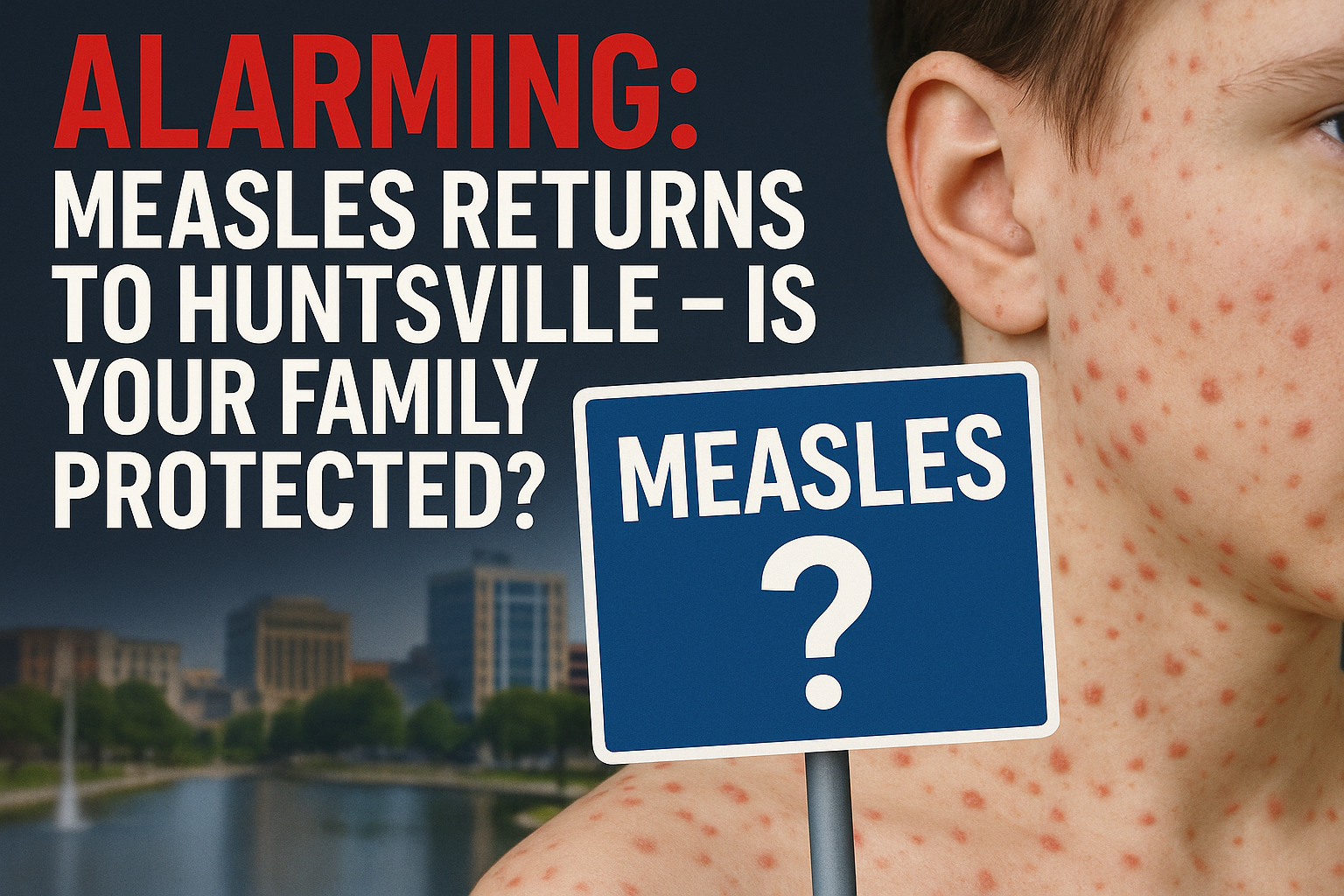
It’s a scenario no one wants to hear: a confirmed measles case in Huntsville, Alabama. News broke recently that a traveler, having visited several local businesses between October 4th and 6th, 2026, tested positive for measles after returning from an international trip. This isn’t just a local blip; it’s a stark reminder of a much larger, global trend that has health officials, like those at the Pan-American Health Organization (PAHO), sounding the alarm. And for good reason: measles, a disease once considered largely eradicated in many parts of the world, is making a disturbing comeback, creating a highly charged and controversial public health discussion.
The implications for our community, especially with this recent measles outbreak Huntsville is now facing, are significant. We’re talking about a highly contagious virus, one that spreads with frightening efficiency among unvaccinated individuals. If you or your loved ones aren’t protected, the risk of infection after exposure can be as high as 90%. That’s not just a statistic; it’s a call to action, reminding us why understanding this resurgence and taking preventative steps is more critical than ever.
The Troubling Resurgence of Measles in the Americas
The single case in Huntsville might feel isolated, but it’s actually part of a much broader, deeply concerning pattern across the Americas. PAHO has been vocal about a significant surge in measles cases throughout the region, prompting urgent calls for countries to ramp up their vaccination and surveillance efforts. Just between January 4th and October 3rd of this year, a staggering 55,792 confirmed measles cases were reported across 17 different countries and territories in the Americas. And here’s the truly heartbreaking part: 77 lives were lost to a preventable disease in that same period. (See: CDC Measles Information.)
Dr. Davosa Babosa, the director of PAHO, hasn’t minced words. She’s emphasized the critical need to protect children with the MMR (Measles, Mumps, and Rubella) vaccine and to swiftly close any existing immunity gaps. Why? Because our increasingly interconnected world, with its frequent international travel and large public gatherings, creates a perfect storm for highly contagious viruses like measles to spread rapidly. This isn’t just about individual health; it’s about community health and the collective responsibility we share to keep these diseases at bay. The fact that we’re seeing this kind of measles outbreak in Huntsville and elsewhere isn’t just troubling; it’s a symptom of larger societal trends.
Understanding the Huntsville Exposure and Your Risk
For those of us in the Huntsville area, the immediate concern revolves around the recent exposure. Health officials have confirmed that the infected individual, after their international travels, visited several local businesses. While specific locations haven’t been publicly detailed, the timeframe is crucial: October 4th to October 6th, 2026. If you or your family were out and about in Huntsville during those dates, especially in public venues, it’s wise to consider your vaccination status and remain vigilant for symptoms.
What makes measles so insidious is its contagiousness. It can linger in the air for up to two hours after an infected person has left a room, meaning you don’t even need direct contact to be exposed. The initial symptoms often mimic a common cold: fever, runny nose, cough, and red, watery eyes. A few days later, the characteristic measles rash appears, starting on the face and spreading downwards. If you suspect exposure or develop these symptoms, contact your healthcare provider immediately. Don’t just show up at an emergency room without calling first, as you could inadvertently expose others. This proactive approach is vital in containing any further spread of the measles outbreak in Huntsville. (See: WHO Fact Sheet on Measles.)
The Vaccine Debate: Closing Immunity Gaps is Critical
The resurgence of measles isn’t a mystery; it’s largely fueled by persistent gaps in vaccination coverage. Despite the MMR vaccine being safe, highly effective, and available for decades, ongoing debates around vaccine policy and parental choices have created pockets of unvaccinated individuals. This isn’t a new phenomenon, but the global increase in travel and large gatherings has amplified its consequences, turning what were once isolated decisions into public health vulnerabilities.
It’s an emotionally charged topic, to be sure. But the science is clear: the MMR vaccine provides robust protection against measles, mumps, and rubella. For children, the recommended schedule involves two doses: the first between 12 and 15 months of age, and the second between 4 and 6 years old. Adults who aren’t sure of their vaccination status or haven’t had measles can also get vaccinated. Closing these immunity gaps isn’t just about protecting ourselves; it’s about creating ‘herd immunity,’ a protective shield that helps safeguard those who are too young to be vaccinated or have medical conditions preventing them from receiving the vaccine. This collective immunity is our best defense against diseases like the current measles outbreak in Huntsville.
What You Can Do Now
So, what’s your next move? First and foremost, check your vaccination records and those of your family members. If you’re unsure, or if you know you’re unvaccinated, speak with your doctor about getting the MMR vaccine. It’s a simple, effective step that can prevent serious illness and complications. Secondly, if you’ve recently traveled internationally or were in public spaces in Huntsville during the exposure window (October 4-6, 2026) and are unvaccinated, be extra vigilant for symptoms. Any fever accompanied by a rash warrants an immediate call to your doctor.
This situation serves as a powerful reminder that global health issues can quickly become local realities. While the recent measles outbreak in Huntsville is concerning, it’s also a wake-up call for our community to reinforce our defenses. By ensuring our own immunity and advocating for robust public health measures, we can collectively push back against this preventable disease and protect the most vulnerable among us.
Trending Now
- our breakdown of baffling: nine six flags rides suddenly close after fatal roller coaster fall
- our breakdown of russell brand trial: prosecutors paint a chilling picture of a ‘ruthless predator’
- our breakdown of catastrophic six flags roller coaster accident: what really happened on goliath?
- the complete explanation
- read the full story
Frequently Asked Questions
What are the symptoms of measles?
Measles symptoms typically begin with high fever, cough, runny nose, and red eyes, followed by a distinctive rash that usually appears 3 to 5 days after the first symptoms. It’s crucial to recognize these signs early, especially in light of recent outbreaks.
How does measles spread?
Measles spreads through respiratory droplets when an infected person coughs or sneezes. It is highly contagious, with a 90% infection risk for unvaccinated individuals after exposure. This emphasizes the importance of vaccination to protect communities.
Is there a measles outbreak in Huntsville?
Yes, a confirmed measles case was reported in Huntsville, Alabama, involving a traveler who visited local businesses. This case highlights the resurgence of measles and the need for increased vaccination efforts in the community.
How can I protect my family from measles?
The best way to protect your family from measles is through vaccination. Ensure that all family members are up to date with their measles, mumps, and rubella (MMR) vaccine, which is highly effective in preventing the disease.
What is the current state of measles in the Americas?
There has been a significant surge in measles cases across the Americas, with over 55,000 confirmed cases reported this year. Health officials are urging increased vaccination and surveillance efforts to combat this alarming trend.
Agree or disagree? Drop a comment and tell us what you think.


