

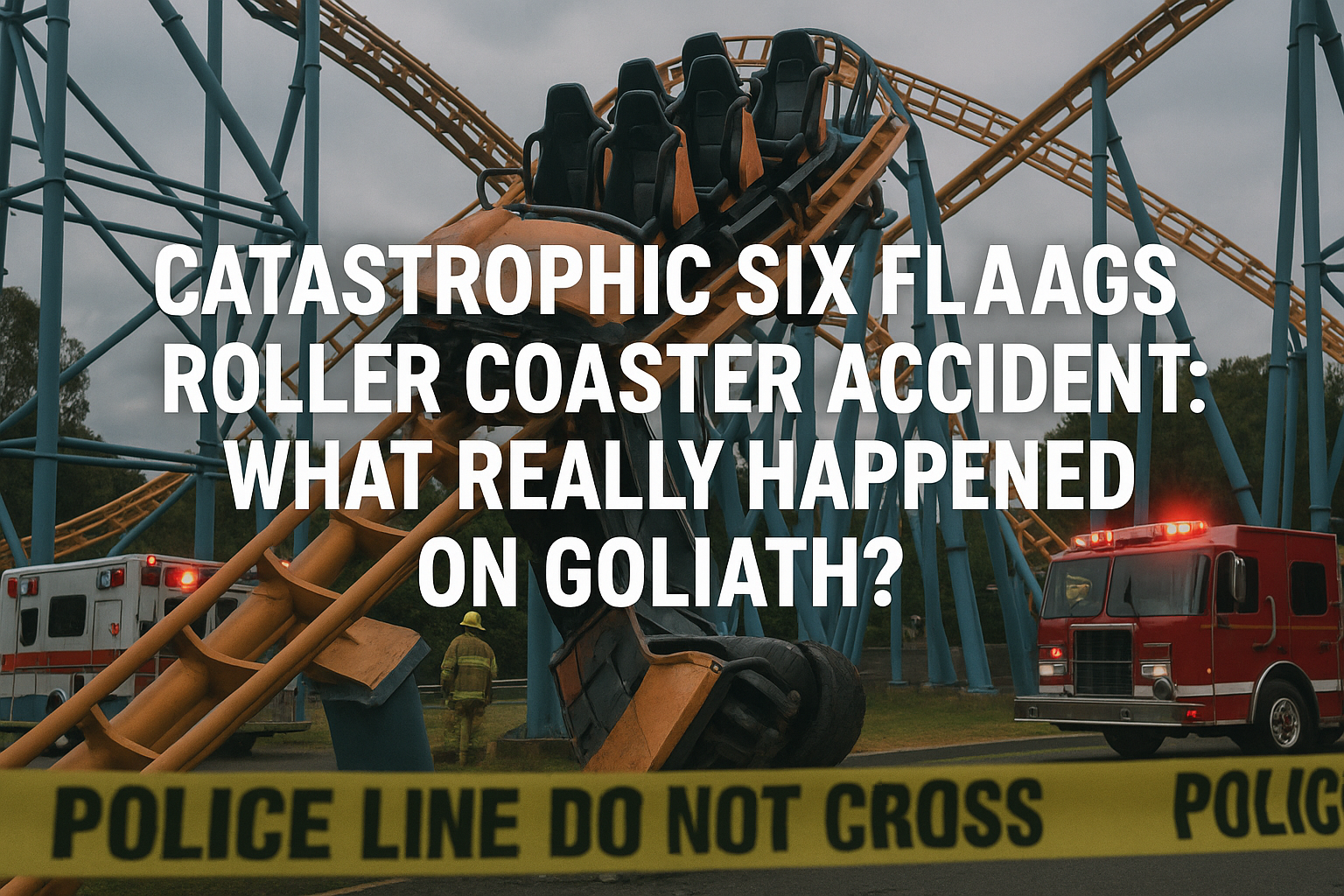
The thrill of a roller coaster — that heart-stopping drop, the rush of wind, the feeling of defying gravity — is what draws millions to amusement parks every year. But what happens when that thrill turns to terror? On Monday, October 12, 2026, Six Flags Over Georgia became the scene of a truly horrific incident when 42-year-old Hassan Jihad Ibn Kariem was tragically ejected from the ‘Goliath’ roller coaster. His death, after striking other patrons and falling to the ground, has sent a chilling wave of concern across the nation, sparking widespread discussions about amusement park safety and the integrity of these beloved, adrenaline-pumping machines.
It’s an unthinkable scenario, isn’t it? One moment you’re soaring through the air, the next, your life is irrevocably changed. Eyewitness accounts from the scene paint a vivid, disturbing picture. One witness described Mr. Kariem appearing to ‘levitate’ from his seat before his fatal fall. Imagine the sheer terror, not just for him, but for those on the ride, and for the unfortunate patrons he struck below. This wasn’t just a mechanical failure; it was a deeply personal, public tragedy that has left many questioning how such a thing could possibly happen on a ride designed for extreme experiences but engineered, we assume, for absolute safety. The sheer virality of this particular Six Flags roller coaster accident has been amplified by reports that the man’s final moments were captured in souvenir photographs taken during the ride, an agonizing detail that adds another layer of horror to an already devastating event.
The Immediate Fallout: Ride Closures and Public Outcry
In the wake of such a catastrophic event, Six Flags moved quickly, albeit defensively. As a precautionary measure, the company temporarily closed nine similar roller coasters across its North American parks. While this is a standard response to a serious incident, it also underscores the gravity of the situation. When an accident on one ride leads to the grounding of nearly a dozen others, it signals a potential systemic concern that goes beyond a single park or a single ride. This isn’t just about ‘Goliath’ anymore; it’s about the broader fleet of rides that share similar design principles or restraint systems. The decision reflects a very real fear of recurrence, which, understandably, only intensifies public anxiety. (See: Amusement park safety guidelines.)
Social media, as it often does, became an immediate forum for discussion, outrage, and speculation. People are sharing their own experiences, their anxieties, and their theories about what went wrong. When you hear about a Six Flags roller coaster accident, especially one that results in a fatality, it hits differently. It’s not just a statistic; it’s a person, a family, and a shattered sense of security for anyone who loves the thrill of a theme park. The public concern isn’t just about this one isolated incident; it’s about the implicit trust we place in these enormous, complex machines and the operators who run them. That trust has been severely shaken.
Unpacking the Investigation: What Are Authorities Looking For?
With police and state agencies now heavily involved, the investigation into this Six Flags roller coaster accident will be meticulous and far-reaching. What exactly will they be looking for? It’s a complex puzzle involving mechanical engineering, operational procedures, and human factors. Investigators will undoubtedly scrutinize the ride’s maintenance logs, looking for any missed inspections, overdue repairs, or recurring issues that might have been overlooked. Was there a fatigue crack in a critical component? Was a sensor malfunctioning? These are the kinds of questions that will be at the forefront. (See: Amusement park safety concerns.)
Then there’s the question of the restraint system. Eyewitnesses suggesting Mr. Kariem ‘levitated’ from his seat points directly to a failure in keeping him secured. Was his harness properly latched? Did it fail mid-ride? Was there an issue with the hydraulic or pneumatic system that controls the restraints? And what about the operator? Were all safety checks performed diligently before dispatch? Human error, whether on the part of maintenance staff, operators, or even the rider themselves (though unlikely to be a factor in an ejection from a properly functioning restraint), can never be entirely ruled out until every avenue is thoroughly explored. This isn’t just about finding blame; it’s about understanding the ‘how’ and ‘why’ to prevent future tragedies.
Rebuilding Trust in Amusement Park Safety
For Six Flags, and indeed the entire amusement park industry, this incident presents a significant challenge to their reputation. The industry prides itself on its safety record, often pointing to the fact that accidents are statistically rare. However, when a Six Flags roller coaster accident of this magnitude occurs, those statistics offer little comfort to a horrified public. Rebuilding trust will require more than just a quick fix or a public relations campaign; it demands transparency, accountability, and demonstrable changes.
It’s crucial for the investigation’s findings to be communicated clearly and openly to the public. People want to know what went wrong, and more importantly, what steps will be taken to ensure it never happens again. This might involve re-evaluating ride designs, implementing new safety protocols, or even enhancing staff training. The psychological impact of such an event can linger for years, affecting attendance and public perception. For many, the joy of a roller coaster is inextricably linked with a sense of safety. When that safety is compromised, even in a rare instance, it casts a long shadow over the entire experience. It reminds us that while the thrill is part of the appeal, the underlying promise of a safe return is paramount. (See: Injury prevention resources.)
The tragic death of Hassan Jihad Ibn Kariem on the ‘Goliath’ coaster is a stark reminder that even our most thrilling diversions carry inherent risks. As the investigation continues, the hope is that lessons learned from this devastating Six Flags roller coaster accident will lead to tangible improvements, ensuring that the next time you strap into a coaster, your only worry is the drop, not the possibility of the unthinkable.
Trending Now
Frequently Asked Questions
What happened in the Six Flags Goliath roller coaster accident?
On October 12, 2026, a tragic incident occurred on the Goliath roller coaster at Six Flags Over Georgia, where 42-year-old Hassan Jihad Ibn Kariem was ejected from the ride and fell to his death after striking other patrons. This horrifying event raised serious concerns about amusement park safety.
What were the eyewitness accounts of the Goliath roller coaster accident?
Eyewitnesses described the scene as terrifying, with one witness noting that Mr. Kariem appeared to 'levitate' from his seat before his fatal fall. The incident not only impacted Mr. Kariem but also terrified other riders and patrons below, leading to widespread fear and concern.
How did Six Flags respond to the roller coaster accident?
In response to the Goliath accident, Six Flags temporarily closed nine similar roller coasters across its North American parks as a precautionary measure. This swift action highlighted the seriousness of the situation and the company's commitment to safety following such a tragic event.
What safety concerns were raised after the Goliath accident?
The Goliath roller coaster accident raised significant concerns about amusement park safety and the integrity of roller coasters. The incident prompted discussions regarding ride design, safety measures, and the overall risks associated with thrill rides, as many questioned how such a tragedy could occur on a seemingly safe attraction.
Were there any photographs taken during the Goliath accident?
Reports indicate that the final moments of Hassan Jihad Ibn Kariem's ride were captured in souvenir photographs taken during the ride. This detail added a disturbing layer to the tragedy, amplifying public interest and concern over the incident and its implications for amusement park safety.
What's your take on this? Share your thoughts in the comments below — we read every one.


