

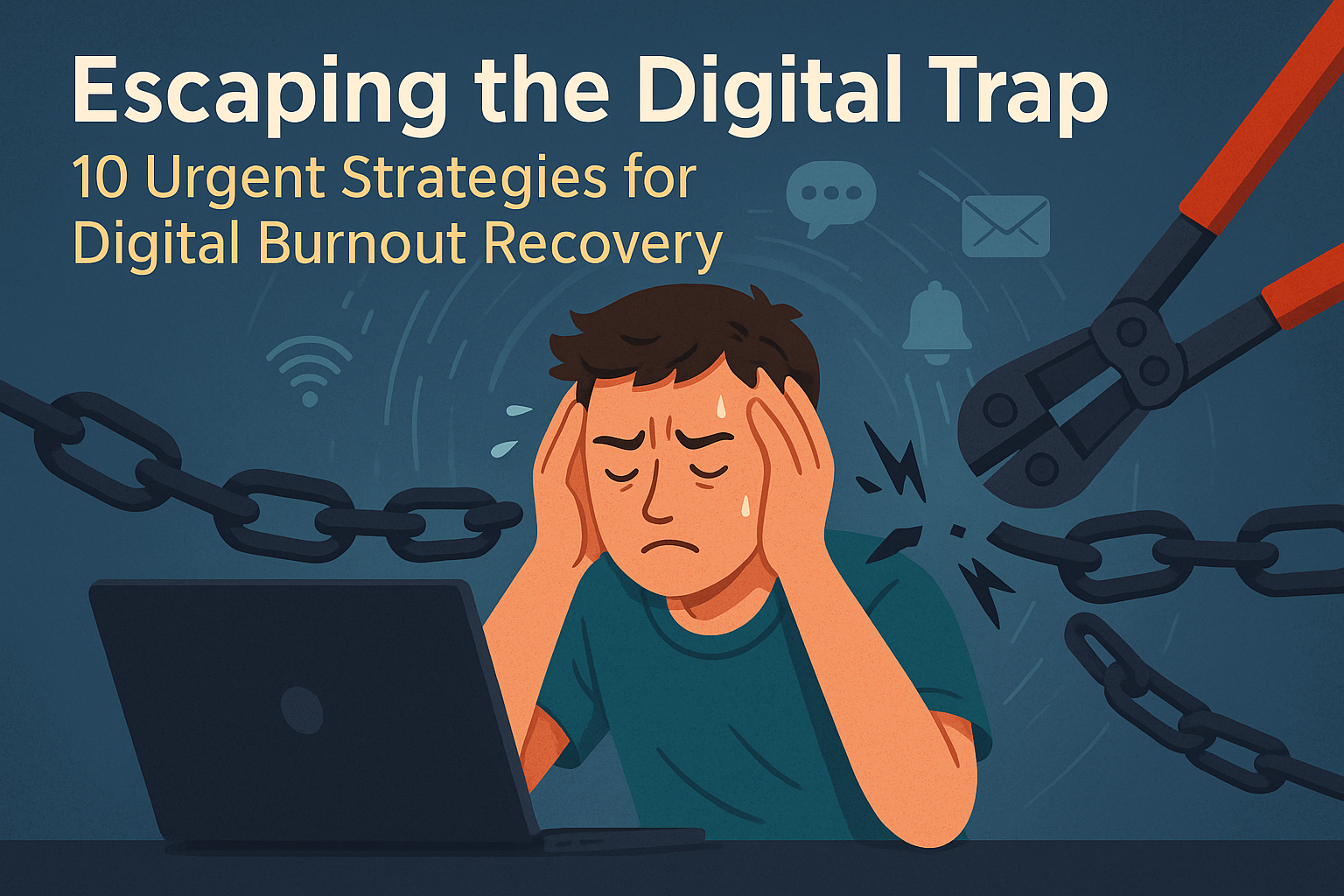
Are you constantly tethered to your devices, feeling an invisible pull to check every notification, even when you know you should be focusing elsewhere? You’re not alone. In our hyper-connected world, the line between productivity and overwhelm has blurred, leading to a widespread — and often debilitating — condition known as digital burnout. It’s that pervasive sense of mental fatigue, decreased productivity, and a general feeling of being ‘fried’ from too much screen time and constant connectivity. The good news? Recovering your focus and reclaiming your peace of mind is entirely possible. It just takes a conscious effort to establish healthier boundaries and habits. Let’s dive into some practical, actionable strategies for effective digital burnout recovery.
Understanding the Digital Drain
Before we jump into solutions, it’s helpful to understand what digital burnout actually feels like and why it’s so prevalent. Think about it: our brains are constantly processing information, alerts, and demands from multiple platforms – emails, social media, news feeds, messaging apps. This constant cognitive load prevents true rest and deep focus. Your mental clarity takes a hit, your energy levels plummet, and you might even find yourself feeling irritable or anxious. It’s not just about screen time; it’s about the mental energy expended in managing that constant influx of digital stimuli.
Many of us fall into the trap of believing we need to be ‘always on’ to be successful or to not miss out. This pressure, often self-imposed, feeds the cycle of exhaustion. But the truth is, true productivity and well-being thrive when we allow ourselves space to disconnect and recharge. The following strategies aren’t about abandoning technology entirely, but rather about using it mindfully and intentionally, creating a healthier relationship with our digital tools.
10 Crucial Steps for Digital Burnout Recovery
1. Schedule Digital Detox Blocks: Unplug Deliberately
One of the most effective ways to begin your digital burnout recovery is to actively schedule time away from all screens. This isn’t just about putting your phone down for a few minutes; it’s about designating specific hours, or even a full day, where you completely disconnect. Think of it like a mini-vacation for your brain.
During these blocks, engage in activities that are entirely offline – reading a physical book, going for a walk, gardening, or spending quality time with loved ones without digital distractions. The key is consistency. Start with an hour a day and gradually increase it. You’ll be amazed at how quickly your mind starts to clear and your energy returns.
2. Implement Notification Audits: Silence the Noise
Those incessant pings and vibrations are designed to grab your attention, and they’re incredibly effective at disrupting focus. Take control by auditing your notifications. Go through every app on your phone and computer and decide which ones truly warrant an immediate alert.
Most likely, you’ll find that many can be turned off entirely or set to ‘silent.’ For essential communications, consider grouping them or checking them at designated times. This simple act drastically reduces the constant sense of urgency and allows you to dictate when you engage with your devices, rather than the other way around. (See: Understanding digital burnout and its effects.)
3. Create Tech-Free Zones: Sacred Spaces
Designate certain areas in your home as completely tech-free zones. The bedroom is a prime candidate. Charging your phone outside the bedroom and using an actual alarm clock can significantly improve sleep quality, which is vital for mental restoration. Other ideas include the dining table during meals or even a specific chair in your living room reserved for reading or quiet contemplation.
These physical boundaries reinforce mental ones, signaling to your brain that it’s okay to relax and disengage in these spaces. It’s a powerful component of any digital burnout recovery plan.
4. Practice Mindful Technology Use: Be Present
Instead of mindlessly scrolling, approach your digital interactions with intention. Before opening an app or clicking a link, ask yourself: ‘Why am I doing this? What do I hope to gain?’ This simple pause can prevent endless rabbit holes and wasted time.
When you are using technology, try to be fully present. If you’re checking email, focus only on that. If you’re engaging on social media, be aware of how it makes you feel. This mindful approach helps you recognize when technology is serving you, and when it’s draining you.
5. Schedule ‘Deep Work’ Blocks: Protect Your Focus
For tasks requiring intense concentration, schedule ‘deep work’ blocks. During these times, turn off all notifications, close unnecessary tabs, and let colleagues or family know you’re unavailable for interruptions. Tools like the Pomodoro Technique (25 minutes of focused work, 5 minutes break) can be incredibly effective here.
Protecting these periods of uninterrupted focus is critical for productivity and for preventing the cognitive fragmentation that contributes to digital burnout. It’s about creating an environment where your brain can truly dive deep into a single task.
6. Integrate Offline Hobbies: Reconnect with the Real World
What did you love doing before screens dominated your free time? Rediscover those passions. Hobbies like painting, playing a musical instrument, hiking, cooking, or even learning a new craft provide a much-needed counterbalance to digital life. (See: Mental health and digital engagement.)
These activities engage different parts of your brain, offer a sense of accomplishment, and, crucially, ground you in the physical world. They are not just distractions; they are essential for holistic well-being and genuine digital burnout recovery.
7. Limit News Consumption: Filter the Negativity
While staying informed is important, the constant barrage of 24/7 news cycles can be overwhelming and anxiety-inducing. Consider limiting your news consumption to specific times of day or to trusted, comprehensive sources rather than endless scrolling through headlines.
Curate your news intake to avoid sensationalism and negativity, which can contribute significantly to mental fatigue and a sense of helplessness. Be intentional about the information you allow into your mental space.
8. Set Digital Curfews: Wind Down Naturally
Just as you might have a bedtime for children, consider setting a ‘digital curfew’ for yourself. Decide on a time each evening when all non-essential screens (phones, tablets, laptops, even TVs) are put away. This allows your mind to wind down naturally before sleep.
The blue light emitted by screens can disrupt melatonin production, making it harder to fall asleep. A consistent digital curfew improves sleep quality, which is foundational for energy and mental clarity, directly aiding digital burnout recovery.
9. Utilize Productivity Apps Wisely: Tools, Not Masters
Ironically, some apps can actually help you manage your digital habits. Screen time trackers on your phone or computer can reveal just how much time you’re spending on various platforms. Browser extensions can block distracting websites during work hours. Use these tools to gain insight and enforce boundaries, but be mindful not to replace one digital habit with another.
The goal isn’t to be constantly monitoring your screen time with another app, but to use data to inform healthier choices.
10. Seek Real-World Connection: Beyond the Screen
Technology often promises connection, but it can sometimes leave us feeling more isolated. Prioritize face-to-face interactions with friends, family, and community members. Join a club, volunteer, or simply make plans to meet up with people in person.
Human connection is a fundamental need, and genuine, in-person interactions provide a depth of emotional and social support that digital interactions simply can’t replicate. This is a vital, often overlooked, aspect of truly overcoming digital exhaustion and fostering overall well-being.
Overcoming digital burnout isn’t a one-time fix; it’s an ongoing process of self-awareness and intentional habit-building. By implementing these strategies, you’ll not only reclaim your focus and energy but also cultivate a more balanced and fulfilling life beyond the screen. Your mental clarity and peace of mind are worth the effort.
Frequently Asked Questions
What are the signs of digital burnout?
Signs of digital burnout include constant fatigue, decreased productivity, irritability, and a feeling of being overwhelmed by notifications and digital demands. Individuals may struggle to focus, feel mentally drained, and experience anxiety due to the incessant cognitive load from multiple digital platforms.
How can I recover from digital burnout?
Recovering from digital burnout involves establishing healthier boundaries with technology. Strategies include scheduling digital detox blocks, practicing mindfulness, setting specific times for checking notifications, and creating tech-free zones to help regain focus and mental clarity.
What causes digital burnout?
Digital burnout is often caused by the relentless influx of information and notifications from various digital platforms. This constant cognitive load can lead to mental fatigue, decreased energy levels, and feelings of anxiety, as individuals feel pressured to remain 'always on' and connected.
How can I set boundaries with technology?
Setting boundaries with technology can be achieved by designating specific times for device use, creating tech-free zones in your home, and turning off non-essential notifications. Additionally, scheduling regular breaks from screens can help foster a healthier relationship with technology.
Is it possible to use technology mindfully?
Yes, using technology mindfully involves being intentional about when and how you engage with digital tools. This includes prioritizing essential tasks, minimizing distractions, and allowing time for digital detoxes to recharge mentally and emotionally, thus promoting overall well-being.
Have you experienced this yourself? We'd love to hear your story in the comments.


