

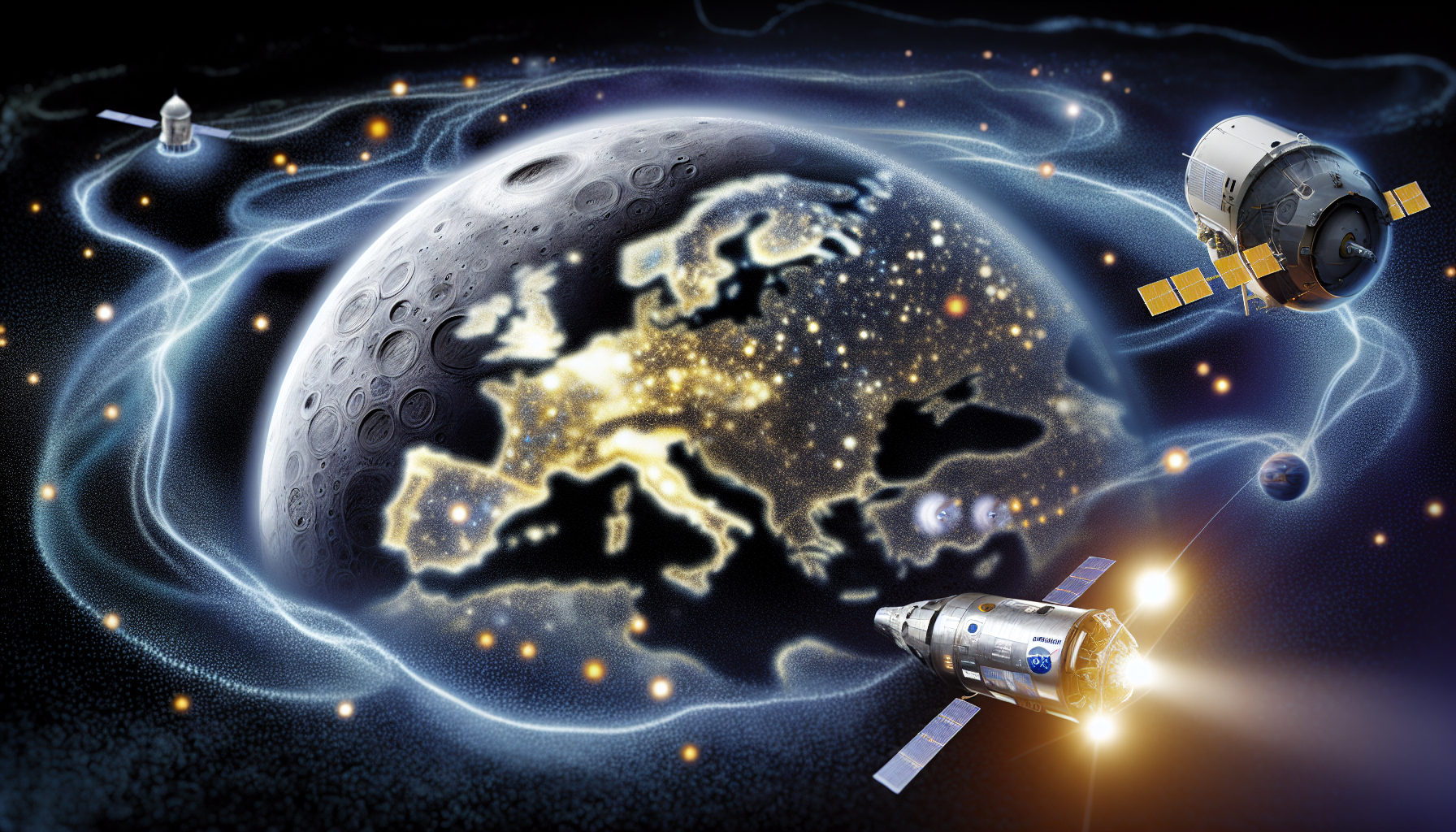
The European Space Agency (ESA) is set to play a vital role in NASA’s upcoming Artemis II mission, which marks a historic return to crewed lunar exploration. Scheduled for launch in 2026, Artemis II will be the first mission in over half a century to send astronauts into lunar orbit, and Europe’s contribution through the European Service Module (ESM) is integral to the mission’s success.
The European Service Module: An Overview
The European Service Module, developed by ESA, is designed to provide essential capabilities for the Orion spacecraft, which will carry astronauts on their journey to the Moon and back. The ESM is responsible for several critical functions, including propulsion, power generation, and life support systems. This technologically advanced module is a testament to Europe’s commitment to international collaboration in space exploration.
Key Functions of the European Service Module
- Propulsion: The ESM is equipped with a powerful engine that will enable the Orion spacecraft to perform maneuvers necessary for entering and exiting lunar orbit.
- Power Generation: Solar panels on the ESM will harness sunlight to generate the electricity needed to power the spacecraft’s systems and support astronaut life.
- Life Support: The module will provide vital life support functions, including oxygen and temperature control, ensuring the safety and comfort of the crew during their mission.
- Communication: The ESM will facilitate communication between the astronauts and mission control, ensuring that the crew remains connected throughout their lunar journey.
The Significance of Artemis II
Artemis II is more than just a mission; it represents a significant milestone in human space exploration. The mission aims to pave the way for sustainable lunar exploration and eventual human missions to Mars. With Artemis II, NASA is focused on demonstrating the capabilities required for long-duration spaceflight, enhancing the safety and reliability of deep-space operations.
This mission will include a crew of astronauts who will orbit the Moon, testing the Orion spacecraft’s systems and gathering valuable data that will inform future missions, including Artemis III, which aims to land astronauts on the lunar surface.
A Historic Return to the Moon
The last time astronauts orbited the Moon was during the Apollo 17 mission in December 1972. Artemis II marks a major step in rekindling human presence in lunar orbit, with significant implications for future exploration. The mission is expected to not only demonstrate new technologies but also inspire a new generation of scientists and engineers.
Collaboration and International Partnerships
The success of the Artemis missions relies heavily on international collaboration. The partnership between ESA and NASA underlines the importance of shared goals in space exploration. ESA’s contributions, particularly the ESM, highlight Europe’s capabilities in aerospace technology and its commitment to advancing human spaceflight.
In addition to the ESM, ESA has also been involved in various aspects of the Artemis program, including lunar lander development and lunar surface operations. This collaboration fosters innovation and promotes shared knowledge, ultimately benefiting all participating nations.
The Future of Space Exploration
As Artemis II approaches, the excitement surrounding lunar exploration continues to grow. The mission is a stepping stone not only for NASA but for humanity as a whole. It will serve as a platform for testing new technologies and a precursor to future missions to Mars and beyond.
ESA’s involvement is crucial, as it enhances the mission’s capabilities and showcases Europe’s significant role in the evolving landscape of space exploration. The advancements made through the ESM and other contributions will set the stage for long-term human presence on the Moon.
Conclusion
In summary, the European Space Agency’s European Service Module is a vital component of NASA’s Artemis II mission, scheduled for 2026. By providing propulsion, power, and life support systems, the ESM will ensure the safety and success of astronauts as they embark on their groundbreaking journey around the Moon. This mission not only marks a return to crewed lunar exploration after over 50 years but also signifies the importance of international cooperation in advancing our understanding of space and preparing for future exploration of Mars and beyond.
As we look forward to this historic mission, it is clear that Europe’s contributions will play a crucial role in shaping the future of human space exploration.


