

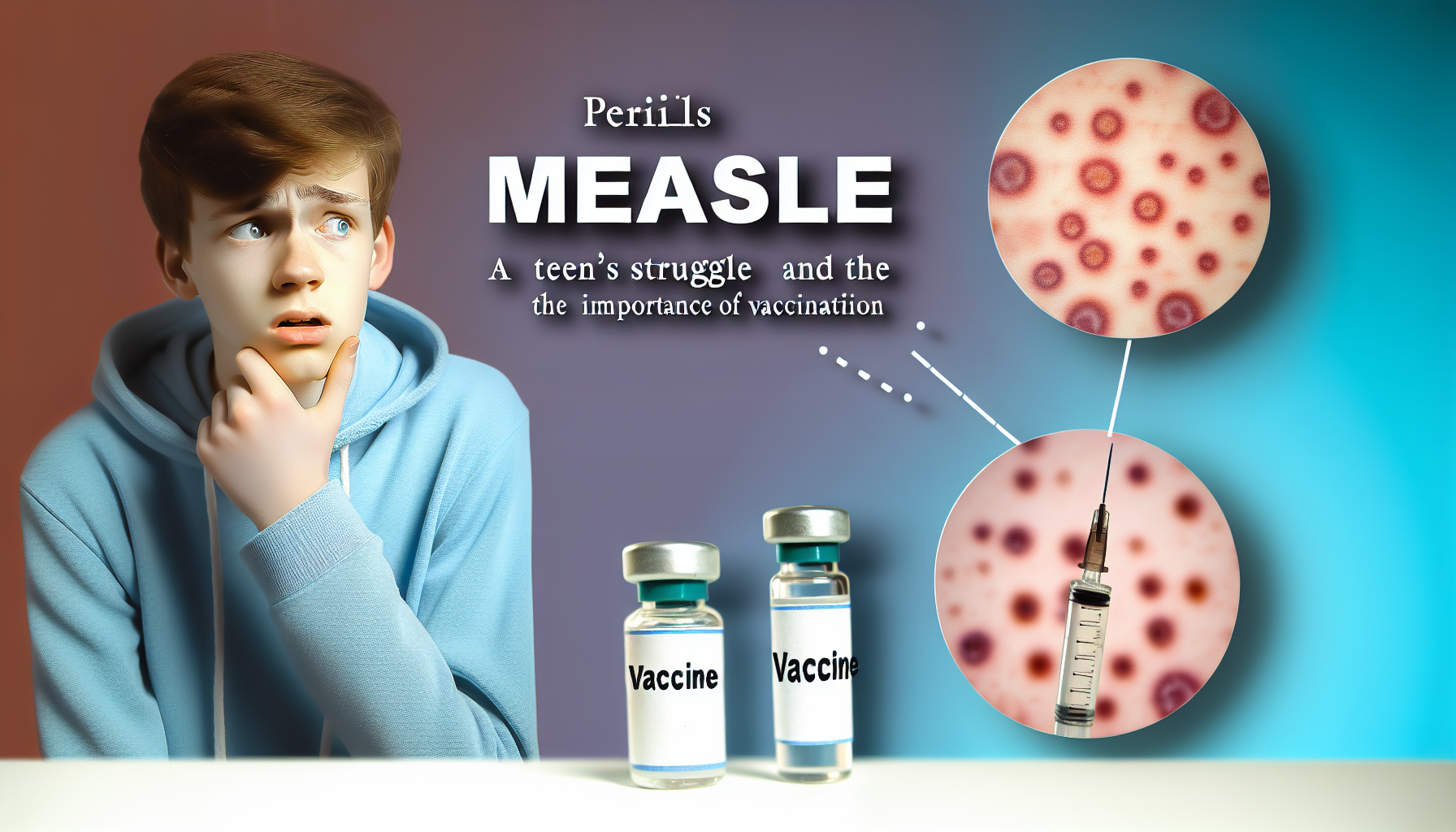
In February, a 14-year-old girl from North Dakota named Makayla Skjerva found herself at the center of a public health crisis when she contracted a severe case of measles. Her harrowing experience serves as a stark reminder of the dangers posed by this highly contagious virus, highlighting the critical need for vaccination amid ongoing outbreaks across the United States.
The Onset of Illness
Makayla’s ordeal began with common symptoms: a high fever, cough, and runny nose. Within days, the situation escalated when she developed a distinctive rash that is characteristic of measles. This progression not only affected her physical health but also led to a series of complications that would require hospitalization. As the illness took hold, her parents watched helplessly, concerned for their daughter’s well-being.
Complications and Hospitalization
Measles is notorious for its severe complications, and Makayla’s case was no exception. After her initial symptoms worsened, she was admitted to the hospital, where she spent several days under medical care. According to health officials, complications from measles can include pneumonia, encephalitis, and other serious infections. In Makayla’s case, her recovery was prolonged, emphasizing the dangerous nature of the virus.
Long Road to Recovery
Following her hospitalization, Makayla faced a long and challenging recuperation process. The experience not only took a toll on her physical health but also impacted her emotional well-being. “It was really scary,” she shared in a recent interview, reflecting on the fear and uncertainty that accompanied her illness. The recovery phase saw her struggling with fatigue and lingering symptoms, which made returning to her normal life difficult.
The Bigger Picture: Outbreaks and Vaccination
Makayla’s case is part of a troubling trend in the United States, where measles outbreaks have been reported in various states. The Centers for Disease Control and Prevention (CDC) has noted an uptick in cases, attributing it in part to vaccine hesitancy among certain populations. Health officials are increasingly concerned that misinformation about vaccines is leading to lower immunization rates, putting vulnerable populations, including children, at risk.
The measles vaccine, typically given in combination with mumps and rubella (MMR), has been proven effective at preventing the virus. The CDC recommends that children receive two doses of the MMR vaccine, with the first dose administered between 12 and 15 months of age and the second between 4 and 6 years. Vaccination not only protects the individual child but also contributes to community immunity, which is crucial in preventing outbreaks.
Community Health Impact
Measles is highly contagious, with a transmission rate of 90% among unvaccinated individuals who come into contact with an infected person. This makes it imperative for communities to achieve high vaccination coverage to prevent the spread of the virus. According to the CDC, an outbreak can occur when vaccination rates fall below 95% in a community.
- Hospitalization Rates: Approximately 1 in 4 people with measles will be hospitalized, with some requiring intensive care.
- Long-term Health Effects: Measles can lead to complications such as encephalitis, which can cause permanent brain damage or even death.
- Vaccine Efficacy: The MMR vaccine is about 97% effective after the second dose, significantly reducing the risk of infection.
Public Health Response and Education
In light of the recent outbreaks and cases like Makayla’s, public health officials are ramping up efforts to educate communities about the importance of vaccinations. Health campaigns are being launched to combat misinformation and to encourage parents to vaccinate their children. The goal is to create a more informed public that understands the risks associated with measles and the benefits of immunization.
Conclusion
Makayla Skjerva’s story is a poignant reminder of the serious nature of measles and the critical importance of vaccination. As cases continue to emerge, it is essential for communities to come together to protect public health. By ensuring high vaccination rates, we can prevent tragedies like Makayla’s from occurring in the future.
As we move forward, it is vital that health officials, parents, and community leaders work collaboratively to promote vaccine confidence and safeguard the health of our children. Through education and awareness, we can work toward a future where measles is no longer a threat.


