

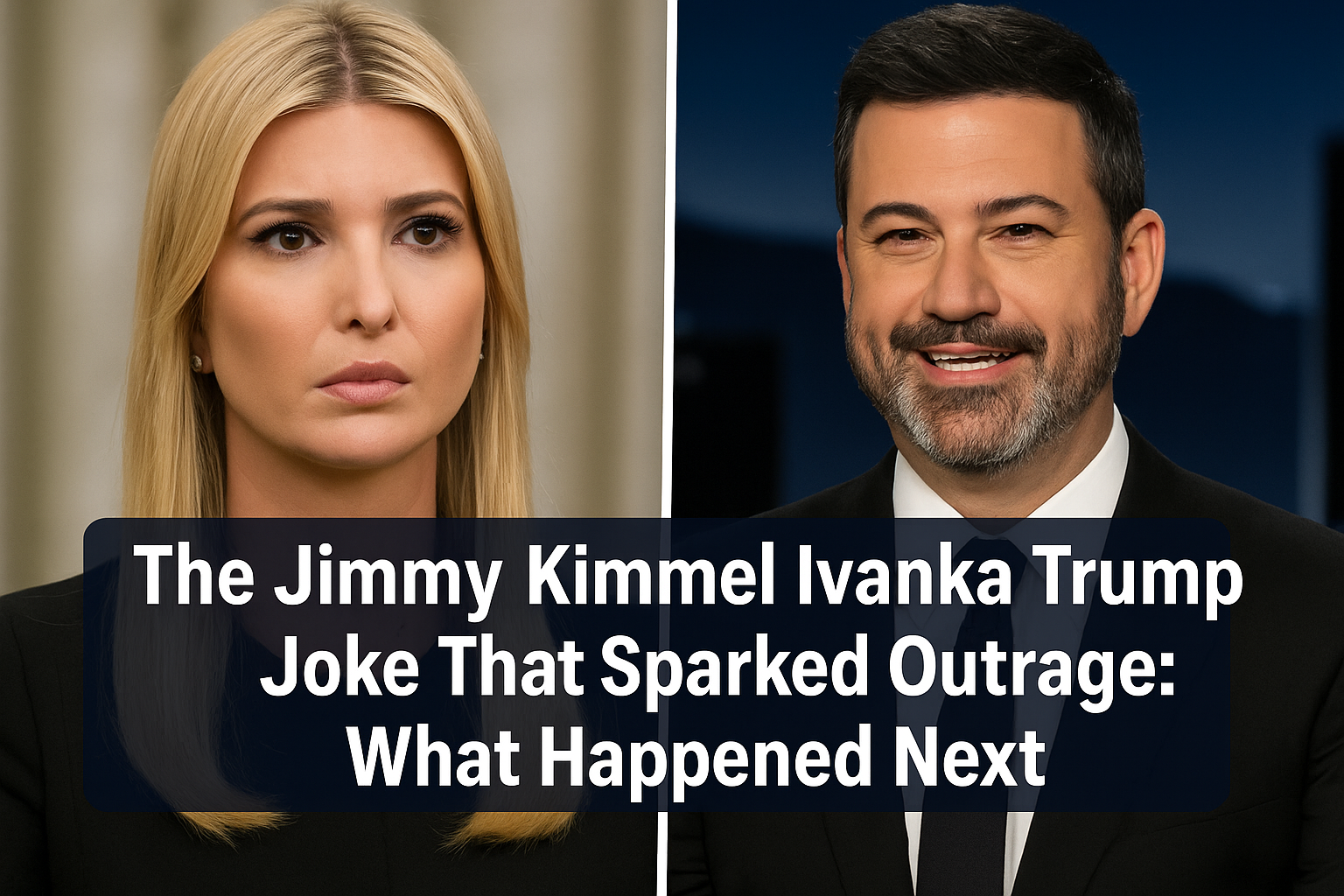
On June 18, 2026, late-night television took a sharp turn into controversy as Jimmy Kimmel delivered a provocative joke about Ivanka Trump during his monologue. This statement ignited a firestorm of outrage across social media platforms, drawing a line in the sand over the limits of comedy in politically charged times. Kimmel’s quip has since become the talk of the town, with viewers and critics alike debating the boundaries of humor.
The Setup: What Did Kimmel Say?
In his monologue, Kimmel made a remark that many deemed inappropriate, targeting Ivanka Trump, who has been a controversial figure since her father’s presidency. While the exact wording of the joke may vary across reports, the essence of it poked fun at her brand and her role in the political landscape. The humor relied heavily on the juxtaposition of her public persona against the backdrop of recent political events, making it both a punchline and a lightning rod for criticism.
This joke was framed in a way that not only ribbed Ivanka but also hinted at the broader implications of her family’s political actions. Fans of Kimmel, known for his sharp tongue and satirical humor, may have found it amusing, but many others felt it crossed a line. The backlash was swift and intense, with calls for accountability echoing through Twitter and Instagram.
The Outcry: Social Media’s Response
The aftermath of the Jimmy Kimmel Ivanka Trump joke was explosive. Social media users wasted no time in sharing clips of the monologue, expressing their shock and disappointment. Hashtags like #KimmelJoke and #IvankaOutrage trended for hours as users dissected the joke, with opinions sharply divided. Some defended Kimmel’s right to joke about public figures, while others insisted that the humor was tasteless and disrespectful. (See: BBC article on political humor.)
Critics pointed out that while late-night comedy often pushes boundaries, there comes a point where satire can morph into personal attacks. Supporters of Kimmel argued that humor, especially in a political context, should be free to explore any subject, no matter how sensitive. This incident raised questions about the responsibility of comedians in today’s polarized environment and whether they should hold back on certain topics for the sake of decency. Related reading: the Trump social media deal.
The Broader Conversation: Comedy and Political Discourse
What Kimmel’s joke reveals is the complex nature of humor in a politically charged atmosphere. Late-night hosts like Kimmel have long been seen as the arbiters of political commentary. They provide a platform for satire that can either provoke thought or incite outrage. The Jimmy Kimmel Ivanka Trump joke serves as a reminder that audiences have varying thresholds for what they find acceptable in comedy.
Leading figures in the entertainment industry have weighed in on the discussion. Some suggest that comedians hold a unique position in society, able to address uncomfortable truths about politics and public figures. Others argue that with great power comes great responsibility, and Kimmel’s recent fallout is an example of how the line between humor and cruelty can blur. (See: New York Times on Jimmy Kimmel's comedy.)
In a climate where humor can trigger strong reactions, the responsibility of a comedian isn’t just to make people laugh, but also to be mindful of the impact their words can have on public discourse. It’s a delicate balance, and Kimmel’s recent joke exemplifies that struggle.
The Future: Implications for Late-Night Comedy
As this controversy continues to unfold, the question remains: what does this mean for late-night comedy going forward? Will Kimmel, a seasoned veteran in the industry, adjust his approach in future monologues? Or will he continue to push boundaries, confident in the notion that comedy should challenge societal norms?
Networks are likely analyzing viewership data and audience reactions closely. The feedback from this incident could influence how late-night shows craft their material in the months to come. As Kimmel’s monologue garnered both applause and condemnation, it highlights an ongoing trend in entertainment where the stakes are higher than ever. (See: Scientific study on humor and politics.)
A key takeaway from this incident is the way comedy can act as a reflection of societal tensions. It’s a double-edged sword that can entertain while also provoking a much-needed dialogue about our leaders and the issues at hand. The Jimmy Kimmel Ivanka Trump joke, for better or worse, has sparked a conversation that translates beyond the realm of entertainment into the heart of political discourse.
In the end, perhaps the most significant impact of Kimmel’s controversial joke is not just the outrage it generated, but also the discussion it has prompted about the interplay between comedy and politics. As viewers, we have to ask ourselves: how far should comedians go? And what do we, as an audience, find acceptable in our quest for both laughter and truth?
Trending Now See also the Platinum Residency controversy.
- the complete explanation
- read the full story
- Discover the Surprising Shift in Luxury Real Estate Trends for 2026
- read the full story
Frequently Asked Questions
What did Jimmy Kimmel say about Ivanka Trump?
During his monologue on June 18, 2026, Jimmy Kimmel made a provocative joke about Ivanka Trump that focused on her brand and role in politics. The humor aimed to juxtapose her public persona with recent political events, which sparked significant outrage among viewers.
Why did Jimmy Kimmel's joke cause outrage?
Kimmel's joke about Ivanka Trump ignited outrage due to its perceived inappropriateness in the politically charged climate. Critics argued that while comedy can push boundaries, Kimmel's quip crossed a line into personal attack, leading to a heated debate on social media.
How did social media react to the Kimmel joke?
Social media users reacted explosively to Kimmel's joke, with clips of the monologue being widely shared. Hashtags like #KimmelJoke and #IvankaOutrage trended as opinions were sharply divided, with some defending Kimmel's humor and others condemning it as tasteless.
What are the implications of Kimmel's joke for political humor?
Kimmel's joke raises questions about the limits of political humor, especially regarding public figures. While some see it as a necessary critique, others argue that it can shift from satire to personal attack, highlighting the fine line comedians navigate in a polarized environment.
What was the public's response to Kimmel's Ivanka Trump joke?
The public's response to Kimmel's joke was polarized. Supporters praised his right to joke about public figures, while critics expressed shock and disappointment, arguing that the humor was inappropriate and disrespectful, reflecting broader societal tensions around political discourse.
What did we miss? Let us know in the comments and join the conversation.


