

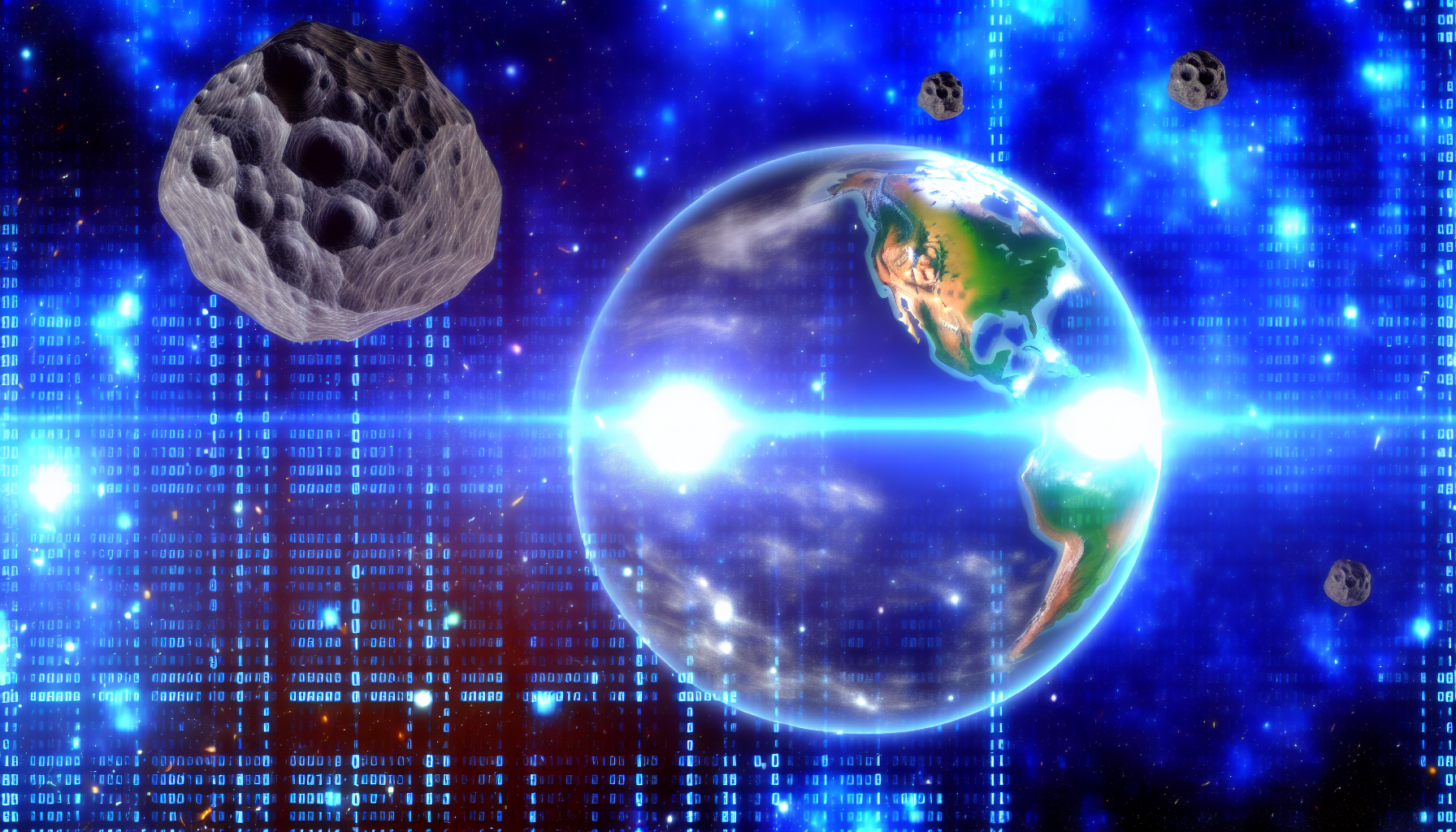
On March 30, 2026, NASA has announced that two significant asteroids will make a close approach to Earth, capturing the attention of astronomers and space enthusiasts alike. The asteroids in question, designated as 2026 FN1 and 2026 FA4, have raised questions regarding their size, proximity, and potential risk to our planet.
Understanding the Asteroids
The first of these near-Earth objects (NEOs), 2026 FN1, measures approximately 56 feet in diameter, roughly the size of a house. The second, 2026 FA4, is somewhat larger, at about 67 feet, comparable to a commercial airplane. These dimensions are significant when considering the potential impact of an asteroid, but it is essential to understand their relative size in the context of space.
What Does Close Approach Mean?
Both asteroids are expected to pass Earth at a distance of about 2.02 million miles. This distance is substantial, roughly eight times farther than the Moon, and indicates that there is no immediate threat to our planet. NASA has established various criteria to categorize NEOs based on their size and trajectory, which helps in determining any risk they may pose.
The Importance of Monitoring NEOs
NASA’s monitoring of NEOs is a crucial part of planetary defense. The agency employs various telescopes and radar systems to track these celestial bodies, gathering data on their orbits, sizes, and compositions. This ongoing vigilance is pivotal in identifying any potential hazards that could affect Earth in the future.
Potential Risks and Responses
While the asteroids 2026 FN1 and 2026 FA4 are not expected to pose any danger during their upcoming flyby, the importance of understanding the risks associated with NEOs cannot be overstated. Some key factors to consider include:
- Frequency of Close Approaches: NEOs frequently pass near Earth, but most do so at safe distances. NASA continually evaluates these objects to ensure their trajectories do not change unexpectedly.
- Size and Impact: Smaller asteroids, like the ones approaching in 2026, typically burn up upon entering Earth’s atmosphere, creating little or no risk. However, larger objects can cause significant damage if they were to collide with the planet.
- Preparedness and Detection: Ongoing research and development of new detection technologies are essential for early warning systems that can inform the public and authorities about potential impacts.
Public Perception and Misinformation
As news of these asteroids circulates, it is essential for the public to approach the information critically. Misinformation can easily spread, leading to unnecessary panic. NASA and other space agencies work diligently to provide accurate data and updates on NEOs to mitigate confusion. The agency emphasizes that while the sight of asteroids passing close to Earth can be alarming, the reality is that they are closely monitored.
The Role of Education
NASA also stresses the importance of education in understanding space phenomena. By engaging with the public through seminars, social media, and educational programs, the agency aims to foster a better understanding of planetary defense. This proactive approach helps demystify the science behind NEOs and encourages interest in space exploration.
The Future of Asteroid Tracking
As technology advances, so does our ability to track and predict the paths of asteroids. NASA’s Near-Earth Object Observations program continues to enhance our capabilities, utilizing advanced telescopes and computer models to refine predictions. This ongoing research is crucial for preparing for any potential threats posed by larger or more unpredictable asteroids.
Conclusion
In summary, the close encounter of asteroids 2026 FN1 and 2026 FA4 on March 30, 2026, serves as a reminder of the vastness of space and the importance of monitoring NEOs. While these particular asteroids pose no threat to Earth, they exemplify the ongoing efforts of NASA and other organizations to ensure planetary safety. As we continue to explore the cosmos, understanding these celestial phenomena will remain a priority for scientists and space agencies worldwide.
For those interested in astronomy and the science of asteroids, staying informed through reputable sources will help navigate the complexities of space exploration and planetary defense.


