

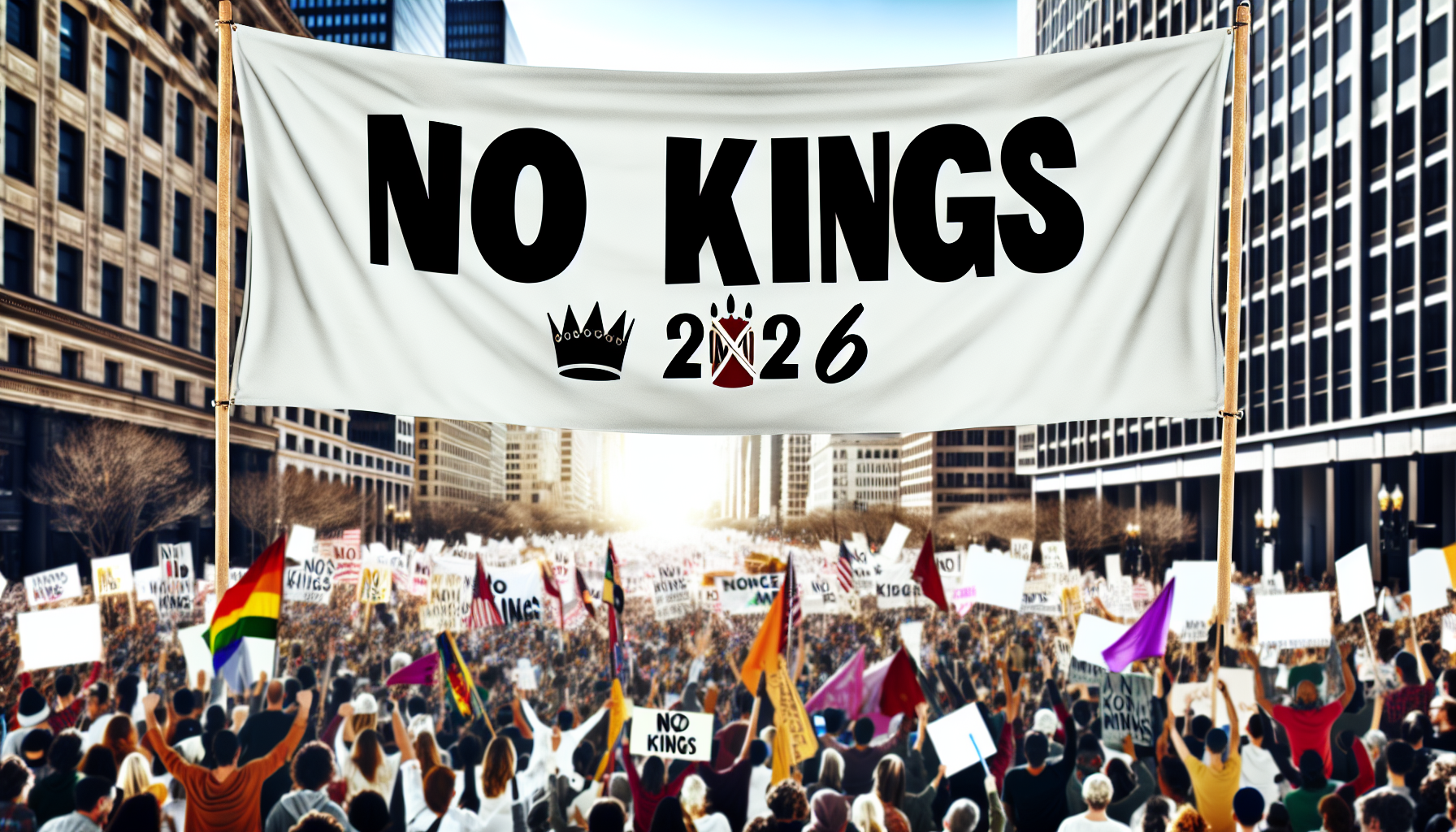
Grassroots Movement Gears Up for Nationwide Protests
On March 28, 2026, a significant wave of protests is set to sweep across the United States as over 3,100 ‘No Kings’ demonstrations are planned. These rallies, organized by a coalition of left-leaning groups, aim to challenge the perceived authoritarian tendencies of President Donald Trump’s administration. With events scheduled in every state and additional gatherings anticipated in Canada and Mexico, the movement reflects a growing discontent among citizens regarding the concentration of power in the hands of a select few.
Power to the People: A Rallying Cry
The central theme of the upcoming protests is a call for democracy and the assertion that power belongs to the people, not to leaders who behave like monarchs or billionaires. This grassroots movement emphasizes the need for accountability and transparency in government, urging citizens to reclaim their rights and participate actively in the democratic process. This builds on lawsuit against Trump.
Historical Context and Previous Protests
The ‘No Kings’ protests are not a new phenomenon; they build on a series of demonstrations held in June and October of 2025. Those earlier rallies saw significant turnout, indicating an increasing mobilization against Trump’s policies and governance style. The momentum has only intensified, and organizers expect an even larger response this time around.
Organizational Backbone: Coalition of Groups
A diverse coalition of left-leaning organizations is spearheading the protests, uniting various factions of the political spectrum under a common banner. These groups include grassroots activists, labor unions, civil rights organizations, and environmental advocates, all of whom share a commitment to creating a more equitable society.
- Grassroots Activists: Mobilizing communities across the nation to participate in the protests, emphasizing local issues and solutions.
- Labor Unions: Advocating for workers’ rights and fair labor practices, highlighting economic disparities.
- Civil Rights Organizations: Focusing on social justice issues, including racial and gender equality.
- Environmental Advocates: Addressing climate change and advocating for sustainable policies.
This coalition reflects a broad base of support, signifying that the desire for change transcends individual political affiliations. The ‘No Kings’ movement aims to demonstrate that collective action is essential for meaningful reform.
Visual Messaging: Themes and Poster Ideas
As the rallies approach, organizers are encouraging participants to create and share powerful visual messages. Posters and banners will play a crucial role in conveying the movement’s themes. Some suggested ideas include:
- “Power to the People!” – A declaration of the movement’s core belief.
- “No More Kings!” – A direct challenge to the leadership style perceived as autocratic.
- “Democracy, Not Oligarchy!” – Highlighting the importance of democratic governance over elite rule.
- “We Are the Majority!” – Reinforcing the idea that the collective voice of the people is stronger than individual interests.
These visual elements will serve to unify participants and make a strong statement about the movement’s demands.
National and International Solidarity
The ‘No Kings’ protests are not confined to the United States. Organizers have noted that additional events are expected in Canada and Mexico, signaling a broader regional response to issues of governance and power dynamics. This cross-border solidarity underscores a shared commitment to democratic values and the rejection of authoritarianism in all its forms.
Engaging the Silent Majority
One of the primary goals of the ‘No Kings’ protests is to engage those who may feel disillusioned or apathetic about the political process. Organizers aim to reach out to individuals who have previously felt their voices were not heard, encouraging them to participate and make their opinions known. By fostering an inclusive environment, the movement hopes to inspire a sense of agency among community members.
Looking Ahead: The Future of the Movement
As March 28 approaches, the anticipation surrounding the ‘No Kings’ protests continues to build. Organizers are focused not only on the immediate impact of these rallies but also on sustaining the momentum needed for long-term change. They emphasize the importance of continued civic engagement and activism beyond the protests, encouraging participants to stay informed and involved in their local communities.
The ‘No Kings’ protests represent a critical moment in the ongoing struggle for democracy and accountability in governance. With a united front of diverse voices, the movement aims to remind leaders that they serve the people, and power ultimately belongs to the many, not the few. Related reading: Trump's social media deal controversy.


