

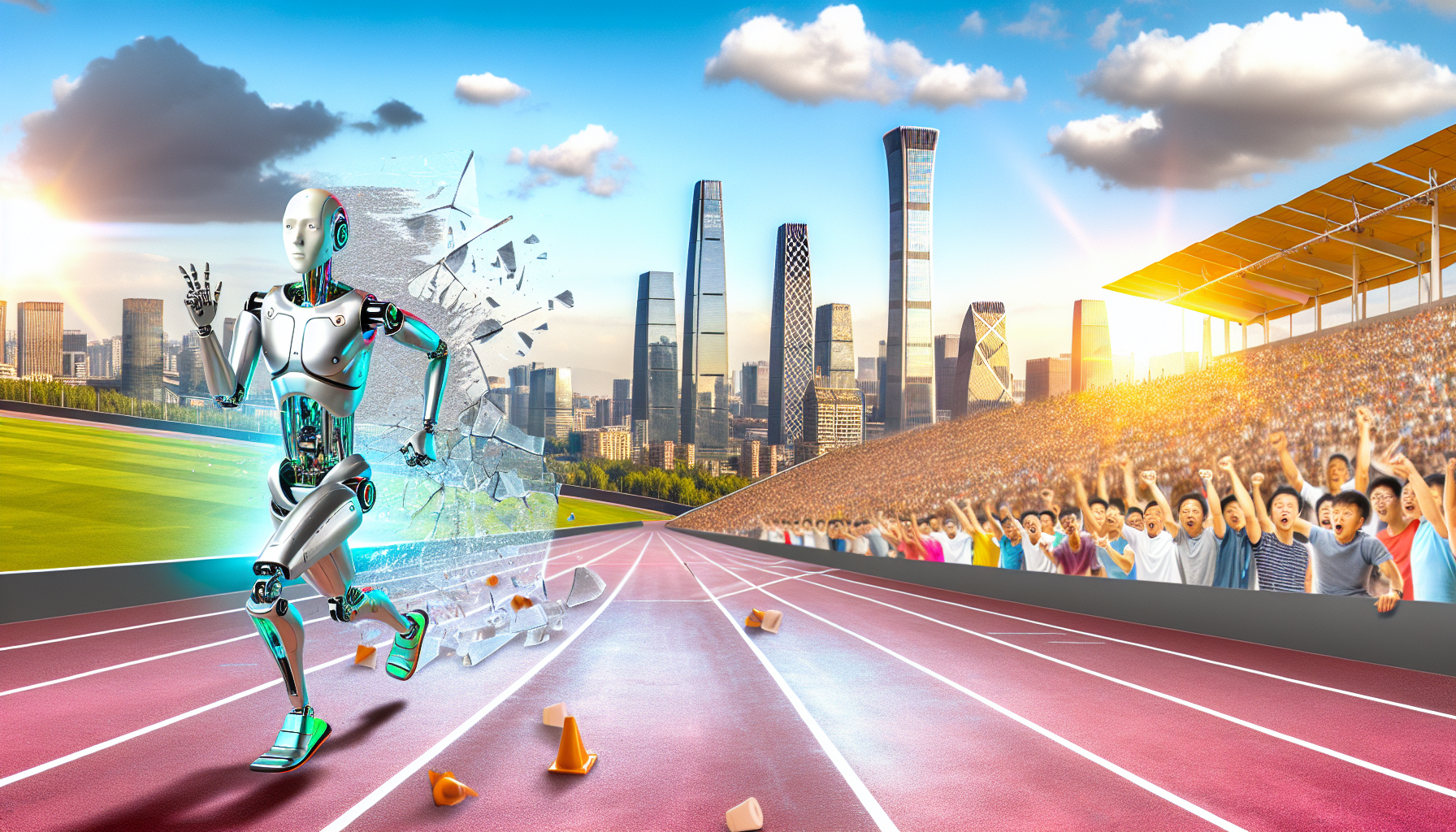
In a groundbreaking event that marks a significant milestone in the realm of robotics and artificial intelligence, a humanoid robot developed by Honor, a prominent Chinese smartphone manufacturer, clinched victory in a half-marathon race for robots in Beijing on April 19, 2026. Completing the 21-kilometer (13-mile) course in an impressive time of 50 minutes and 26 seconds, the robot not only outpaced its mechanical competitors but also surpassed the human world record set by Uganda’s Jacob Kiplimo in March 2023, which stands at approximately 57 minutes.
The Event and Its Significance
The half-marathon for robots took place in the Beijing Economic-Technological Development Area (Beijing E-Town), a hub showcasing China’s rapid advancements in technology, particularly in robotics and AI. This event is part of a broader effort to demonstrate the capabilities of humanoid robots and their potential applications across various sectors, from sports to healthcare and beyond.
By beating the human record, the humanoid robot has not only highlighted the speed and efficiency of robotic technology but has also stirred conversations about the future of athletic competitions. As technology continues to evolve, the lines between human and machine capabilities are becoming increasingly blurred. Related reading: top robotics programs.
China’s Robotics Landscape
China has been at the forefront of robotics innovation, investing heavily in research and development to position itself as a leader in this field. The success of the humanoid robot in Beijing reflects the nation’s commitment to advancing technology that can perform complex tasks traditionally reserved for humans.
- Investment in Technology: The Chinese government has allocated substantial resources towards enhancing AI and robotics, aiming to integrate these technologies into everyday life.
- Education and Research: Universities and research institutions are collaborating with tech companies like Honor to push the boundaries of what robots can achieve.
- Public Interest: Events like the half-marathon not only showcase technological prowess but also engage the public’s imagination about the future of AI.
The Humanoid Robot’s Performance
While specific technical details about the robot’s design and capabilities were not disclosed, the performance metrics achieved during the race indicate a level of sophistication that is impressive by any standard. The ability to complete a half-marathon in under an hour demonstrates not just speed but also advanced algorithms that govern motion, balance, and energy efficiency.
Key Features of the Robot
Here are some potential features that could contribute to such remarkable performance:
- Advanced Sensors: These allow the robot to navigate the course effectively, avoiding obstacles and adjusting its pace as needed.
- AI Algorithms: Sophisticated machine learning algorithms can optimize running strategies based on real-time data.
- Energy Efficiency: Innovations in materials and design may enhance the robot’s endurance and speed.
The event has sparked discussions about the implications of robotic athletes in future competitions. Some argue that while robots can perform feats beyond human limits, they lack the emotional and psychological aspects that define human sportsmanship.
Future Implications
The victory of the humanoid robot in Beijing raises several important questions about the future of sports, technology, and humanity:
- Ethics of Competition: As robots become more capable, should they be allowed to compete against humans in athletic events? What would such competitions mean for traditional sports?
- Potential for Collaboration: Instead of viewing robots as competitors, could there be opportunities for human-robot collaboration in enhancing athletic performance?
- Broader Applications: The technologies developed for robotic athletes could have vast implications in areas like rehabilitation, elderly care, and more.
Conclusion
The triumph of Honor’s humanoid robot in the half-marathon is a pivotal moment that encapsulates the rapid evolution of AI and robotics. As the lines between human and machine continue to blur, society must navigate the ethical and practical implications of these advancements. Will we see more robotic athletes in the future? Only time will tell, but the future certainly looks promising.


