

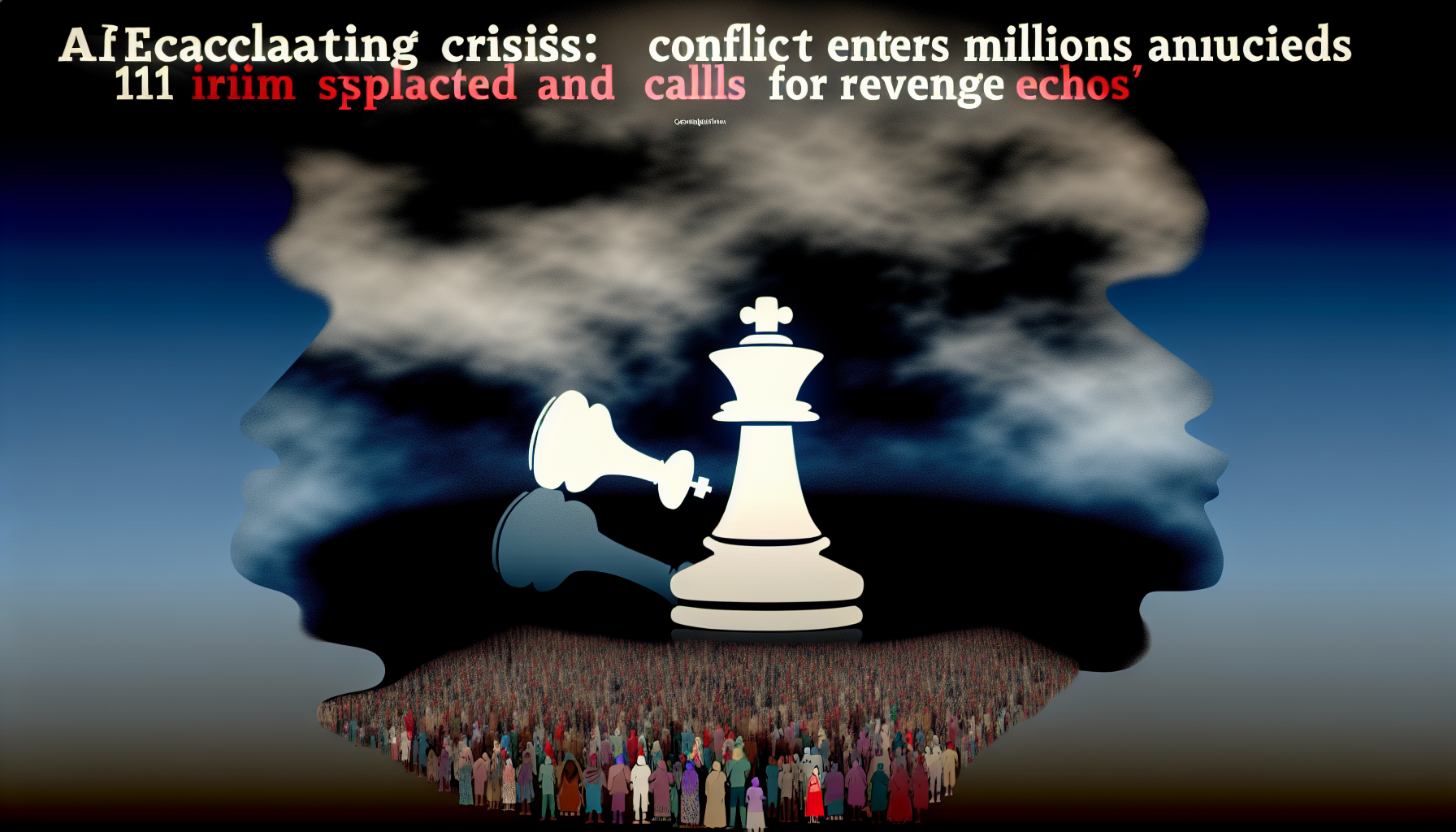
The ongoing conflict in Iran has entered its 14th day, marking a significant escalation in violence that has forced millions of citizens to flee their homes. As the humanitarian crisis deepens, a new Ayatollah has emerged, publicly vowing revenge against those perceived to be responsible for the current turmoil, further heightening tensions in an already volatile region.
Mass Displacement and Humanitarian Impact
As the conflict escalates, reports indicate that an estimated seven million people have been displaced from their homes, creating one of the most severe refugee crises in recent history. Many are seeking refuge in neighboring countries, exacerbating the strain on already fragile infrastructure and resources.
International organizations have raised alarms over the humanitarian consequences of the conflict. Aid workers are struggling to provide necessary support, with supplies running low and access to affected areas becoming increasingly difficult. The United Nations has called for immediate action to address the needs of those affected, emphasizing that the situation is dire and requires urgent attention. There’s a fuller look at media bias insights.
Political Landscape and Rising Tensions
The recent appointment of a new Ayatollah has introduced a radical shift in Iran’s political landscape. This figure, who has quickly gained prominence, has publicly stated his intention to seek revenge against various factions, including foreign powers and regional adversaries. His incendiary rhetoric has raised fears of further escalations and reprisals, which could have far-reaching implications for the entire Middle East.
In the wake of these developments, key Iranian leaders are reportedly in discussions with international diplomats as they navigate the complex geopolitical landscape. The involvement of foreign governments has made this conflict a focal point for regional politics, with countries aligning either in support of or against Iran.
International Reactions
International reactions to the crisis have been varied, with several nations expressing concern over the humanitarian implications and the potential for wider conflict. The United States has reiterated its commitment to monitoring the situation closely, emphasizing the importance of diplomatic engagement to prevent further escalation.
Meanwhile, European Union representatives have called for an immediate ceasefire and the establishment of humanitarian corridors to assist those fleeing the violence. They are also urging all parties involved to respect international law and human rights standards.
Regional Dynamics and Security Concerns
The conflict in Iran has broader implications for regional stability. Neighboring countries are on high alert, with many fearing that the violence could spill over their borders. There are growing concerns about the potential for increased sectarian violence, especially in areas with mixed religious and ethnic populations.
Analysts warn that the new Ayatollah’s call for revenge could incite further hostilities not only within Iran but also against neighboring states. This situation poses a significant threat to regional security, with potential repercussions that could destabilize an already fragile balance of power.
Humanitarian Aid Efforts
- International Organizations: Groups like the Red Cross and various NGOs are mobilizing resources to provide aid to displaced individuals.
- Government Responses: Several countries have started to allocate funds and materials to assist those affected by the conflict.
- Community Initiatives: Local organizations are stepping up efforts to support refugees, offering shelter and basic necessities.
Despite these efforts, the scale of the crisis presents significant challenges. Many aid workers report that they are unable to reach all those in need due to ongoing violence and logistical obstacles.
Looking Ahead: The Need for Resolution
As the war in Iran continues to unfold, the international community faces a pressing challenge: how to effectively intervene while respecting the sovereignty of the nation. Diplomatic solutions must prioritize the protection of civilians and the restoration of peace.
In conclusion, the 14th day of the Iran war marks a critical juncture in a conflict that has already inflicted tremendous suffering on millions. With a new Ayatollah vowing revenge and the humanitarian situation deteriorating, the need for a concerted international response has never been more urgent. The coming days will be crucial in determining whether peace can be restored or if the region will descend further into chaos.


