

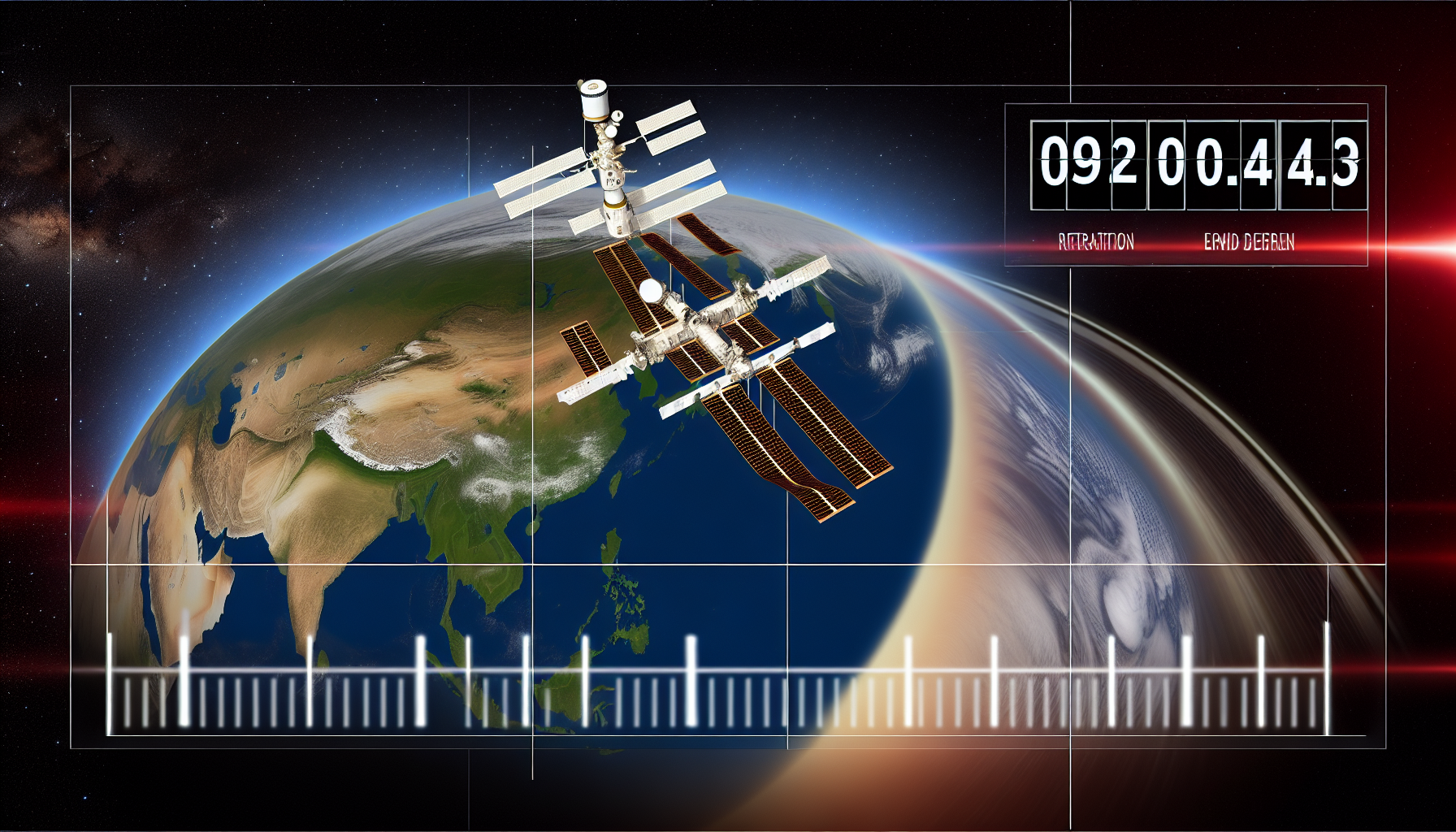
The International Space Station (ISS), a marvel of human engineering and collaboration, has been continuously occupied for over two decades, serving as a hub for scientific research in low Earth orbit (LEO). However, with its decommissioning slated for 2030, concerns are mounting about the future of U.S. presence in space and the broader implications for international collaboration and scientific progress.
The Aging ISS: Challenges Ahead
As the ISS approaches the end of its operational life, signs of structural degradation are becoming increasingly evident. The aging infrastructure, coupled with the high costs of maintenance, has prompted NASA to reassess its role in LEO. The agency has outlined plans to transition to commercial space stations, a shift that, while promising, may take several years to fully realize.
NASA’s Transition Plans
NASA’s strategy involves moving away from reliance on the ISS and engaging with private companies to develop new platforms for research and experimentation in space. Organizations like Blue Origin and Boeing are already at the forefront of this development. While this shift could usher in a new age of space exploration, experts warn that the timeline for these commercial stations is uncertain, raising questions about the continuity of scientific research in microgravity.
China’s Tiangong Station: A New Contender
In this shifting landscape, China’s Tiangong space station has been operational since 2022, positioning itself as a significant player in LEO. With the ISS’s imminent retirement, Tiangong could potentially emerge as the only operational space station, thereby impacting international collaborations and setting new technology standards.
Global Implications
- International Collaborations: The ISS has historically been a symbol of international cooperation in space, involving partnerships among multiple countries. The retirement of the ISS could jeopardize these collaborative efforts.
- Technology Standards: With the rise of Tiangong as a potential sole LEO platform, there are concerns that differing technological standards could emerge, complicating global space operations.
- Research Access: The transition away from the ISS raises questions about access to microgravity research environments that are crucial for various scientific endeavors.
The Impact on Research and Exploration
The ISS has been instrumental in conducting microgravity experiments that have significant implications for future space exploration, particularly for NASA’s Artemis program, which aims to return humans to the Moon and eventually send astronauts to Mars. Key areas of research that may be affected include:
- Human Health Studies: Understanding how long-duration spaceflight affects human health is critical for future missions beyond low Earth orbit.
- Life Support Systems: Developing reliable life support systems is essential for sustained human presence on the Moon and Mars.
- Deep-Space Technology: Experiments conducted in microgravity are vital for testing new technologies that will be necessary for deep-space missions.
The Road Ahead
The prospect of losing the ISS as a platform for research and international cooperation presents a multifaceted challenge. As NASA pivots towards commercial partnerships, the timeline for these new stations remains a critical concern. Without a seamless transition, the scientific community could face a gap in research opportunities, which could hinder advancements in various fields. We covered Artemis 2 mission details in more detail.
Furthermore, the continued success of the Artemis program hinges not just on technological advancements but also on the ability to conduct comprehensive research in microgravity. The ISS has provided invaluable insights that cannot be replicated on Earth, and its loss would be felt across numerous scientific disciplines.
Conclusion
As the countdown to the ISS retirement progresses, the global space community must navigate a complex landscape of uncertainties and opportunities. While the emergence of commercial space stations and the operational Tiangong station could redefine human presence in LEO, it is crucial that international collaboration, technological standardization, and access to research environments remain priorities. The future of space exploration depends on our ability to adapt and innovate in the face of these challenges.


