

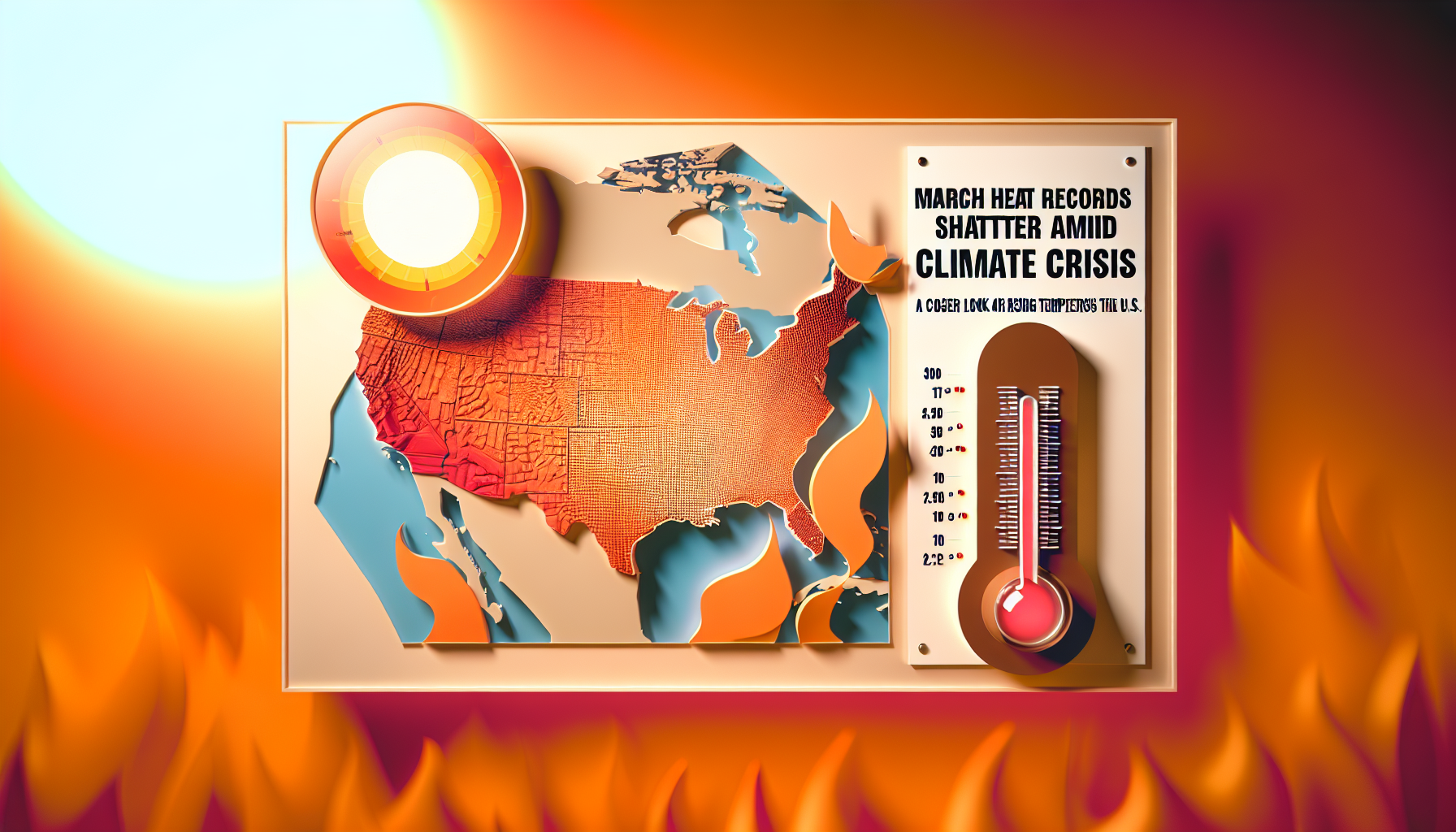
As the calendar turned to March, the United States found itself grappling with unprecedented heat levels, raising alarms about the implications of climate change. In an unprecedented event, Yuma, Arizona, recorded a blistering 109°F on March 20, surpassing the previous national record for March of 108°F set in Texas in both 1954 and 1902. This extreme weather event is not an isolated incident; it is part of a larger pattern that climate scientists attribute directly to human-induced climate change.
Breaking Records Across the Southwest
The record-breaking temperatures were not confined to Yuma. Nearby, Martinez Lake experienced staggering highs of 112°F, although this temperature remains unverified. Phoenix also felt the heat, as it shattered its own March records with a sweltering 102°F on Tuesday and followed up with 105°F on Thursday, effectively tying its all-time April record. Flagstaff, typically known for its cooler temperatures, recorded a remarkable 84°F, which exceeded its March record by an astounding 11°F.
The Science Behind the Heat
According to climate scientists from the World Weather Attribution group, the extreme heat experienced across the Southwest U.S. is virtually impossible to explain without considering the impact of climate change. The phenomenon is driven by a strong heat dome, a meteorological occurrence where a high-pressure system traps warm air in a specific region, leading to excessively high temperatures.
This heat dome is exacerbated by pollution that contributes to global warming, creating a vicious cycle where rising temperatures lead to more extreme weather events. As the planet continues to warm, the frequency and intensity of these heat waves are expected to increase, posing significant risks to public health and safety.
Impact on Public Health
Extreme heat is not merely an uncomfortable nuisance; it is a serious public health threat. In fact, it is known to kill more Americans than hurricanes and tornadoes combined. Vulnerable populations, such as the elderly, children, and those with pre-existing health conditions, are at a higher risk during these heat events. The impacts are compounded in urban areas, where the heat island effect can elevate temperatures even further.
With the ongoing climate crisis, the U.S. is witnessing a marked increase in heat-related illnesses and fatalities. Public health officials are urging people to take precautions, such as staying hydrated, avoiding outdoor activities during peak heat hours, and seeking air-conditioned spaces.
The Broader Implications of Climate Change
The recent extreme heat serves as a stark reminder of the broader implications of climate change on the environment and public policy. As regions around the globe experience more frequent and intense heat waves, the economic costs associated with healthcare, infrastructure damage, and energy consumption are likely to escalate.
- Infrastructure Strain: Increased temperatures can lead to power outages as demand for air conditioning surges. This strain on energy resources can result in failures of electric grids, impacting millions of residents.
- Water Scarcity: Higher temperatures can exacerbate drought conditions, leading to water shortages that threaten agriculture and drinking supplies.
- Wildfire Risk: Hot, dry conditions increase the likelihood of wildfires, which can devastate ecosystems and communities.
Moving Forward: Adapting to a Hotter Future
As climate change continues to shape weather patterns, it is imperative for policymakers, scientists, and communities to collaborate on effective solutions. Adaptation strategies may include: For more on this, see urgent climate warning.
- Urban Planning: Designing cities to mitigate heat, such as increasing green spaces and utilizing reflective materials in construction.
- Public Health Initiatives: Developing programs that educate communities about heat safety and provide resources for vulnerable populations.
- Climate Action: Implementing policies that reduce greenhouse gas emissions, transitioning to renewable energy sources, and promoting sustainable practices.
Conclusion
The record-breaking heat in March 2026 serves as a warning sign of the growing impact of climate change on everyday life. As temperatures rise, the urgency for action becomes increasingly clear. By understanding the science behind these extreme weather events and taking proactive steps, society can work towards a more resilient future in the face of climate change.


