

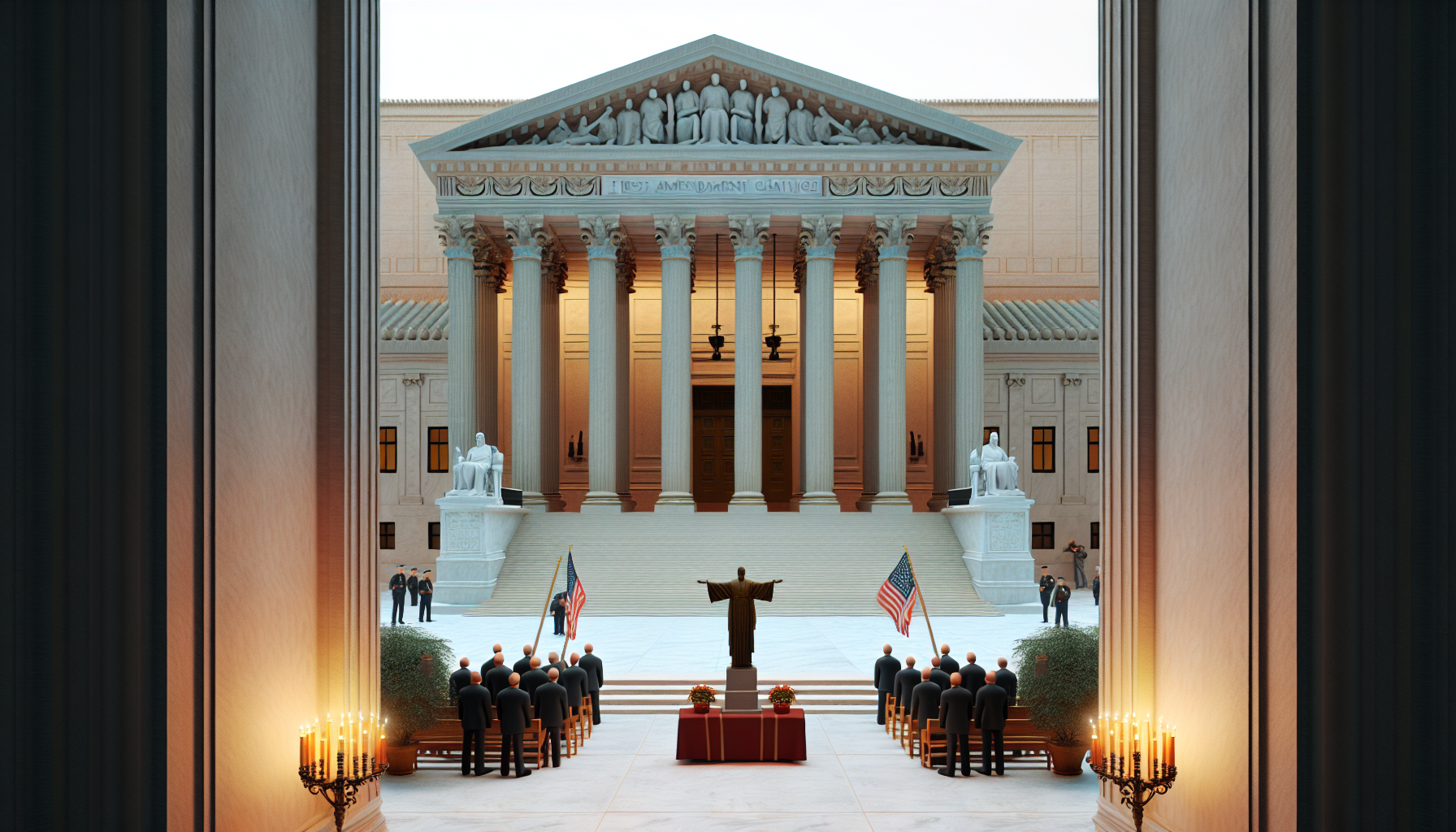
The U.S. Supreme Court has delivered a significant ruling in favor of free speech, reviving a lawsuit from evangelical Christian Gabriel Olivier. This decision comes after Olivier was arrested in Mississippi for violating local protest regulations, specifically after he refused to relocate his preaching activities from a suburban amphitheater to a designated zone.
Background of the Case
Gabriel Olivier’s confrontation with law enforcement arose during a demonstration where he used a loudspeaker to convey his religious messages, which included derogatory comments aimed at specific individuals, labeling them with terms such as “whores” and “Jezebel.” Additionally, he displayed graphic signs depicting aborted fetuses. His passionate, albeit controversial, method of preaching led to his arrest under a local ordinance that restricts demonstrations to specific areas.
Supreme Court’s Unanimous Decision
In a unanimous ruling, the Supreme Court, led by Justice Elena Kagan, determined that Olivier’s request for a forward-looking injunction against the enforcement of the city ordinance could move forward, despite his previous conviction. The Court notably distinguished this case from others that generally undermine criminal convictions, marking a crucial point in the ongoing dialogue around First Amendment rights.
Legal Implications
The ruling is significant as it allows Olivier’s civil rights suit to advance through the judicial system, emphasizing the importance of free speech even in the face of local regulations. Justice Kagan’s opinion highlighted that the case represents a broader issue regarding the balance between public order and the fundamental right to express one’s beliefs.
Reactions from Legal Experts
The decision has garnered praise from various legal experts, particularly from those advocating for First Amendment rights. Kelly Shackelford, president and CEO of the First Liberty Institute, expressed his support for the ruling, labeling it as a victory for free speech and religious expression. Shackelford noted that the decision reinforces the notion that individuals should not be silenced for their beliefs, regardless of how controversial they may seem.
Concerns from Local Governments
While the ruling has been celebrated by free speech advocates, local governments have expressed concerns about the potential repercussions. Officials warn that the revival of this lawsuit may lead to a surge of similar legal challenges against municipal ordinances designed to maintain public order during demonstrations. The implications of the Court’s decision could lead to a reevaluation of how cities regulate public protests and demonstrations, posing challenges for law enforcement and city planners.
Understanding the Broader Context
This case is not an isolated incident; it falls within a larger framework of legal disputes surrounding free speech and public demonstrations in the United States. The First Amendment guarantees citizens the right to express their opinions, but local ordinances often attempt to regulate the time, place, and manner of such expressions to prevent public disorder.
As cases like Olivier’s make their way through the courts, they continue to shape the legal landscape regarding the limits and protections of free speech. The Supreme Court’s decision underscores the need for careful consideration of how local laws intersect with constitutional rights. best colleges for free speech offers useful background here.
The Future of Free Speech and Demonstrations
As this lawsuit proceeds, it raises important questions about the future of public demonstrations and the legal protections afforded to individuals expressing controversial viewpoints. Will local governments need to alter their ordinances to comply with this ruling? And how will this affect the behavior of individuals engaging in similar forms of protest?
As Olivier’s case unfolds, it is likely that the legal community will be closely watching the implications of this decision. The balance between maintaining public order and ensuring the right to free speech remains a contentious issue, and the outcomes of these cases will likely influence future legal standards.
Conclusion
In summary, the Supreme Court’s revival of Gabriel Olivier’s lawsuit marks a pivotal moment for First Amendment rights in the United States. By allowing his civil rights suit to proceed, the Court has opened the door for further legal challenges against local ordinances that may infringe on free speech. As the nation continues to grapple with the complexities of free expression, the implications of this ruling will undoubtedly resonate across various jurisdictions, prompting a reexamination of how we balance individual rights with community standards.


