

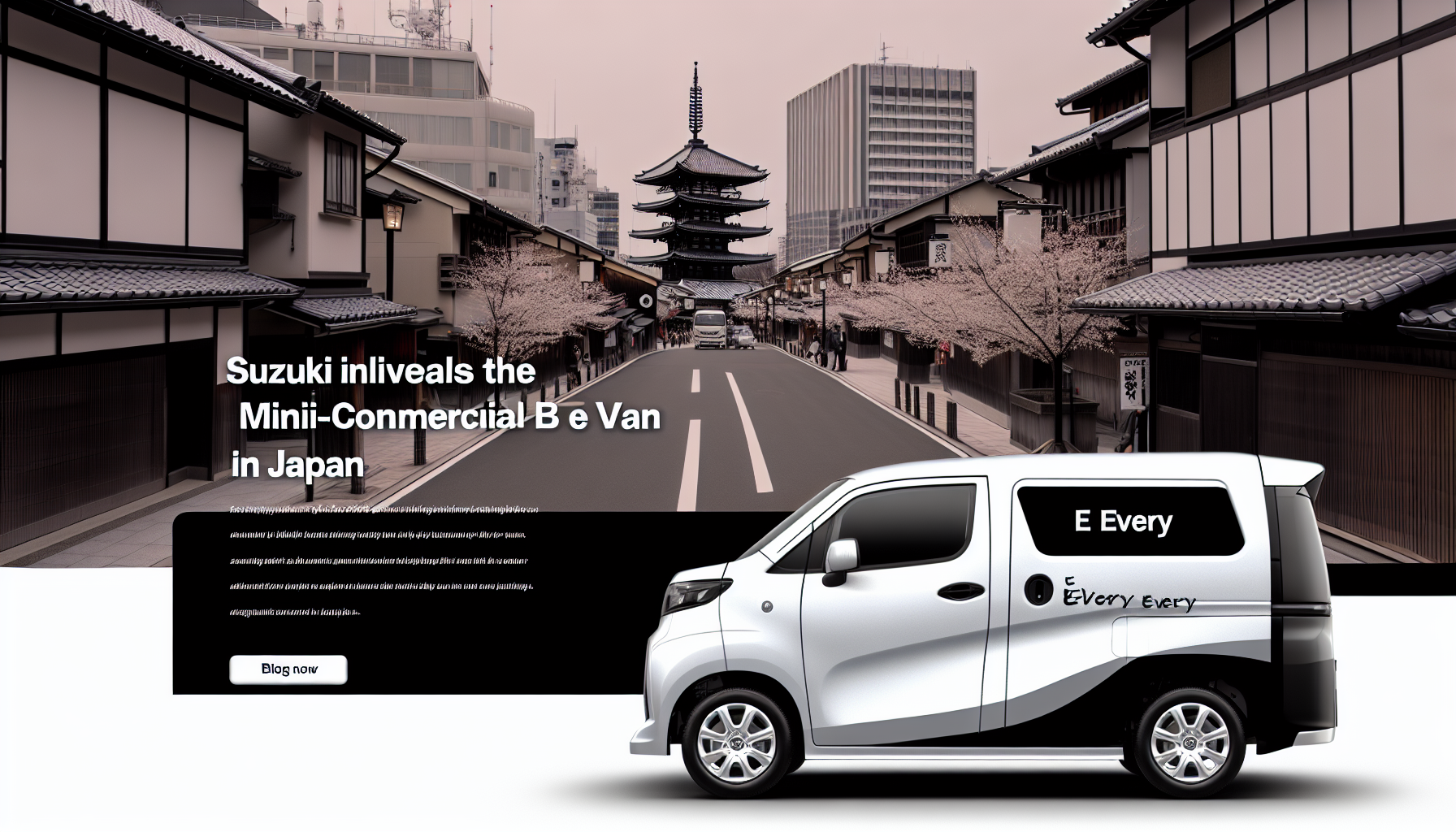
Suzuki has recently made a significant stride in the automotive industry with the launch of its all-new e Every, a mini-commercial battery electric vehicle (BEV) van tailored specifically for the Japanese market. This innovative vehicle marks a pivotal moment for the manufacturer as it embraces electrification amidst a growing demand for sustainable and zero-emission delivery solutions.
The Rise of Electric Commercial Vehicles
As urban centers become increasingly congested and environmental concerns mount, the need for efficient, eco-friendly transport solutions has never been more critical. Japan, known for its advanced technology and commitment to sustainability, is witnessing a notable shift toward electric vehicles (EVs), particularly in the commercial sector. Suzuki’s e Every is poised to address this demand by providing a practical and environmentally friendly option for businesses.
Key Features of the e Every
The e Every is designed with urban commercial use in mind, incorporating advanced electric technology that optimizes its performance for city driving. Some of the standout features of this mini-commercial BEV van include:
- Compact Design: The van’s small footprint makes it ideal for navigating crowded urban environments.
- Zero Emissions: As a fully electric vehicle, the e Every produces no tailpipe emissions, significantly reducing its environmental impact.
- Efficient Powertrain: Equipped with a state-of-the-art electric motor and battery system, the e Every offers impressive range and reliability.
- Versatile Cargo Space: Designed to accommodate various cargo types, making it suitable for a range of commercial applications.
Market Demand for Zero-Emission Vehicles
The launch of the e Every aligns with the increasing demand for zero-emission delivery vehicles in Japan. As businesses look to enhance their sustainability efforts, electric vans have emerged as a viable solution to meet both regulatory requirements and consumer expectations. The Japanese government has also been actively promoting the adoption of electric vehicles through incentives and infrastructure development, further fueling the market for BEVs.
Competitive Landscape
With the introduction of the e Every, Suzuki enters a competitive market already populated by several key players in the electric commercial vehicle space. Notable competitors include:
- Honda: Known for its commitment to sustainable transport, Honda has been developing its own range of electric commercial vehicles.
- Nissan: A pioneer in the EV market with its Leaf model, Nissan is also expanding its offerings to include commercial options.
- Toyota: With its extensive research in hydrogen fuel cells and electric technologies, Toyota is a significant player in the eco-friendly vehicle sector.
Despite the competition, Suzuki’s deep roots in the Japanese market, coupled with its ability to innovate, position the e Every as a strong contender in the mini-commercial EV segment.
Future of Suzuki and Electrification
The launch of the e Every is part of Suzuki’s broader strategy to enhance its portfolio of electrified vehicles. Recognizing the global shift towards sustainability, the company aims to invest heavily in research and development to expand its electric vehicle lineup. The e Every is just one of the many initiatives Suzuki is undertaking to align itself with the future of mobility.
Consumer Reception
Initial reactions to the e Every have been positive, with businesses expressing enthusiasm for its practicality and environmental benefits. The van is expected to appeal particularly to small businesses and delivery services looking for a cost-effective and eco-friendly alternative to traditional combustion vehicles.
As the demand for electric commercial vehicles continues to grow, Suzuki’s e Every stands out as a promising solution that could revolutionize urban delivery logistics in Japan.
Conclusion
The introduction of the e Every mini-commercial BEV van marks a significant milestone for Suzuki as it embarks on its electrification journey. With its innovative design, advanced electric technology, and commitment to sustainability, the e Every is set to play a crucial role in shaping the future of urban transportation in Japan. As businesses increasingly seek zero-emission solutions, Suzuki’s latest offering could well become a preferred choice in the ever-evolving landscape of commercial vehicles.


