

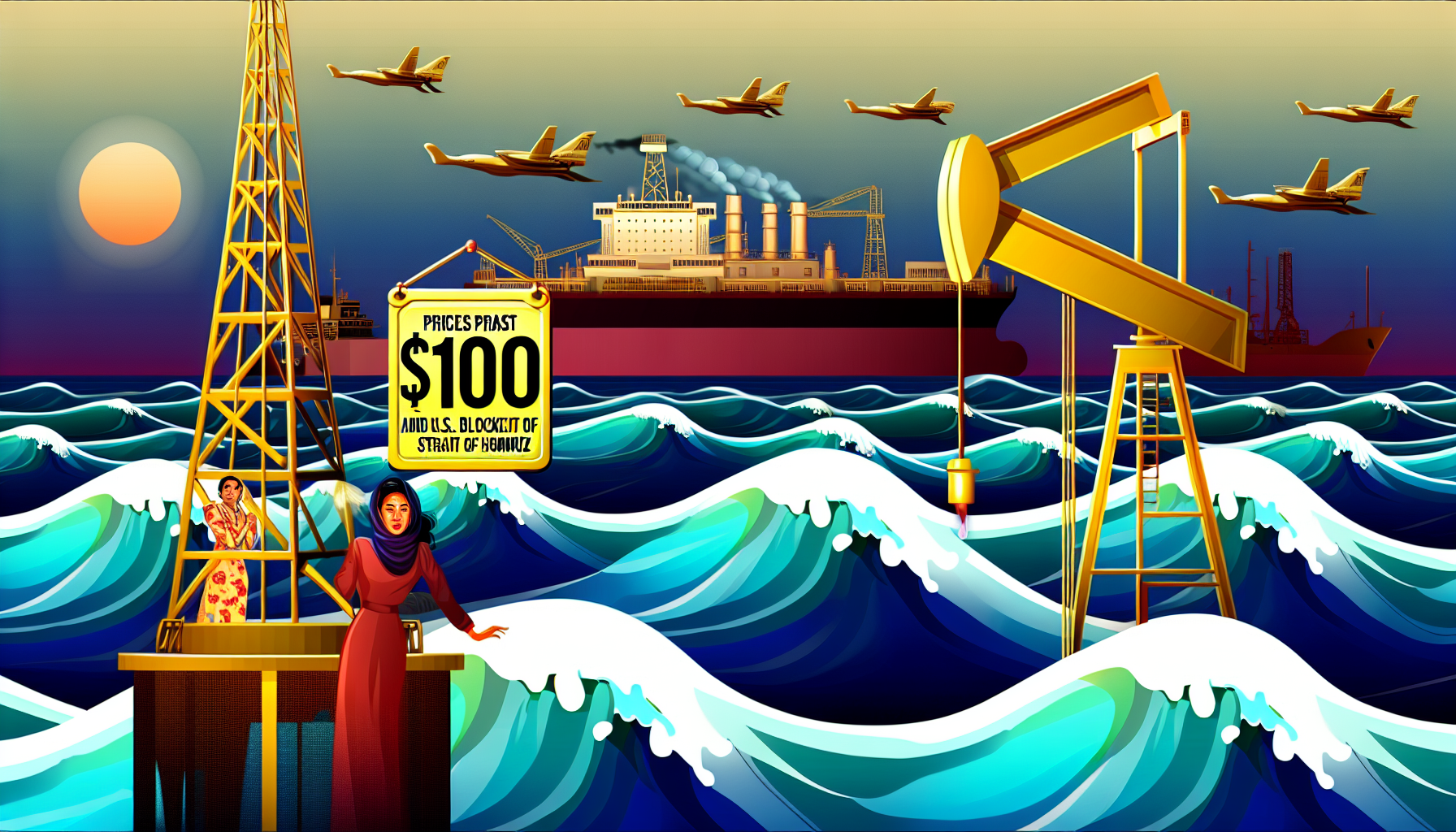
On April 13, 2026, oil prices experienced a dramatic surge, crossing the $100 per barrel threshold as tensions escalated in the Middle East. The spike came in response to the U.S. Navy’s announcement of a blockade on Iranian access through the Strait of Hormuz, a crucial maritime route for oil shipments, following the collapse of peace negotiations with Iran.
Brent Crude and WTI Prices Soar
Brent crude oil prices jumped by 7%, reaching approximately $104 per barrel, while West Texas Intermediate (WTI) also hit the $104 mark. This significant increase in oil prices is indicative of the market’s reaction to the heightened geopolitical risks that threaten the stability of oil supplies from the region.
The Strait of Hormuz: A Critical Energy Chokepoint
The Strait of Hormuz is one of the world’s most vital energy chokepoints, with a substantial portion of the world’s oil supply passing through it. Approximately 20% of global oil consumption transits this narrow waterway, making any disruption in this area particularly impactful on global oil markets.
The U.S. decision to enforce a blockade comes in light of ongoing tensions with Iran, particularly following a series of unsuccessful peace talks aimed at de-escalating conflicts. The Iranian government has long threatened to retaliate against such moves, which raises concerns about potential military confrontations and further disruptions to oil shipping.
Market Reactions and Economic Implications
The announcement of the blockade sent ripples through the financial markets, with traders reacting swiftly to the potential of supply disruptions. The price hike reflects not only immediate market responses but also broader concerns regarding regional instability. Analysts predict that continued tensions could lead to further volatility in oil prices.
- Supply Disruptions: The blockade could lead to significant reductions in Iranian oil exports, which are already under heavy sanctions. This reduction is expected to create a ripple effect on global oil supply, leading to higher prices.
- Inflationary Pressures: Rising oil prices often translate into higher costs for consumers, potentially exacerbating inflationary pressures in various economies, particularly those reliant on oil imports.
- Shifts in Energy Policy: Countries may be prompted to explore alternative energy sources or increase domestic production to mitigate the impacts of fluctuating oil prices.
Geopolitical Landscape
The U.S. blockade is a significant escalation in the ongoing geopolitical tensions between the U.S. and Iran. The Iranian government has responded defiantly, stating that such actions will not go unchallenged. The potential for military engagement in the region remains a pressing concern for policymakers and analysts alike.
Historically, the Strait of Hormuz has been a flashpoint for conflicts, and the current situation is reminiscent of past crises where military interventions and blockades led to severe disruptions in oil supply. The implications of the U.S. Navy’s blockade extend beyond immediate economic concerns, as they also raise questions about international security and the stability of global oil markets.
Global Responses and Future Outlook
As oil prices surge, various countries and organizations are closely monitoring the situation, assessing the potential impacts on their economies. The Organization of the Petroleum Exporting Countries (OPEC) may also need to consider its production strategies in light of these developments, as they have a vested interest in maintaining price stability.
Looking ahead, analysts suggest that the market will remain highly sensitive to developments in the region. Any further escalations or diplomatic breakthroughs could lead to significant shifts in oil prices. Investors are advised to stay informed and consider the potential volatility that could arise from ongoing geopolitical tensions. See also Trump's perspective on Iran.
Conclusion
The recent rise in oil prices following the U.S. blockade of the Strait of Hormuz underscores the fragile nature of global oil supply chains. As the situation develops, stakeholders across the globe will be closely watching for signs of further escalation or resolution. The impact of these events is likely to resonate across various sectors, influencing not just oil prices but also broader economic stability.


