

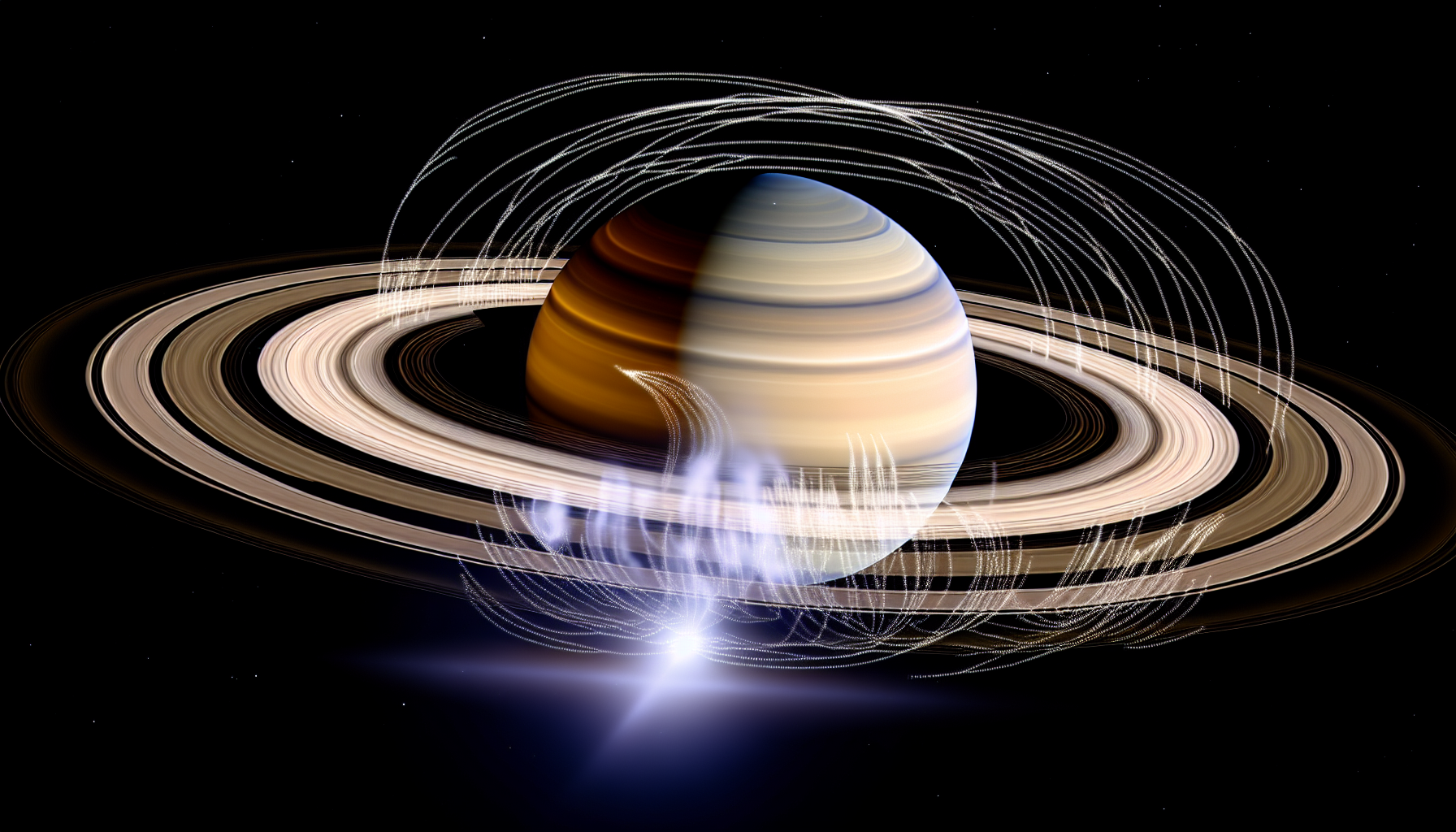
Astronomers have made a groundbreaking discovery that sheds light on a long-standing enigma surrounding the rotation of Saturn. For years, scientists have observed that the spin rate of this magnificent gas giant seemed to change, leading to questions about its atmospheric dynamics and internal structure. Recent research has finally resolved this mystery, offering valuable insights into the behavior of gas giants and expanding our understanding of planetary physics.
The Enigma of Saturn’s Rotation
Saturn, the sixth planet from the Sun, is renowned for its stunning rings and numerous moons. However, its rotation has perplexed astronomers for decades. The planet’s spin rate was initially estimated based on its magnetic field, which provided a rough idea of how quickly it rotates. Yet, as observational technology advanced, researchers realized that Saturn’s rotation period seemed to vary over time, complicating our understanding of its dynamics.
New Research Findings
A recent study, led by a team of international researchers, has unveiled the underlying factors contributing to Saturn’s variable rotation. The findings suggest that the changes in the planet’s spin rate are not random but are instead linked to complex interactions within its atmosphere.
Atmospheric Dynamics at Play
The researchers discovered that fluctuations in Saturn’s wind patterns, particularly the jet streams that dominate its atmosphere, play a crucial role in the apparent changes in its rotation. Saturn’s atmosphere is characterized by strong east-west winds that can reach speeds of over 1,800 kilometers per hour (approximately 1,100 miles per hour). These winds are influenced by a variety of factors, including seasonal changes, temperature variations, and atmospheric pressure.
By utilizing data from NASA’s Cassini spacecraft, which orbited Saturn from 2004 to 2017, the team was able to analyze the planet’s atmospheric dynamics in detail. Their research revealed that as the jet streams shift and evolve, they can create oscillations in the planet’s rotation. This means that the spin rate can appear to change without any alteration to Saturn’s core structure.
The Importance of Understanding Saturn
This new understanding of Saturn’s rotation has profound implications for astronomers and planetary scientists alike. It not only enhances our knowledge of Saturn but also offers critical insights into gas giants in general. The dynamics of gas giants are vital for understanding their formation, evolution, and potential habitability.
Broader Implications for Planetary Science
The study of Saturn’s rotation contributes to a larger body of research focused on planetary atmospheres and their behaviors. Gas giants, such as Jupiter and Neptune, exhibit their own unique features and atmospheric conditions. By understanding the mechanisms at play within Saturn, scientists can draw parallels and make predictions about the behavior of other gas giants in our solar system and beyond.
- Planetary Dynamics: Insights into the rotational dynamics of gas giants can help refine models of their internal structures.
- Atmospheric Interactions: Understanding how atmospheric phenomena influence rotation can lead to a better grasp of weather patterns on these distant worlds.
- Exoplanet Research: Knowledge gained from studying our solar system’s gas giants can inform the search for exoplanets and their atmospheres.
Future Research Directions
This recent breakthrough opens the door for additional research opportunities. Scientists are eager to explore how Saturn’s atmospheric dynamics may change with the seasons, as well as how similar processes might occur on other gas giants. Future missions, such as the proposed Dragonfly mission to Titan, Saturn’s largest moon, could provide further insights into the complex interplay between a gas giant’s atmosphere and its rotation.
Technological Advancements
The advancements in observational technology, particularly in the realm of space exploration, have been pivotal in uncovering these mysteries. As telescopes and spacecraft become more sophisticated, they will enable scientists to collect more detailed data about the atmospheres and rotations of distant planets.
Conclusion
The resolution of Saturn’s spin mystery marks a significant milestone in our understanding of planetary physics. By revealing how atmospheric dynamics influence the rotation of this gas giant, researchers have not only answered a long-standing question but also laid the groundwork for future studies of gas giants across the universe. As we continue to explore and uncover the secrets of our solar system, Saturn remains a focal point of inquiry, promising new discoveries that will deepen our understanding of the cosmos.


