

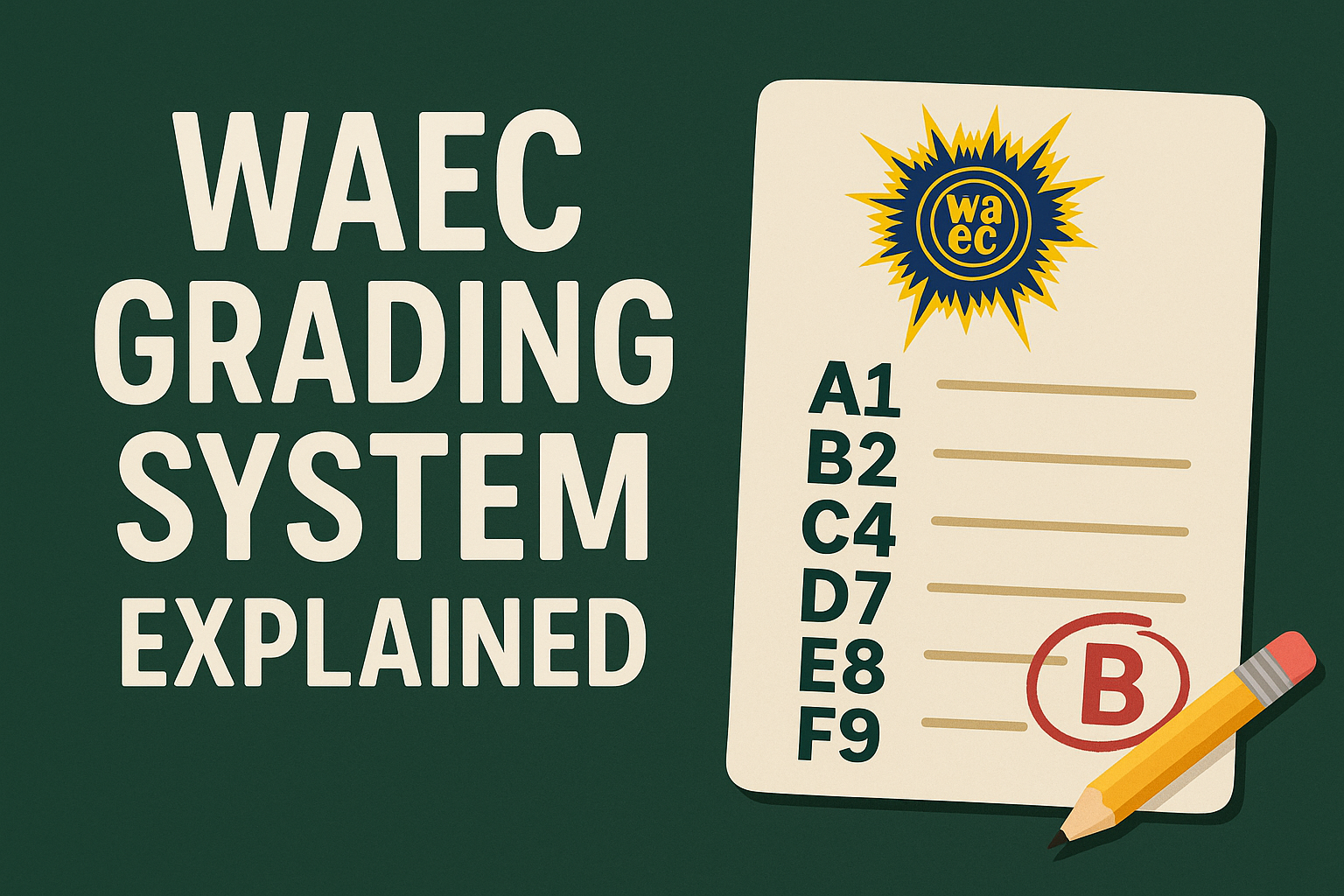
The WAEC grading system is a crucial component for students in West Africa, particularly those aiming for higher education or vocational training. Understanding how this system operates can significantly influence a student’s academic journey, and it’s more than just a set of letters or numbers. Let’s explore the intricacies of the WAEC grading system, its significance, and how it affects students.
Background of the WAEC Grading System
The West African Examinations Council (WAEC) was established in 1952 to conduct examinations and award certificates to students in member countries, including Nigeria, Ghana, Sierra Leone, and The Gambia. The WAEC grading system specifically pertains to the West African Senior School Certificate Examination (WASSCE), which assesses students’ knowledge after completing their secondary education.
Initially, the grading system was quite different, but over the years, WAEC has refined it to better reflect students’ understanding and abilities. Now, the system employs a grading scale from A1 to F9, with A1 being the highest and F9 representing a failure. This scale is vital as it not only serves as a measure of academic performance but also plays a significant role in university admissions. (See: West African Examinations Council overview.) (tips for scholarship applicants)
The Grading Scale Explained
The WAEC grading system uses a letter-based scale, which also corresponds to percentage ranges. Here’s a breakdown:
- A1: 75% – 100% (Excellent)
- B2: 70% – 74% (Very Good)
- B3: 65% – 69% (Good)
- C4: 60% – 64% (Credit)
- C5: 55% – 59% (Credit)
- C6: 50% – 54% (Credit)
- D7: 45% – 49% (Pass)
- E8: 40% – 44% (Pass)
- F9: 0% – 39% (Fail)
This grading scale is pivotal for students, as it not only reflects their performance but also impacts their opportunities for further education. For instance, many universities have set specific cut-off points for admission, often requiring at least five credits, including Mathematics and English. Thus, understanding where one falls in this grading system can determine a student’s future pathways.
Significance of the WAEC Grading System
Beyond its role in examinations, the WAEC grading system has broader implications. It can influence job opportunities, scholarships, and even a student’s self-esteem. For instance, a student who achieves A1 or B2 grades may find it easier to secure scholarships or positions in competitive programs. In contrast, lower grades might hinder access to higher education institutions.
Furthermore, the grading system is a reflection of the educational standards within the region. High performance in WAEC is often associated with a rigorous academic environment, which can be attractive to both local and international institutions. The grading system thus serves as a benchmark for assessing the overall quality of education in West Africa. (See: Centers for Disease Control and Prevention.)
Practical Insights for Students
Understanding the WAEC grading system is essential for students preparing for their exams. Here are some actionable tips to navigate through: We covered exploring micro scholarships in more detail.
- Set Realistic Goals: Knowing the grading scale allows you to set achievable targets. For example, if you aim for a B3 or better, you’ll need to focus your studies to meet that goal.
- Prioritize Core Subjects: Since universities often require credits in key subjects, prioritize your efforts in Mathematics and English to ensure you meet the basic requirements.
- Practice Past Questions: Familiarize yourself with the exam format and types of questions by practicing past WAEC exams. This can boost your confidence and performance.
- Time Management: Develop a study schedule that allocates time for each subject according to your strengths and weaknesses.
By proactively engaging with the WAEC grading system, students can better prepare themselves for the challenges of their examinations and future academic endeavors. (See: New York Times education articles.)
The Current Relevance of the WAEC Grading System
In today’s competitive educational landscape, the WAEC grading system remains highly relevant. With increasing competition for university placements, understanding this grading mechanism can give students a leg up. Moreover, as the digital age transforms education, there’s potential for WAEC to innovate its grading practices, perhaps incorporating technology to enhance understanding and tracking progress.
In conclusion, the WAEC grading system is not just a series of letters; it represents students’ hard work and determination. By grasping its nuances, students can make informed decisions that shape their academic and professional futures. So, whether you’re a student gearing up for exams or a parent guiding your child, familiarity with this system is crucial for success.
Trending Now
- Is Travel to Paris Summer 2023 Still a Good Idea? Here’s What You Need to Know
- our breakdown of discover the 2026 summer wellness reset: trends shaping your seasonal self-care
- Inside the Michael Biopic TikTok Trend:…
- our breakdown of rising summer travel costs in 2026: what every traveler needs to know
- this guide on why michael jackson is trending in 2026: the surprising reasons behind the buzz
Frequently Asked Questions
What is the WAEC grading system?
The WAEC grading system is a scale used in West Africa to evaluate students' performance in the West African Senior School Certificate Examination (WASSCE). It ranges from A1 (75%-100%) to F9 (0%-39%), serving as a critical measure for university admissions and academic assessment.
How does the WAEC grading scale work?
The WAEC grading scale consists of letter grades A1 to F9, each representing specific percentage ranges. A1 indicates excellent performance (75%-100%), while F9 signifies failure (0%-39%). This grading system is essential for determining students' eligibility for further education.
What are the implications of WAEC grades for university admissions?
WAEC grades significantly impact university admissions, as many institutions require students to have at least five credits, typically including core subjects. Higher grades improve chances of acceptance into competitive programs, making understanding the grading system crucial for students.
What percentage corresponds to a C6 in the WAEC grading system?
In the WAEC grading system, a C6 corresponds to a percentage range of 50% to 54%. This grade is classified as a credit, indicating satisfactory performance that can meet certain academic requirements for further education.
Why is the WAEC grading system important for students?
The WAEC grading system is vital for students as it not only reflects their academic performance but also influences their future educational opportunities. Understanding this system helps students strategize for university admissions and vocational training.
What did we miss? Let us know in the comments and join the conversation.

