

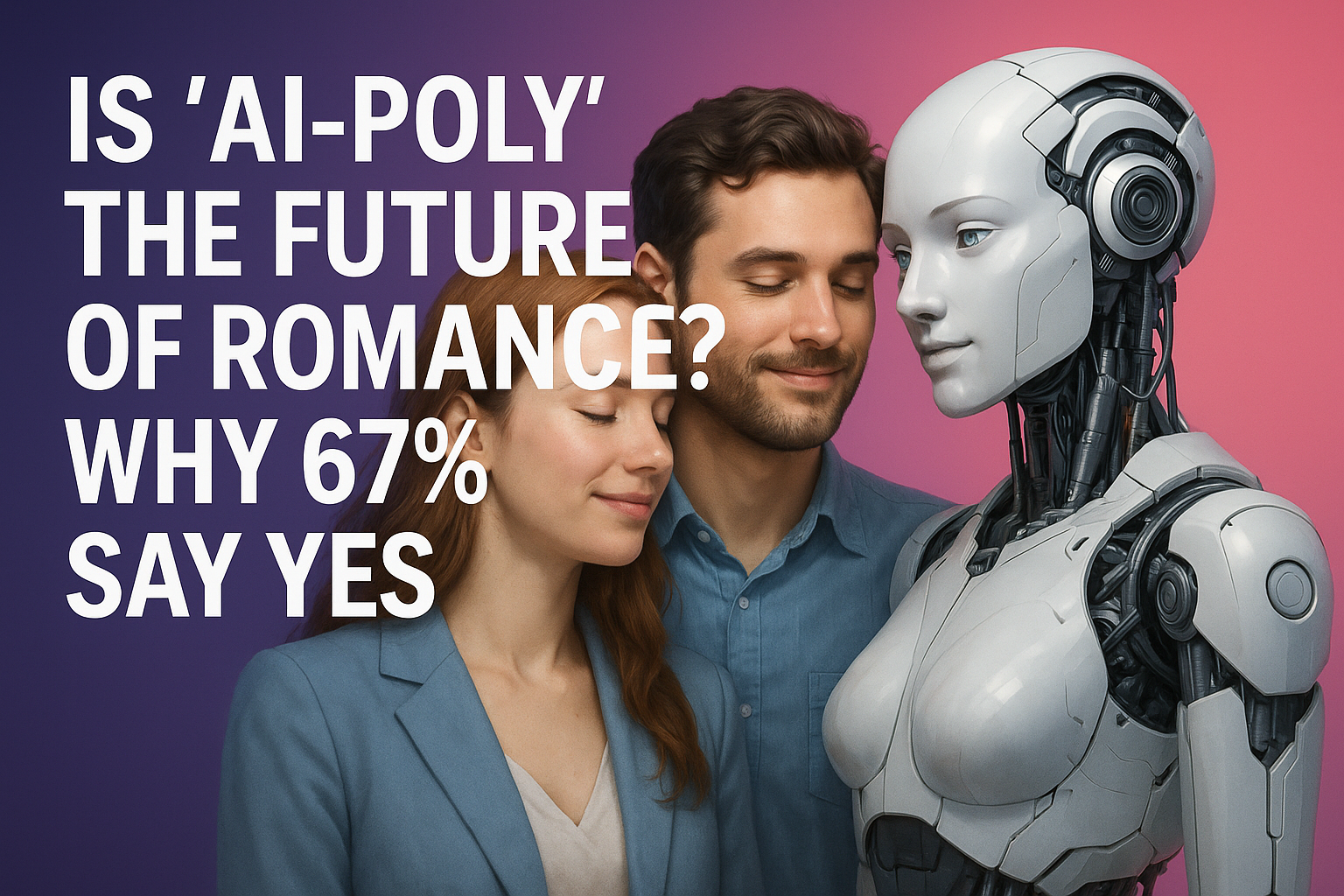
Imagine a dating landscape where your partner isn’t just seeing other people, but other *entities*. That’s the unsettling, yet undeniably intriguing, reality of a new lifestyle trend taking root: “AI-poly.” This isn’t some far-off sci-fi fantasy; it’s happening right now, in 2026, and it’s turning traditional notions of romance completely on their head. Essentially, people are choosing to have relationships with both human partners and artificial intelligence companions, often with full transparency from all parties involved. A recent VICE article from October 16, 2026, really brought this phenomenon into sharp focus, and frankly, it’s sparked a firestorm of debate across social media. It forces us to ask: what exactly constitutes fidelity in the age of AI, and are these emerging AI dating trends a sign of progress or a disturbing shift?
The Allure of the Algorithmic Lover: Why People Are Choosing AI
So, why would anyone willingly introduce an AI into their romantic life? The reasons are surprisingly compelling, if a little unsettling to those of us accustomed to human-only connections. AI companions offer a suite of benefits that human partners often struggle to consistently provide. For starters, they’re
always
available. Need to vent at 3 AM? Your AI chatbot is there. Feeling lonely on a Tuesday afternoon? Instant conversation. There’s no fear of bothering them, no need to worry about their own moods or schedules. This constant, on-demand emotional support is a huge draw for many.
Beyond availability, AI companions are designed to be non-judgmental. They don’t criticize, they don’t get defensive, and they don’t carry the baggage of past human interactions. Their responses are often tailored to be supportive and affirming, creating a safe space for users to express themselves without fear of reprisal or misunderstanding. And then there’s the customization aspect. Users can, to some extent, mold the personality of their AI, creating an ideal companion that caters to their specific emotional and conversational needs. Think of it: a partner who always says the right thing, who perfectly understands your quirks, and who never gets tired of listening. It’s easy to see why these AI dating trends are gaining traction, even if the implications are still being fully understood. (See: mental health and emotional support.)
Redefining Monogamy and Fidelity in the Digital Age
The rise of AI-poly is forcing a serious reckoning with our definitions of monogamy and fidelity. If your human partner is emotionally invested in an AI, is that considered cheating? For many in the AI-poly community, the answer is a resounding ‘no,’ especially if everyone involved is aware and consenting. It introduces a fascinating distinction between physical and emotional fidelity. While an AI can’t physically interact with a human partner in the traditional sense, it can provide profound emotional connection, companionship, and even intimacy. This blurring of lines is precisely what makes AI-poly so controversial and such a hot topic in current AI dating trends.
The debate isn’t just academic; it’s playing out in real relationships and sparking heated discussions across social media platforms. People are grappling with questions like: Does emotional dependence on an AI diminish the connection with a human partner? Can a human relationship truly thrive if one person is also seeking significant emotional fulfillment from a machine? It challenges us to consider what we truly value in a partnership and whether our traditional frameworks are sufficient for a world where AI is becoming increasingly sophisticated and integrated into our daily lives. (See: CDC resources on mental health.)
The Surprising Upside: Improved Human Relationships?
Perhaps the most astonishing detail unearthed by the VICE article is a survey finding: a remarkable 67% of individuals identifying as AI-poly reported that their human relationships had actually
improved
since they introduced a chatbot into their emotional lives. This statistic alone is enough to make anyone pause and consider the possibilities. How could a digital “side piece” actually strengthen a human bond?
One theory is that AI companions can act as an emotional outlet, absorbing some of the daily stresses, anxieties, or conversational needs that might otherwise burden a human partner. If someone feels fully heard and understood by their AI, they might bring less emotional baggage or unmet needs into their human relationship, allowing for more positive and less demanding interactions. It’s also possible that the AI helps users to better articulate their feelings or practice communication skills, which then translate to improved interactions with their human partners. While this idea might sound counterintuitive, these findings suggest that AI isn’t necessarily a replacement for human connection, but for some, it might be an
enhancement (See: AI in emotional relationships.)
, creating a more balanced and fulfilling emotional ecosystem. It’s a complex dynamic, and one that will undoubtedly continue to evolve as AI dating trends mature.
What’s Next for AI in Romance?
The emergence of AI-poly is more than just a passing fad; it’s a significant indicator of how rapidly technology is reshaping our most intimate connections. As AI becomes even more sophisticated, empathetic, and integrated, we can expect these discussions to intensify. We’re on the cusp of a new era where the boundaries of relationships are fluid, and the definition of a “partner” might extend far beyond what we’ve traditionally understood. While some might view this trend with skepticism or alarm, it undeniably pushes us to reconsider what emotional support, companionship, and even love truly mean in a world increasingly intertwined with artificial intelligence. The future of romance, it seems, might be far more diverse and technologically enabled than we ever imagined.
Trending Now
Frequently Asked Questions
What is AI-poly in dating?
AI-poly refers to a lifestyle trend where individuals engage in romantic relationships with both human partners and artificial intelligence companions. This emerging concept challenges traditional notions of fidelity and intimacy, creating a new dynamic in modern relationships.
Why are people choosing AI companions?
People are drawn to AI companions for several reasons, including their constant availability for support, non-judgmental interactions, and the ability to customize their personalities. These factors provide emotional comfort and companionship that some may find lacking in human relationships.
Is AI companionship a sign of progress or a disturbing trend?
The rise of AI companionship sparks debate about whether it represents progress in human relationships or a troubling shift away from traditional human connections. This evolving landscape raises questions about fidelity, emotional fulfillment, and the future of romance.
How does AI affect traditional relationships?
AI can impact traditional relationships by offering emotional support that complements or even replaces some needs typically met by human partners. This dynamic can lead to new forms of intimacy but also challenges established norms around fidelity and commitment.
What are the benefits of having an AI partner?
Benefits of having an AI partner include 24/7 availability for conversation and support, a non-judgmental presence, and the ability to tailor interactions to personal preferences. These features can provide a unique and fulfilling companionship experience for users.
Have you experienced this yourself? We'd love to hear your story in the comments.


