

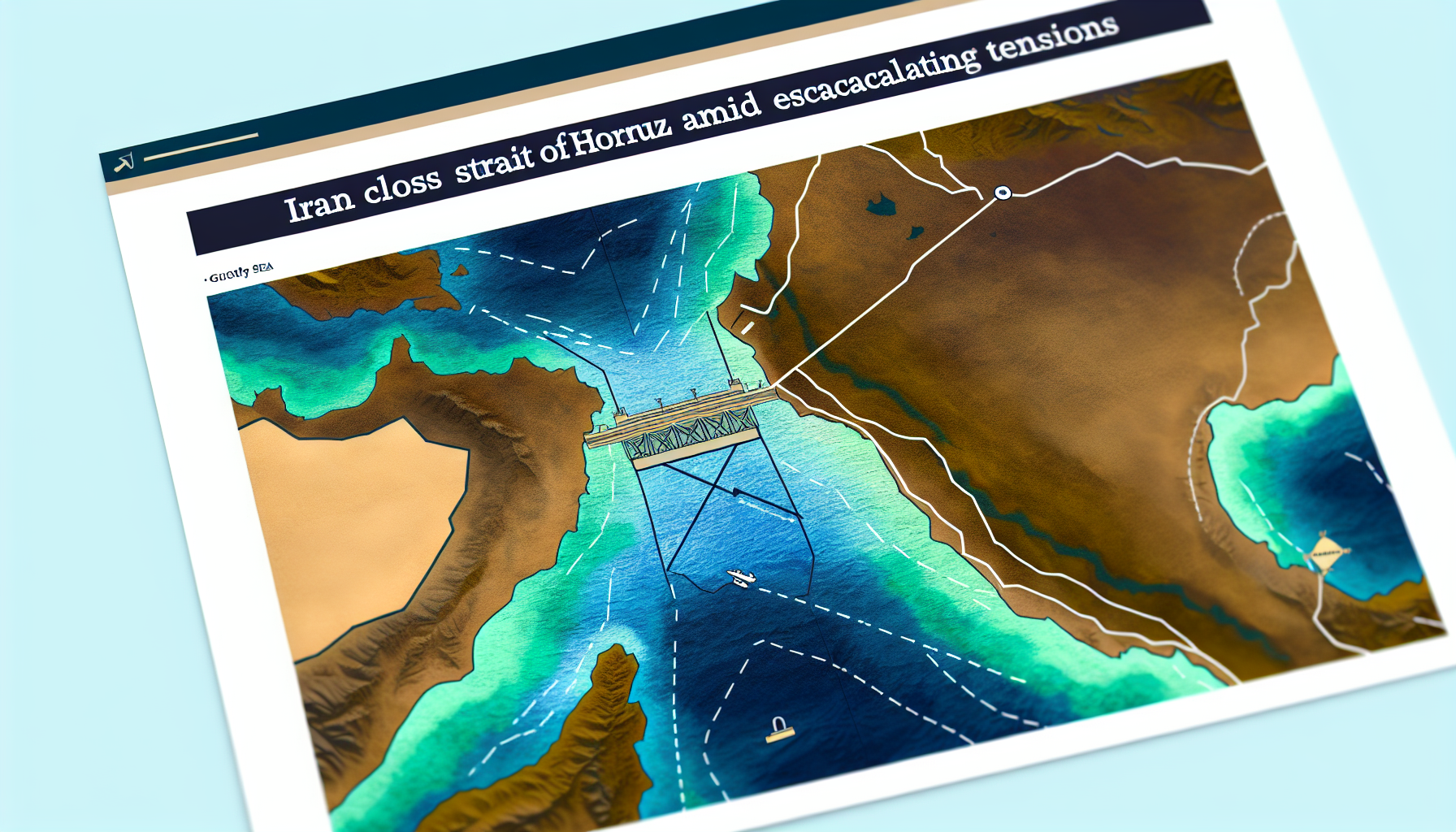
The geopolitical landscape of the Middle East has witnessed significant turmoil as Iran has announced the closure of the Strait of Hormuz, a critical maritime chokepoint for global oil shipments. This decision comes in direct response to a U.S. blockade of Iranian ports, escalating tensions that have been brewing for nearly two months.
The Strategic Importance of the Strait of Hormuz
The Strait of Hormuz is a vital artery for the global oil supply, with approximately one-fifth of the world’s oil passing through its waters. The closure of this strait not only threatens energy security for numerous nations but also risks profound economic repercussions worldwide. The Iranian Revolutionary Guard navy has firmly stated that the strait will remain closed until the U.S. lifts its blockade, which has raised alarms among international leaders and energy markets alike.
Recent Incidents in the Strait
Amid these tensions, two vessels have reportedly been attacked in the strait and off the coast of Oman. Iranian gunboats were involved in one of these assaults; however, both the tanker and its crew managed to escape without significant harm. Such incidents highlight the increasing danger present in these waters and the potential for miscalculation that could lead to broader conflicts.
The Human Cost of the Ongoing Conflict
The standoff in the region is not just a matter of geopolitical maneuvering; it has resulted in a staggering human toll. Reports indicate that the ongoing conflict has claimed the lives of at least 3,000 individuals in Iran and 2,300 in Lebanon. Additionally, there have been 23 fatalities in Israel, over a dozen in Gulf states, and 13 U.S. service members have also lost their lives since the hostilities began. This escalating violence underscores the dire humanitarian crisis developing in the region.
The Fragile Ceasefire
Despite the intensifying conflict, a fragile ceasefire has been holding for the past ten days between Israeli forces and Hezbollah. However, this relative calm was marred recently by the deaths of Israeli soldiers in Lebanon, which could jeopardize the truce and lead to further escalations.
Global Reactions and Economic Implications
As news of the Strait’s closure spreads, global markets are already feeling the effects. Oil prices have surged, driven by fears of supply shortages amid the ongoing conflict. Analysts warn that if the strait remains closed for an extended period, it could lead to a broader energy crisis, affecting consumer prices and economic stability across multiple nations.
International leaders are urged to intervene diplomatically in order to de-escalate tensions, as the potential for a military confrontation looms large. The U.S. administration is facing pressure to reassess its blockade strategy, which has been a catalyst for Iran’s recent aggressive actions.
Looking Ahead
The situation remains fluid, and the future of the Strait of Hormuz hangs in the balance. With the Revolutionary Guard’s commitment to maintaining the closure until the U.S. lifts the blockade, the potential for further military engagement could rise. As nations monitor the situation closely, the hope is that diplomatic measures can be revived to prevent an all-out conflict.
For now, the world watches and waits, aware that the consequences of this standoff extend far beyond the Middle East, influencing global energy markets, security policies, and humanitarian conditions. The coming days and weeks will be crucial in determining whether peace can be restored or whether this latest flare-up will spiral into a larger regional conflict. We covered Brutal conflict impacting inflation in more detail.


