

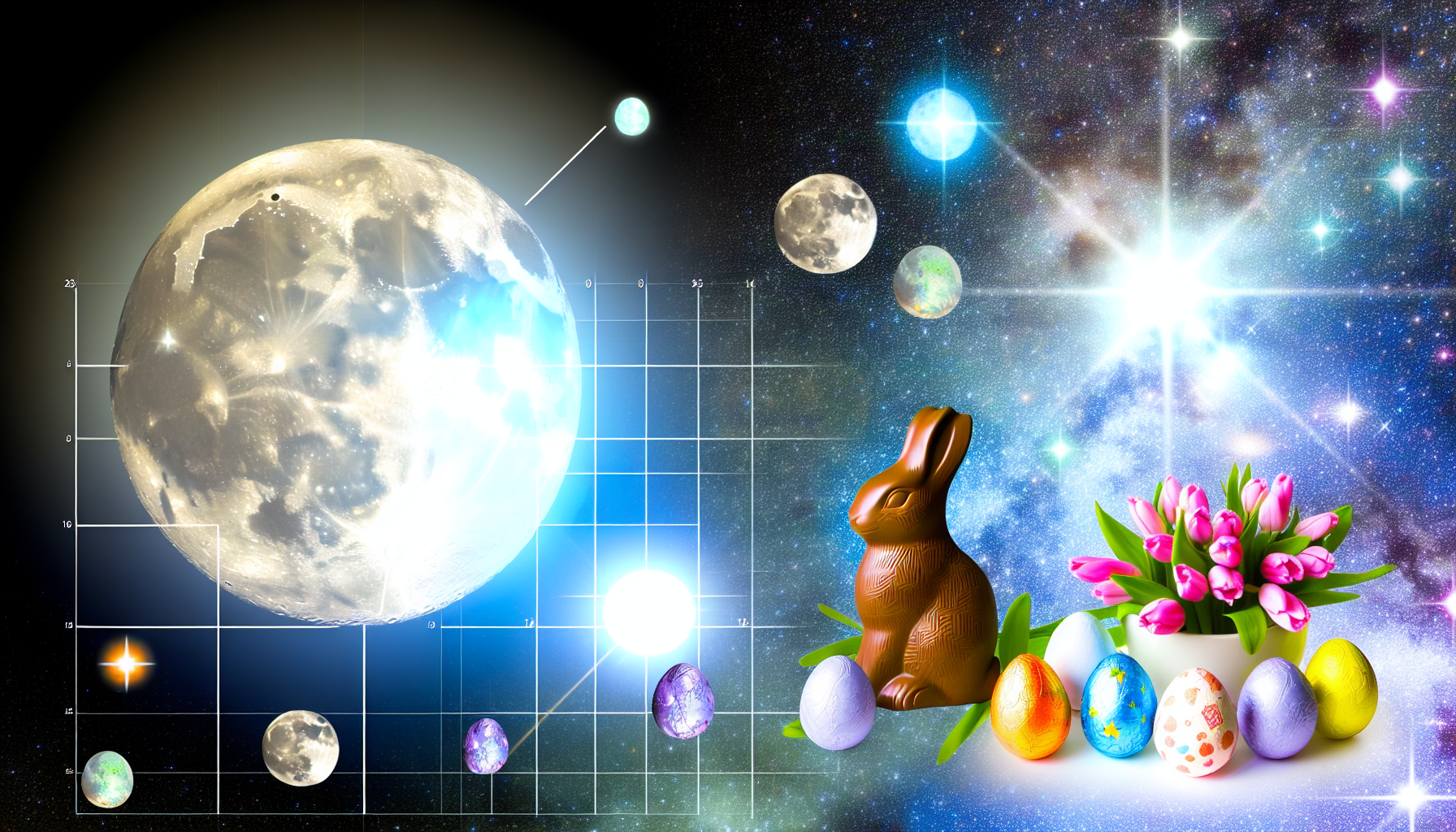
The Connection Between the Full Moon and Easter
Each year, millions of Christians around the globe celebrate Easter, but the date of this significant holiday is not fixed. Instead, it is determined by the lunar calendar, specifically by the first full moon of spring. In 2026, this celestial event will occur on April 1, playing a pivotal role in the timing of Easter.
The Ecclesiastical Calculation of Easter
The method for determining Easter’s date is rooted in a system established by the Church that connects the timing of Easter to the cycles of the moon. This system is known as the ecclesiastical approximation. It defines Easter as the first Sunday after the first full moon that follows the vernal equinox, which is typically fixed on March 21. This means that Easter can be celebrated as early as March 22 and as late as April 25.
The Role of the Vernal Equinox
The vernal equinox marks the moment in spring when day and night are approximately equal in length, signaling the arrival of longer days and warmer temperatures. While the actual equinox can vary slightly each year, for the purposes of calculating Easter, it is standardized to March 21. This simplification allows for a consistent approach to determining the holiday’s date.
April’s Full Moon: A Key Date in 2026
In 2026, the first full moon of spring will occur on April 1. According to the ecclesiastical rules, this means that if the full moon rises on or after the vernal equinox, Easter will be celebrated on the following Sunday. In 2026, this falls on April 4, making it a significant date for Christian communities around the world.
The Significance of Full Moons in the Calendar
The relationship between lunar phases and the calendar has long fascinated astronomers and religious scholars alike. The lunar cycle, lasting approximately 29.5 days, has been used for millennia to track time and mark important events. The full moon, in particular, serves as a marker for various cultural and religious observances.
Historical Context of Easter’s Calculation
The process for determining Easter’s date was formalized in 325 AD during the First Council of Nicaea. The council aimed to establish a unified method for celebrating Easter among Christians, as varying practices had emerged. By connecting Easter to the vernal equinox and the full moon, the Church sought to maintain a link to the Jewish calendar, which is also lunar-based, and ties the Passover celebration to Easter.
Modern Observations of Easter
Today, Easter is celebrated by numerous Christian denominations, including Roman Catholics, Protestants, and Orthodox Christians, although they may calculate the date differently. For example, many Eastern Orthodox churches use the Julian calendar, which results in a different date for Easter than that observed by Western churches.
The Broader Implications of Lunar Calendars
Beyond Easter, the use of lunar calendars has implications for various religious and cultural festivities worldwide. For instance, the Islamic calendar is entirely lunar, resulting in holidays like Ramadan shifting each year relative to the Gregorian calendar. Similarly, Jewish holidays, including Passover, are also determined by lunar cycles.
Understanding the Lunar Influence on Agriculture
The moon’s phases have been used not only for religious observances but also in agricultural practices. Farmers often plant and harvest crops according to the lunar calendar, believing that the moon’s gravitational pull affects soil and plant growth. This ancient wisdom continues to influence modern agricultural practices in many cultures.
Conclusion: The Harmony of Faith and Astronomy
The connection between the lunar calendar and Easter highlights the intersection of faith and astronomy. As we look forward to the full moon on April 1, 2026, it serves as a reminder of the intricate systems that govern our calendar and the traditions that shape our cultural and religious identities. This cosmic dance between the Earth, the moon, and the sun continues to influence our lives in profound ways, reminding us of the importance of celestial events in marking time and guiding our celebrations.


