

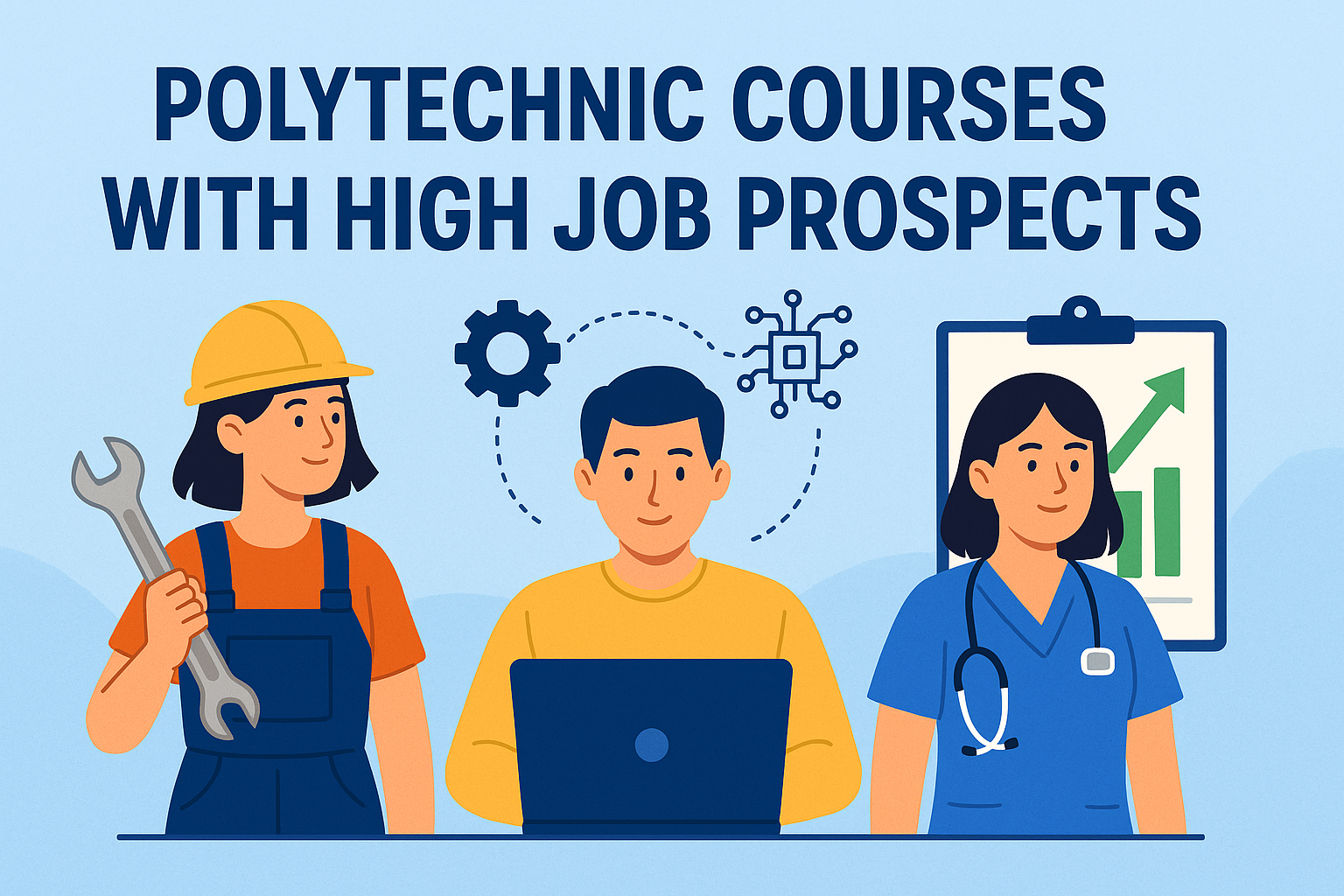
In today’s competitive job market, educational pathways play a crucial role in securing a stable career. As industries evolve and technology advances, the demand for skilled professionals continues to rise. Polytechnic courses, known for their practical, hands-on approach, have emerged as a popular choice among students seeking high job prospects. In this article, we’ll explore some of the most promising polytechnic courses and why they stand out in terms of career opportunities.
Understanding Polytechnic Education
Polytechnic institutions differ from traditional universities by focusing on skill development and technical education. They offer programs that are specifically designed to meet the needs of industries, providing students with both theoretical knowledge and practical experience. This unique blend makes polytechnic courses highly relevant in today’s job environment. Market Analysis Insights offers useful background here.
With an increasing emphasis on STEM (Science, Technology, Engineering, and Mathematics) fields, polytechnic education has become a stepping stone for many students. Graduates often find themselves in high demand, as employers seek candidates who can immediately contribute to their teams. (See: impact of technology on job market.)
Top Polytechnic Courses with High Job Prospects
Several polytechnic courses have consistently shown strong job prospects, catering to various interests and skills. Here’s a look at some of the most sought-after programs:
- Information Technology (IT): With the digital landscape expanding rapidly, IT professionals are in high demand. Courses in software development, cybersecurity, and data analysis prepare students for roles that are critical in businesses today.
- Engineering Technology: Specializations in civil, mechanical, and electrical engineering technology can lead to lucrative positions. These programs focus on practical applications and often include internships with leading companies.
- Health Sciences: As the healthcare industry grows, so does the need for trained professionals. Courses in nursing, radiology, and laboratory technology equip students with the necessary skills to enter this essential field.
- Hospitality Management: The tourism and hospitality sector is booming globally. Programs that teach hotel management, event planning, and culinary arts are not only practical but also offer diverse career opportunities.
- Automotive Technology: With the rise of electric vehicles and advanced automotive systems, this field is rapidly evolving. Courses that focus on automotive repair, diagnostics, and engineering are increasingly relevant.
- Graphic Design and Multimedia: As businesses increasingly rely on digital marketing and branding, skilled graphic designers are crucial. Programs that cover design principles, digital media production, and user experience design are highly regarded.
- Construction Management: This course prepares students for roles in project management, cost estimation, and construction supervision. With urban development on the rise, skilled professionals in this field are essential.
The Importance of Practical Experience
One of the standout features of polytechnic courses is the emphasis on practical experience. Many programs include internships, co-op placements, or hands-on projects that allow students to apply their learning in real-world scenarios. This not only enhances their resumes but also develops professional networks, which can be invaluable when entering the job market.
Employers often value candidates with practical experience more than those with purely theoretical backgrounds. Graduates from polytechnic programs can demonstrate their abilities and problem-solving skills, making them more attractive candidates. We covered top aerospace engineering schools in more detail.
Current Relevance and Future Prospects
As we navigate through a rapidly changing job landscape, the relevance of polytechnic courses with high job prospects cannot be overstated. The World Economic Forum has projected that up to 85 million jobs may be displaced by a shift in labor between humans and machines by 2025, emphasizing the need for workers with specialized skills. (See: importance of education in workforce.)
In response to these trends, polytechnic institutions are continuously updating their curricula to incorporate emerging technologies and skills. This adaptability ensures that graduates remain competitive in the job market. Fields like artificial intelligence, renewable energy, and biotechnology are expected to grow, and polytechnic courses are increasingly aligning with these industry demands.
Choosing the Right Polytechnic Course
When considering a polytechnic course, it’s essential to assess your interests, strengths, and career aspirations. Research potential career paths related to each course and evaluate the job market in your area. Speak with current students or alumni to gain insights into the course and its outcomes. (See: current trends in job prospects.) For more on this, see career education frameworks.
Moreover, consider the course’s alignment with industry trends and the availability of internships or job placement assistance offered by the institution. A well-rounded program that not only teaches skills but also prepares you for real-world challenges can significantly enhance your employability.
In summary, polytechnic courses with high job prospects can open doors to fulfilling careers. By emphasizing practical skills and industry relevance, these programs equip students with the tools they need to succeed. Whether you’re drawn to technology, healthcare, or creative fields, there’s likely a polytechnic course that’s right for you. Explore your options, and take the first step toward a promising future!
Trending Now
- Vocational Course: Kailan Ito Mas Mabuti…
- this guide on best jamb lesson apps for android
- the complete explanation
- Law School Journey: From College to Bar Exam
Frequently Asked Questions
What are the best polytechnic courses for job prospects?
Some of the best polytechnic courses for job prospects include Information Technology, Engineering Technology, and Health Sciences. These fields are in high demand due to the rapid advancements in technology and the growing need for skilled professionals.
Why choose a polytechnic education over a traditional university?
Polytechnic education focuses on skill development and practical training tailored to industry needs, making graduates more employable. This hands-on approach equips students with relevant experience and knowledge that aligns with current job market demands.
What industries are hiring polytechnic graduates?
Industries such as Information Technology, engineering, healthcare, and manufacturing are actively seeking polytechnic graduates. These sectors value the practical skills and technical knowledge that polytechnic programs provide, leading to high employment rates for graduates.
How do polytechnic courses prepare students for careers?
Polytechnic courses prepare students for careers by combining theoretical knowledge with practical experience, often through internships and hands-on projects. This approach ensures that graduates are ready to meet the challenges of their respective fields and contribute effectively from day one.
What is the significance of STEM in polytechnic education?
STEM (Science, Technology, Engineering, and Mathematics) is crucial in polytechnic education as it aligns with current job market trends. Polytechnic programs focusing on STEM fields equip students with the skills needed for high-demand roles, contributing to their employability and career success.
What did we miss? Let us know in the comments and join the conversation.


