

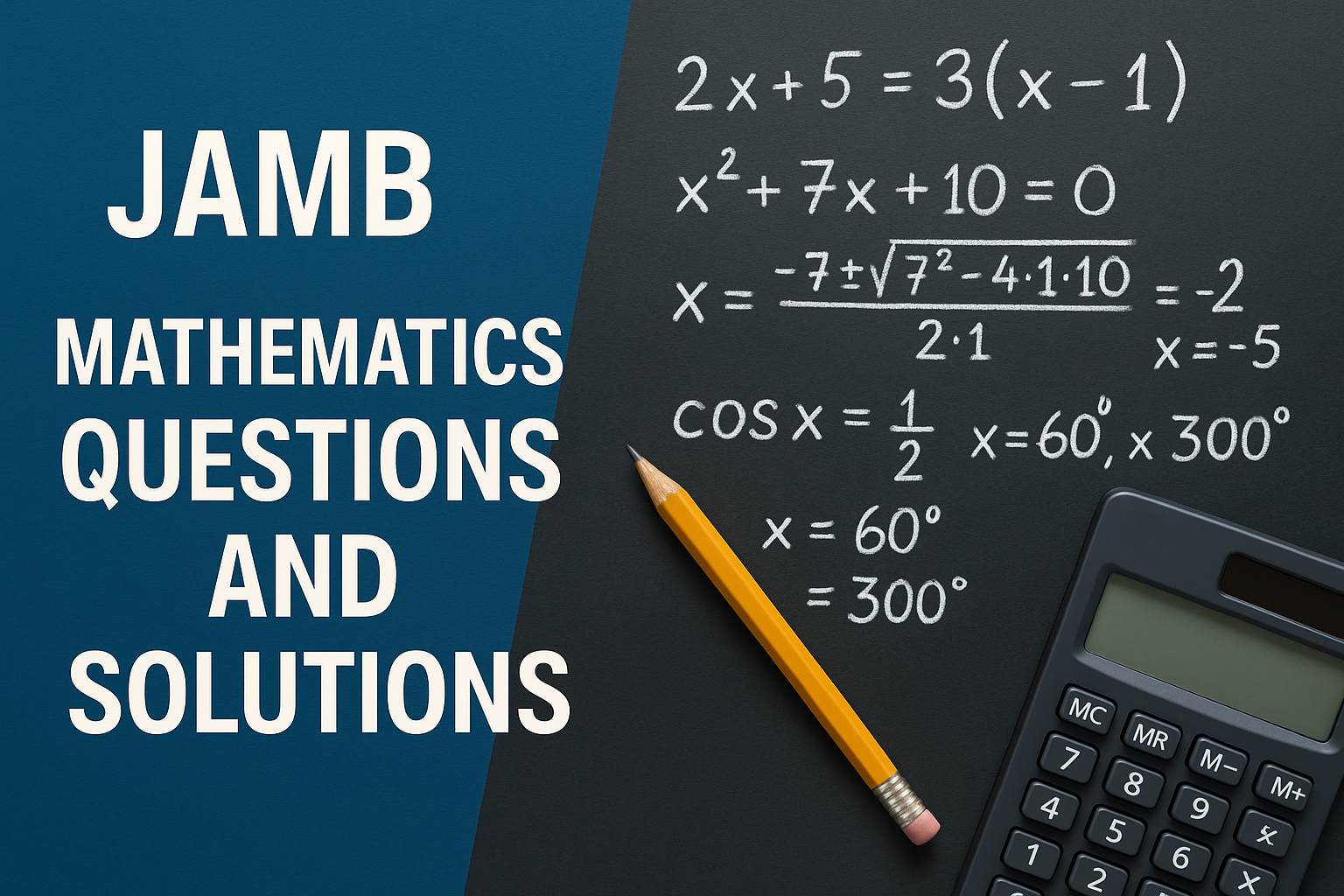
The Joint Admissions and Matriculation Board (JAMB) exam is a critical gateway for students aiming to enter higher education in Nigeria. Among the various subjects tested, Mathematics is often seen as the most challenging. With its complex problems and logical reasoning requirements, many students find themselves in need of effective JAMB Mathematics Solutions to help them succeed.
Understanding JAMB and Its Importance
Established in 1978, JAMB conducts entrance examinations for various tertiary institutions in Nigeria. The significance of this exam cannot be overstated; it not only determines a student’s admission into universities, polytechnics, and colleges but also plays a role in the educational direction of the nation. The Mathematics component of this examination assesses a student’s ability to apply mathematical concepts, solve problems, and think critically — skills that are essential in any academic pursuit.
The Structure of JAMB Mathematics Questions
JAMB Mathematics questions typically cover a wide range of topics, including algebra, geometry, trigonometry, and statistics. Understanding the structure and common themes of these questions can drastically improve a student’s performance. For instance, questions may be formatted as:
- Multiple-choice questions (MCQs)
- Problem-solving scenarios
- Data interpretation
- Word problems that require logical reasoning
According to past examination patterns, students can expect a balance between basic calculations and more complex problem-solving tasks. For example, in the 2022 JAMB exam, about 40% of the questions were directly related to algebra, while geometry and trigonometry accounted for approximately 30%. This emphasizes the need for students to focus equally on all areas of the syllabus.
Effective Study Strategies for JAMB Mathematics
To tackle the JAMB Mathematics section successfully, students must adopt effective study strategies. Here are some practical tips: (See: Joint Admissions and Matriculation Board.)
- Understand the Syllabus: Familiarize yourself with the JAMB Mathematics syllabus. Knowing what topics are covered can help focus your studies and identify areas that need more attention.
- Practice with Past Questions: Regularly solving past JAMB Mathematics questions can build familiarity and confidence. This practice helps in identifying patterns and the types of problems frequently presented.
- Join Study Groups: Collaborating with peers can provide different perspectives on problem-solving. Engaging in discussions can also clarify complex topics.
- Seek Professional Help: If you’re struggling with specific areas, consider enrolling in preparatory classes or seeking online resources. Many platforms offer detailed JAMB Mathematics Solutions that breakdown specific problems.
Incorporating these strategies into your study routine not only aids retention but also boosts your problem-solving speed, which is vital during the timed exam.
Current Trends and Resources for JAMB Mathematics Preparation
With the rise of technology, preparing for the JAMB Mathematics exam has become more accessible. Numerous online platforms now provide interactive resources, including video tutorials, quizzes, and forums where students can discuss JAMB Mathematics Solutions. Related reading: Mathematics teaching strategies.
Some noteworthy resources include:
- Online Learning Platforms: Websites like Khan Academy and Coursera offer free courses that cover essential mathematical concepts.
- Mobile Apps: Apps specifically designed for JAMB preparation, such as “JAMB CBT Practice App”, provide practice questions and simulated exams to enhance readiness.
- YouTube Channels: Channels dedicated to JAMB preparation often feature step-by-step explanations of challenging problems, making it easier to digest complex information.
Moreover, current trends indicate that students are increasingly relying on social media groups and forums for tips, advice, and community support. Engaging with others who are preparing for the same exam can create a motivational environment. (See: importance of education in youth.)
The Role of JAMB Mathematics Solutions in Success
Ultimately, finding effective JAMB Mathematics Solutions can drastically influence exam outcomes. Not only do these solutions provide clarity on solving specific types of problems, but they also aid in developing a mathematical mindset required for higher education. (problem-solving in education)
Common Mistakes to Avoid
While preparing for the JAMB Mathematics exam, students often fall into specific traps that can hinder their performance. Here are some common pitfalls:
- Ignoring Weak Areas: Many students prefer to focus on their strengths while neglecting topics they find challenging. Make sure to allocate time for all topics, especially those that are difficult for you.
- Rushing Through Practice Questions: It’s important to take your time with practice questions. Rushing can lead to careless mistakes that could cost you points on the exam.
- Neglecting Time Management: During the exam, managing your time effectively is crucial. Practice with timed quizzes to improve your speed and accuracy.
Frequently Asked Questions (FAQ)
1. What are the best resources for JAMB Mathematics preparation?
Consider using a mix of online courses, mobile apps, and past question papers. Engaging with study groups can also enhance your understanding.
2. How can I improve my problem-solving speed for the exam?
Consistent practice with a timer can help you get used to the pace needed for the exam. Focus on understanding the concepts behind problems rather than just memorizing solutions.
3. Are there specific topics that are more frequently tested?
Algebra, geometry, and statistics are commonly featured in the exams. Review past papers to identify which topics appear more often.
4. How do I cope with exam anxiety?
Practicing relaxation techniques, maintaining a consistent study schedule, and simulating exam conditions can help reduce anxiety and boost confidence.
As you prepare for your JAMB Mathematics exam, remember that success is a mix of understanding, practice, and strategic preparation. Equip yourself with the right tools, leverage available resources, and approach your studies with confidence. The right preparation can turn what seems like a daunting task into an achievable goal.
Trending Now
- our breakdown of discover the 2026 summer wellness reset: trends shaping your seasonal self-care
- the complete explanation
- our breakdown of rising summer travel costs in 2026: what every traveler needs to know
- read the full story
Frequently Asked Questions
What topics are covered in JAMB Mathematics?
JAMB Mathematics questions cover a variety of topics, including algebra, geometry, trigonometry, and statistics. Understanding these areas is crucial for success, as students will encounter both basic calculations and complex problem-solving scenarios in the exam.
How can I prepare for JAMB Mathematics effectively?
Effective preparation for JAMB Mathematics involves adopting strategic study methods. Students should practice past questions, focus on weak areas, and utilize study materials that cover the entire syllabus to enhance their problem-solving skills and conceptual understanding.
What is the format of JAMB Mathematics questions?
JAMB Mathematics questions are typically presented in various formats, including multiple-choice questions, problem-solving scenarios, data interpretation, and word problems. Familiarity with these formats can help students approach the exam with confidence.
Why is JAMB Mathematics important for students?
JAMB Mathematics is crucial as it assesses students' ability to apply mathematical concepts and solve problems, skills that are essential for success in higher education. Performance in this section can significantly influence admission into tertiary institutions in Nigeria.
What percentage of JAMB Mathematics questions are algebra-related?
Based on past examination patterns, approximately 40% of JAMB Mathematics questions are related to algebra. This highlights the importance of focusing on algebraic concepts while also ensuring a balanced preparation across other topics like geometry and trigonometry.
Have you experienced this yourself? We'd love to hear your story in the comments.


