

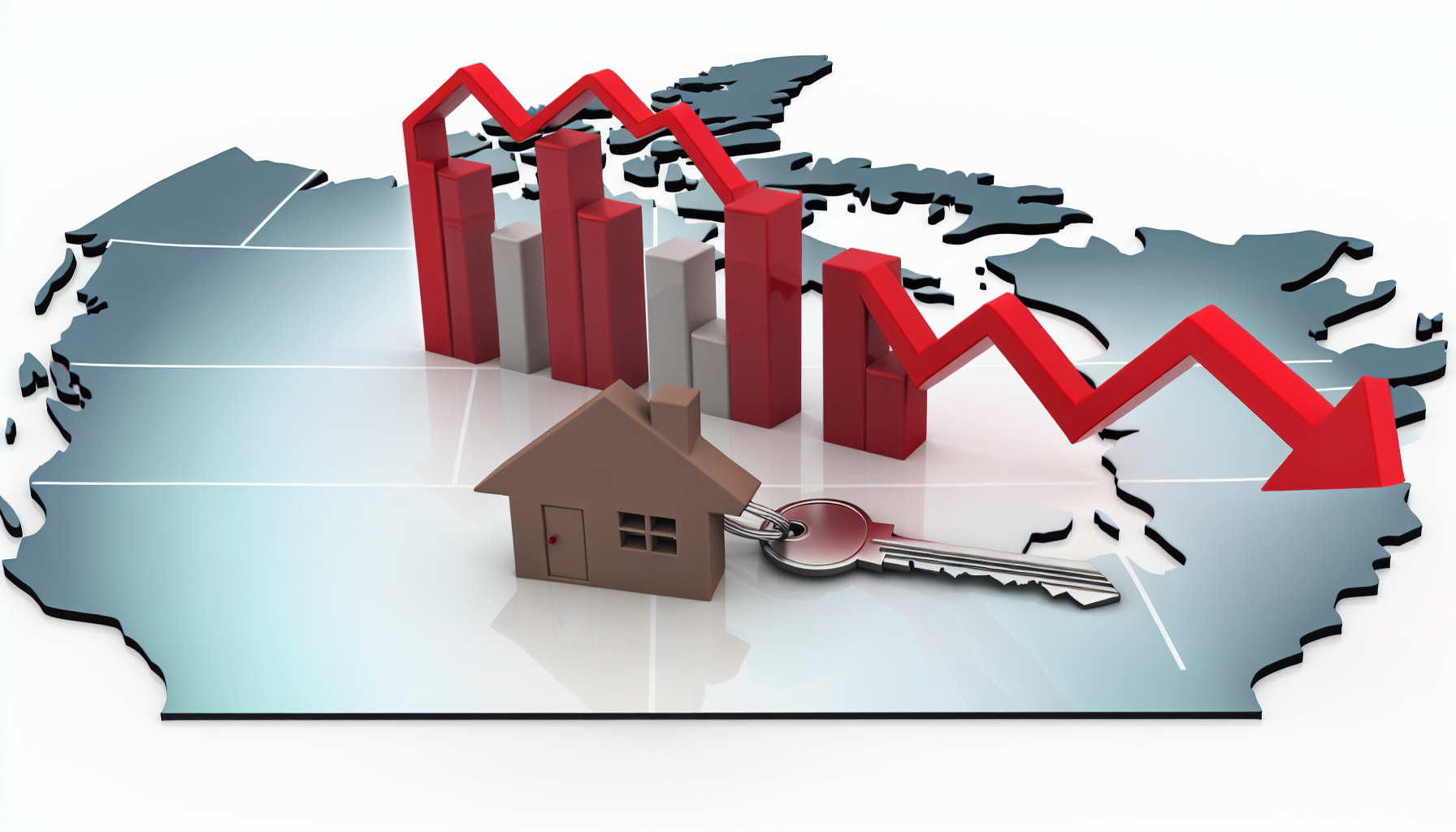
Current Trends in Canadian Home Prices
As the Canadian real estate market continues to evolve, recent reports indicate a notable trend: home prices are declining in several major cities across the country. With economic factors such as rising interest rates and fluctuating inventory levels influencing buyer sentiment, the landscape of real estate is changing. Cities like Halifax, Hamilton, Toronto, Vancouver, and Victoria are among those experiencing significant drops in home values, prompting a closer look at the current state of the market.
Cities Experiencing Price Declines
According to the latest data, the following cities are witnessing considerable decreases in home prices:
- Halifax: The city has recently joined the ranks of those experiencing declines, reflecting a broader trend in the region.
- Hamilton: Home prices in Hamilton have decreased by 8%, indicating a shift in the market dynamics.
- Toronto: Once a hotbed for real estate investment, Toronto has seen a 7% drop in home prices.
- Vancouver: Known for its high property values, Vancouver’s market has cooled, with a 5% decline.
- Victoria: This picturesque city has experienced the most significant drop among the mentioned cities, with home prices falling by 9%.
Factors Influencing the Market
Several economic factors are contributing to the downward trend in home prices across these cities. The primary factors include:
- Interest Rates: The Bank of Canada has raised interest rates in an effort to combat inflation, making borrowing more expensive for prospective homebuyers. Higher mortgage rates often deter buyers, leading to decreased demand and subsequently lower prices.
- Inventory Levels: An increase in available housing inventory has also played a role. As more homes enter the market, buyers have a wider selection, which can lead to price competition and downward pressure on home values.
- Economic Sentiment: Concerns about the overall economy, including potential recessions and job market fluctuations, have made buyers more cautious about entering the housing market.
The Impact on Homeowners and Buyers
The decline in home prices has mixed implications for homeowners and potential buyers. For existing homeowners, particularly those who may have purchased at peak market prices, the decrease in home values can be concerning. Many may find themselves in a position where their home equity has diminished, potentially affecting their ability to sell or refinance.
On the other hand, the cooling market presents an opportunity for first-time buyers or those looking to upgrade their living situations. With lower prices, buyers may find it easier to enter the market or secure homes that were previously out of reach. However, the increased interest rates may still pose challenges in terms of affordability.
Regional Variations and Future Outlook
While the aforementioned cities are experiencing noticeable declines, it is essential to recognize that the Canadian real estate market is not monolithic. Different regions can exhibit varying trends due to localized economic conditions, population growth, and employment opportunities.
Looking ahead, experts suggest that if economic conditions remain stable, the housing market may continue to stabilize, with prices leveling off rather than plummeting further. However, if interest rates continue to rise, or if there are significant economic shocks, the market could face additional challenges.
Conclusion
The current state of the Canadian real estate market presents a complex picture, with home prices experiencing declines in several major cities. Factors such as rising interest rates, inventory levels, and overall economic sentiment are contributing to this trend. While existing homeowners may face challenges, potential buyers could find new opportunities in a cooling market. As conditions evolve, stakeholders will need to stay informed and adapt to the changing landscape of Canadian real estate. This builds on impact of interest rates.


