

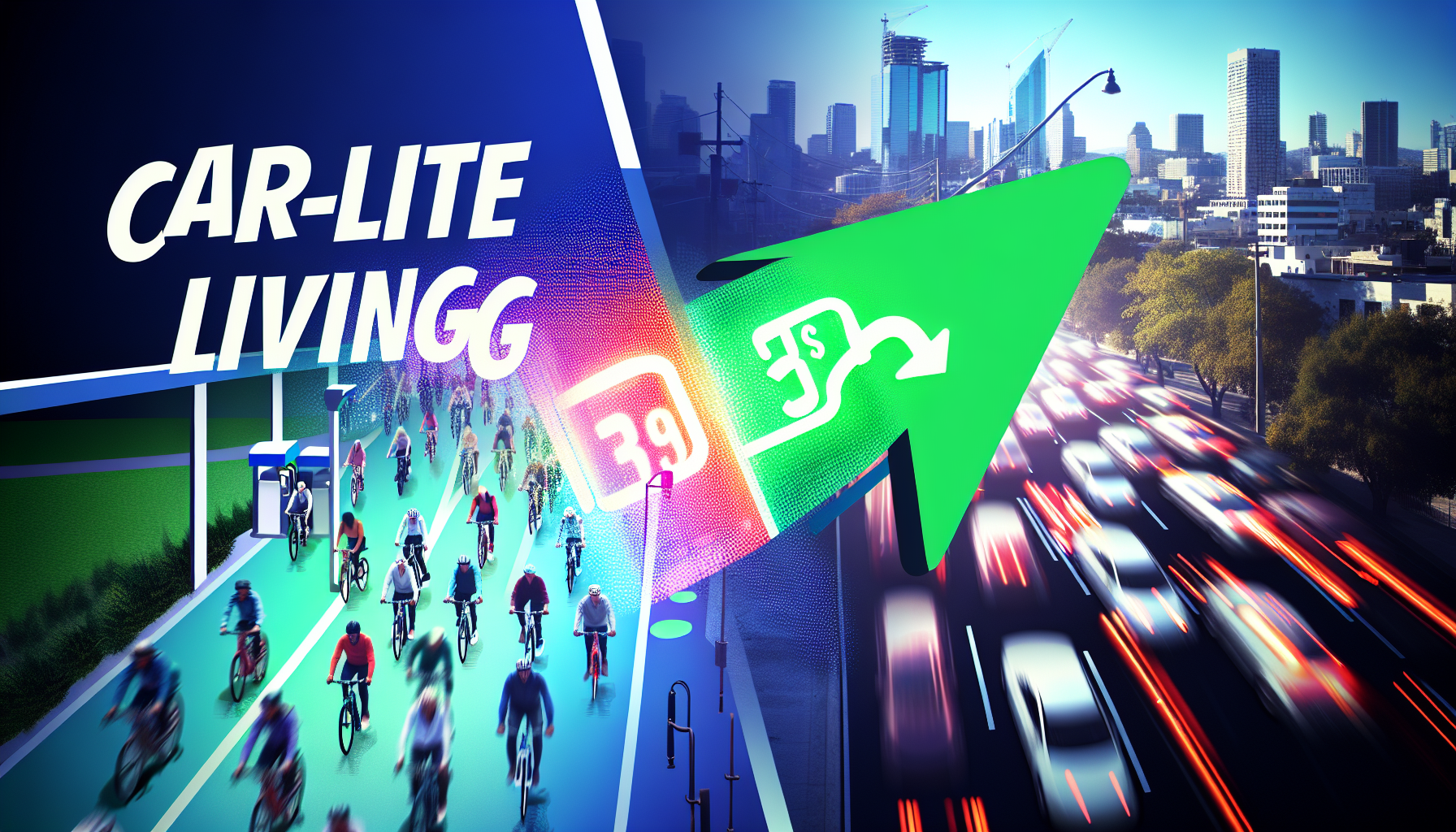
As the price of gasoline surges past the $4 mark, many individuals are beginning to rethink their transportation choices. This latest oil price shock has not only affected the wallets of everyday consumers but also prompted a significant behavioral shift towards alternative commuting methods. For some, like Stu Strickland, this shift has led to the adoption of a ‘car-lite’ lifestyle that incorporates biking and public transport into their daily routines.
The Current Oil Price Landscape
The recent spike in oil prices is reminiscent of past shocks in the energy market, each of which has historically led to changes in commuting behaviors. The current environment, marked by geopolitical tensions and supply chain disruptions, has resulted in gasoline prices soaring to heights not seen in years. As families and individuals feel the pinch at the pump, many are exploring options that can alleviate their dependence on fossil fuels.
Stu Strickland’s ‘Car-Lite’ Approach
Stu Strickland, a resident of Pittsburgh, is one of many who have embraced the ‘car-lite’ philosophy. This lifestyle encourages reduced car usage in favor of alternative modes of transportation. Strickland has made a conscious effort to incorporate biking and public transport into his daily life. He highlights how this transition has not only saved him money but has also contributed positively to his overall well-being.
Adapting to Rising Costs
“When gas prices hit $4 a gallon, I knew I had to change my habits,” Strickland explains. “Biking to work and using public transit has not only cut my fuel costs but has also made my commute far less stressful.”
Strickland’s experience reflects a growing trend among urban residents who are seeking ways to navigate the financial burden of high fuel prices. According to a recent survey conducted by the American Public Transportation Association, over 50% of respondents indicated they would consider using public transportation more frequently if gas prices remained elevated.
Historical Context of Oil Price Shocks
This isn’t the first time that oil price shocks have led to transformative changes in commuting habits. The 1970s oil crisis, for instance, prompted a significant shift towards fuel-efficient vehicles and public transportation use. Similarly, the 2008 spike in oil prices saw a renewed interest in biking as a viable commuting alternative.
Historically, as fuel costs rise, so does the demand for alternative transportation solutions. Cities across the United States have observed a corresponding increase in public transit ridership as individuals seek to cut costs. For many, the prospect of spending less on gas is a strong motivator to explore different commuting options.
Impacts on Urban Infrastructure
The shift towards a ‘car-lite’ lifestyle has broader implications for urban planning and infrastructure. Cities are increasingly investing in bike lanes, public transit systems, and pedestrian-friendly developments to accommodate this trend. The National Highway Traffic Safety Administration has noted a significant uptick in bicycle sales and usage, indicating a societal shift towards more sustainable commuting methods.
- Increased Bike Lane Development: Cities are expanding bike lane networks to encourage cycling as a safe alternative.
- Public Transit Investment: Transit authorities are enhancing services and frequency to meet rising demand.
- Pedestrian-Focused Planning: Urban areas are being redesigned to prioritize foot traffic over vehicle access.
Personal and Environmental Benefits
The benefits of adopting a ‘car-lite’ lifestyle extend beyond just financial savings. For many, biking and using public transportation contribute to improved mental and physical health. Strickland notes, “I feel more energetic and less stressed since I started biking to work. It’s a great way to start my day.”
Moreover, reducing car usage not only alleviates personal financial burdens but also has positive environmental impacts. Fewer cars on the road mean reduced carbon emissions and less air pollution, contributing to a healthier planet. This dual benefit of economic and environmental sustainability resonates with an increasing number of consumers.
Challenges Ahead
While the ‘car-lite’ approach presents numerous advantages, it is not without its challenges. Urban infrastructure in many cities still lags behind the growing demand for safe cycling and effective public transport options. Additionally, there remains a significant portion of the population that relies heavily on cars due to geographic or lifestyle constraints.
The Future of Commuting
As gas prices fluctuate, the potential for long-term changes in commuting habits remains. While some may revert to their previous driving habits when prices eventually drop, the current oil price shock serves as a wake-up call for many to reconsider their transportation choices.
Ultimately, the shift towards a ‘car-lite’ lifestyle could lead to a more sustainable future, encouraging individuals to adopt healthier habits while simultaneously reducing their carbon footprint. As cities adapt to these changing habits, the hope is that a comprehensive framework for sustainable urban mobility will emerge, paving the way for more environmentally friendly commuting options.


