

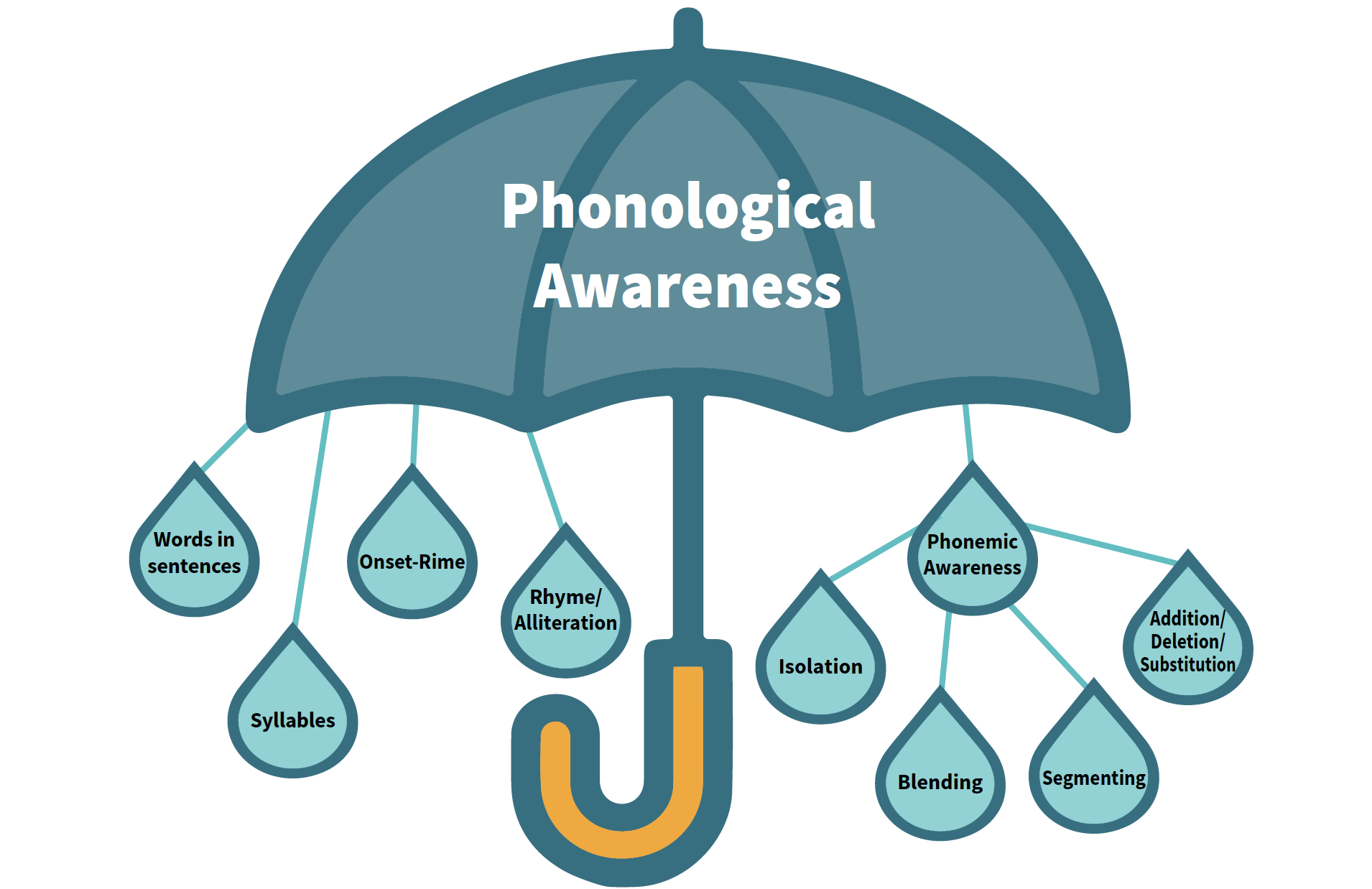
Phonological awareness is a broad skill set that encompasses the ability to recognize and manipulate the sound structure of spoken language. It is an umbrella term that includes various levels of sound awareness, from larger units like words and syllables to smaller units like phonemes. Phonological awareness is a critical precursor to reading and spelling success, as it helps children understand how spoken language relates to written language.
Key components of phonological awareness include:
Word awareness: Recognizing individual words in sentences
Syllable awareness: Identifying and manipulating syllables within words
Rhyme awareness: Recognizing and producing rhyming words
Onset-rime awareness: Identifying the initial sound (onset) and the rest of the syllable (rime)
Phonemic awareness: Manipulating individual sounds in words
Phonological awareness develops along a continuum, typically progressing from larger to smaller sound units. It is often taught through various activities, such as clapping syllables, identifying rhymes, and playing with word sounds. Strong phonological awareness skills provide a solid foundation for learning to read and write.


