

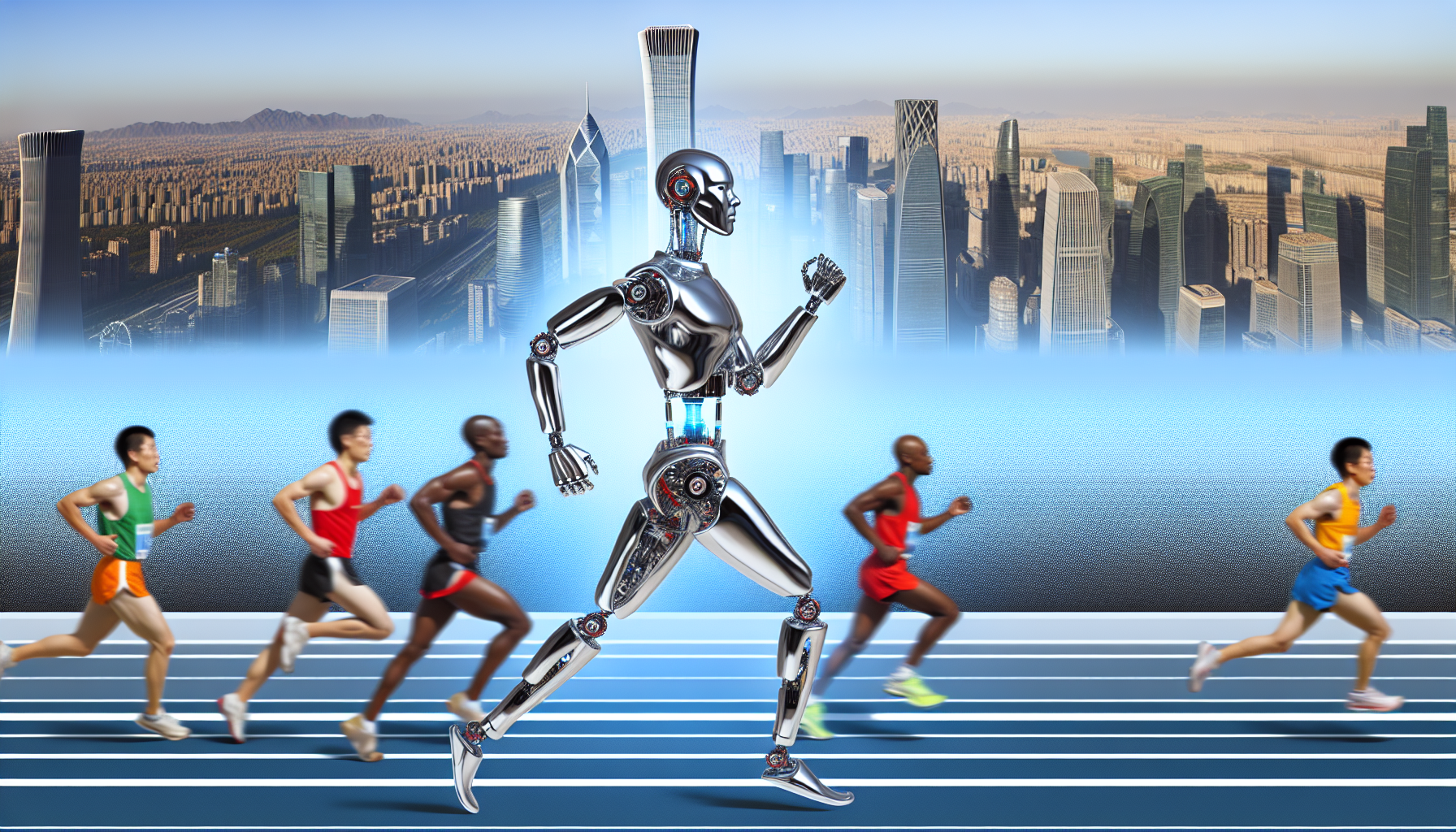
In a groundbreaking event that underscores the rapid advancements in robotics, a humanoid robot developed by Chinese smartphone manufacturer Honor has made headlines by winning a half-marathon in Beijing. On April 19, 2026, the robot completed the 21-kilometer (13-mile) race in an impressive time of 50 minutes and 26 seconds, surpassing the previous human world record for the distance.
The Event and Its Significance
The race took place in the Beijing Economic-Technological Development Area (Beijing E-Town), a region known for its focus on technological innovation. The triumph of the Honor humanoid robot not only highlights the capabilities of current robotics technology but also raises questions about the future of human and machine competition in sports.
As stated by state media outlet Global Times, the victory was not just a simple demonstration of speed; it showcased the robot’s sophisticated onboard navigation system, which allowed it to autonomously navigate the course while adhering to the event’s weighted scoring rules. This achievement marks a significant milestone in the field of robotics, emphasizing the potential for humanoid robots to perform complex tasks independently.
Details of the Race
The half-marathon event featured two categories: one for autonomous robots and another for remotely-controlled machines. The Honor humanoid robot, which competed autonomously, finished with a time that has now set a new benchmark in robotic racing.
- **Winning Time**: 50 minutes and 26 seconds
- **Distance**: 21 kilometers (13 miles)
- **Event Location**: Beijing E-Town
Interestingly, a separate remotely-controlled robot from Honor achieved a faster raw time of 48 minutes and 19 seconds. However, due to the nature of its control, this robot was not eligible for the same accolades as its autonomous counterpart.
Technological Advancements Behind the Success
The success of the humanoid robot can be attributed to several technological advancements:
- Onboard Navigation: The robot utilized advanced algorithms to navigate the course, allowing it to adjust its path in real-time based on environmental factors.
- Mechanical Design: Engineers at Honor focused on creating a lightweight yet sturdy frame, optimizing the robot’s speed without compromising stability.
- Artificial Intelligence: AI-driven decision-making processes enabled the robot to optimize its pace and energy consumption throughout the race.
These elements combined to create a machine capable of not just participating in a race but excelling at it, raising the bar for future robotic competitions.
Implications for the Future of Robotics
The implications of a humanoid robot completing a half-marathon faster than any human athlete are profound. As robotics technology continues to evolve, the potential applications of such machines extend far beyond competitive sports. In fields such as healthcare, manufacturing, and logistics, robots capable of high levels of autonomy can enhance productivity and efficiency.
This event also prompts discussions about the ethical implications of robots competing against humans. As machines become more capable, the line between human and machine performance blurs, leading to questions about fairness, competition, and the role of technology in sports.
The Reaction from the Robotics Community
Reactions from experts in the robotics field have been largely positive, with many praising the achievement as a testament to China’s leadership in robotics innovation. Researchers and engineers are encouraged by the advancements demonstrated by the Honor robot, viewing it as a catalyst for further research and development.
“This event marks a significant leap forward in our understanding of what robots can achieve,” said Dr. Li Wei, a robotics professor at Tsinghua University. “It opens up new avenues for exploration in autonomous technologies and their applications in real-world scenarios.”
A Glimpse into the Future
As the field of robotics continues to progress, events like the half-marathon in Beijing serve as a vital reminder of the potential for machines to outperform humans in various domains. The Honor humanoid robot’s victory is not merely a technological feat; it is a glimpse into a future where robots could play an integral role in society, enhancing our capabilities and perhaps even competing alongside us in various arenas.
As we look ahead, the intersection of sports and technology may evolve dramatically, offering new forms of entertainment and competition that challenge our perceptions of athleticism and achievement. The road ahead is filled with possibilities, and as robotics continues to advance, it will be fascinating to see what the next chapter holds for both human athletes and their robotic counterparts.


