

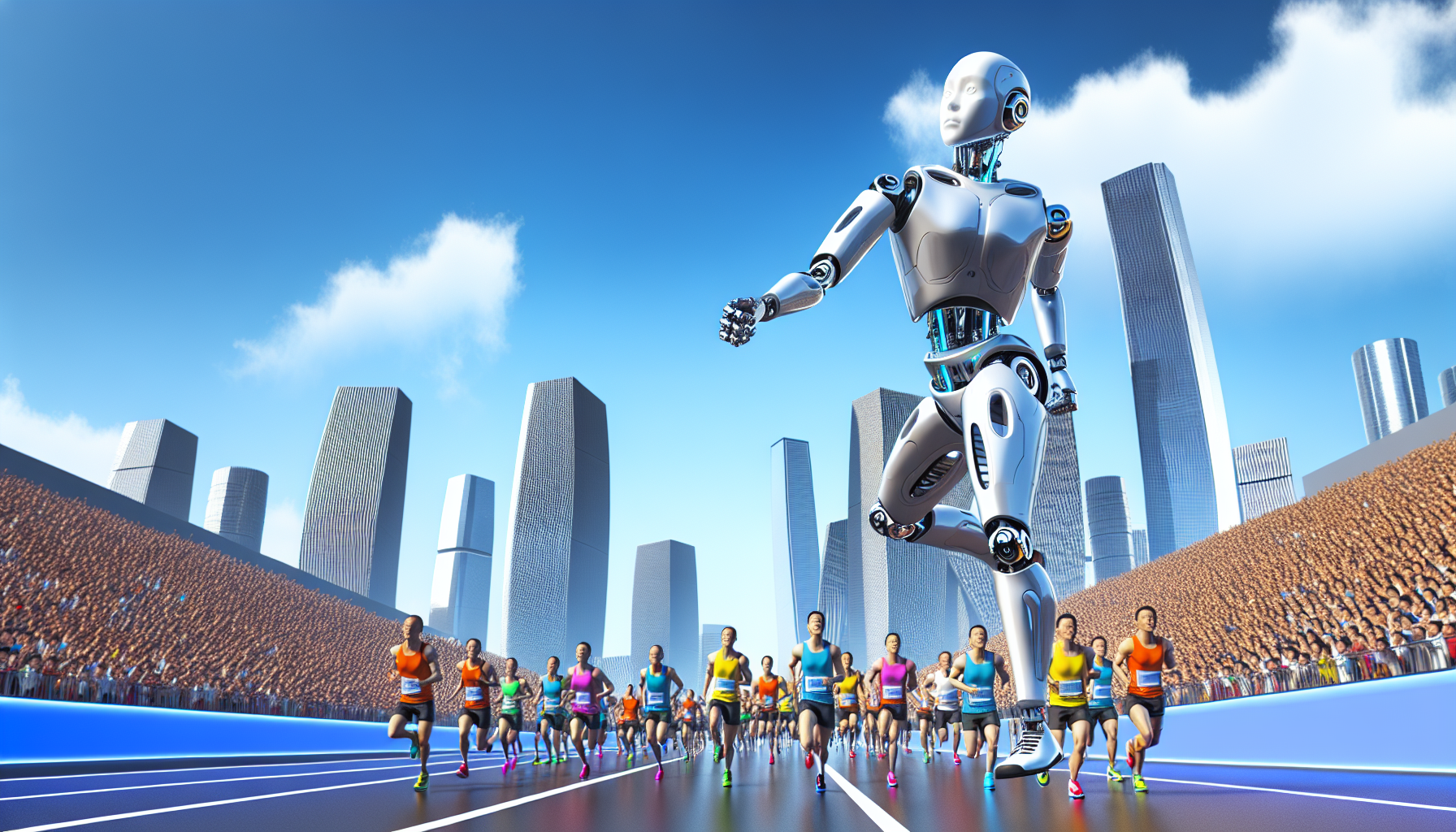
In a groundbreaking event that underscores the rapid advancements in robotics and artificial intelligence, a humanoid robot developed by Chinese smartphone manufacturer Honor has made headlines by winning a half-marathon race in Beijing. This remarkable achievement took place in the Economic-Technological Development Area of Beijing (Beijing E-Town) on April 16, 2023.
A Historic Victory
The humanoid robot completed the 21-kilometer (13-mile) course in an astonishing time of 50 minutes and 26 seconds. This feat not only secured the robot’s victory but also eclipsed the existing human half-marathon world record, showcasing the potential of AI and robotics in competitive sports.
While a separate remotely-controlled Honor robot also participated and finished the race in an impressive 48 minutes and 19 seconds, it was the autonomous navigation model that claimed victory under the event’s weighted scoring rules. This differentiation highlights the significant strides made in robot autonomy and decision-making capabilities.
The Significance of the Achievement
This milestone marks a pivotal moment in the realm of robotics, reflecting China’s commitment to becoming a global leader in AI technology. As reported by the state media outlet Global Times, the success of Honor’s humanoid robot not only demonstrates its advanced engineering but also serves as an inspiration for future developments in robotic capabilities.
Advancements in Robotics and AI
The humanoid robot’s performance is a culmination of years of research and development in artificial intelligence, machine learning, and robotics. Engineers have worked tirelessly to create a machine that can navigate complex terrains, adapt to environmental variables, and make real-time decisions—traits that are essential for any athlete competing in endurance sports.
- Autonomous Navigation: The robot’s ability to navigate autonomously allowed it to adapt to the race environment, avoiding obstacles and making swift decisions.
- Speed and Agility: The humanoid design contributes to its speed, allowing it to mimic human running patterns effectively.
- Data Processing: Advanced sensors and processing capabilities enable the robot to analyze its performance metrics in real-time.
Implications for Future Competitions
The victory of the humanoid robot has sparked discussions about the future of robotics in sports and competitions. As the line between human and machine blurs, questions arise regarding the fairness and ethics of allowing robots to compete alongside humans.
While this event was specifically designed for robotic participants, future competitions may need to establish clear guidelines regarding the participation of such machines. The technological advancements showcased by Honor’s robot could lead to more events that feature AI and robotics, either in competitive formats or as demonstrations of technological prowess.
The Future of Robotics in Athletics
As we look toward the future, the implications of this victory extend beyond athletics. The advancements in robotics and AI technology have the potential to revolutionize various industries, from healthcare to manufacturing. The skills developed in creating high-performing robots can be adapted for use in medical robotics, disaster response, and beyond.
- Healthcare: Robots equipped with AI could assist in surgeries or rehabilitation.
- Manufacturing: Automated robots can increase efficiency and reduce human error in production lines.
- Disaster Response: Robots can be deployed in hazardous environments where human lives are at risk.
Conclusion
The humanoid robot’s remarkable performance in the half-marathon has not only set a new standard in competitive robotics but also highlighted the rapid pace of innovation in artificial intelligence. As these technologies continue to evolve, the potential applications are limitless, and the future of robotics in various fields looks promising.
The success of Honor’s robot in Beijing serves as a testament to human ingenuity and the power of technology. As we continue to explore the capabilities of robots, one thing is clear: the race between humans and machines is just beginning, and the outcomes may transform our world in ways we can only begin to imagine.


