

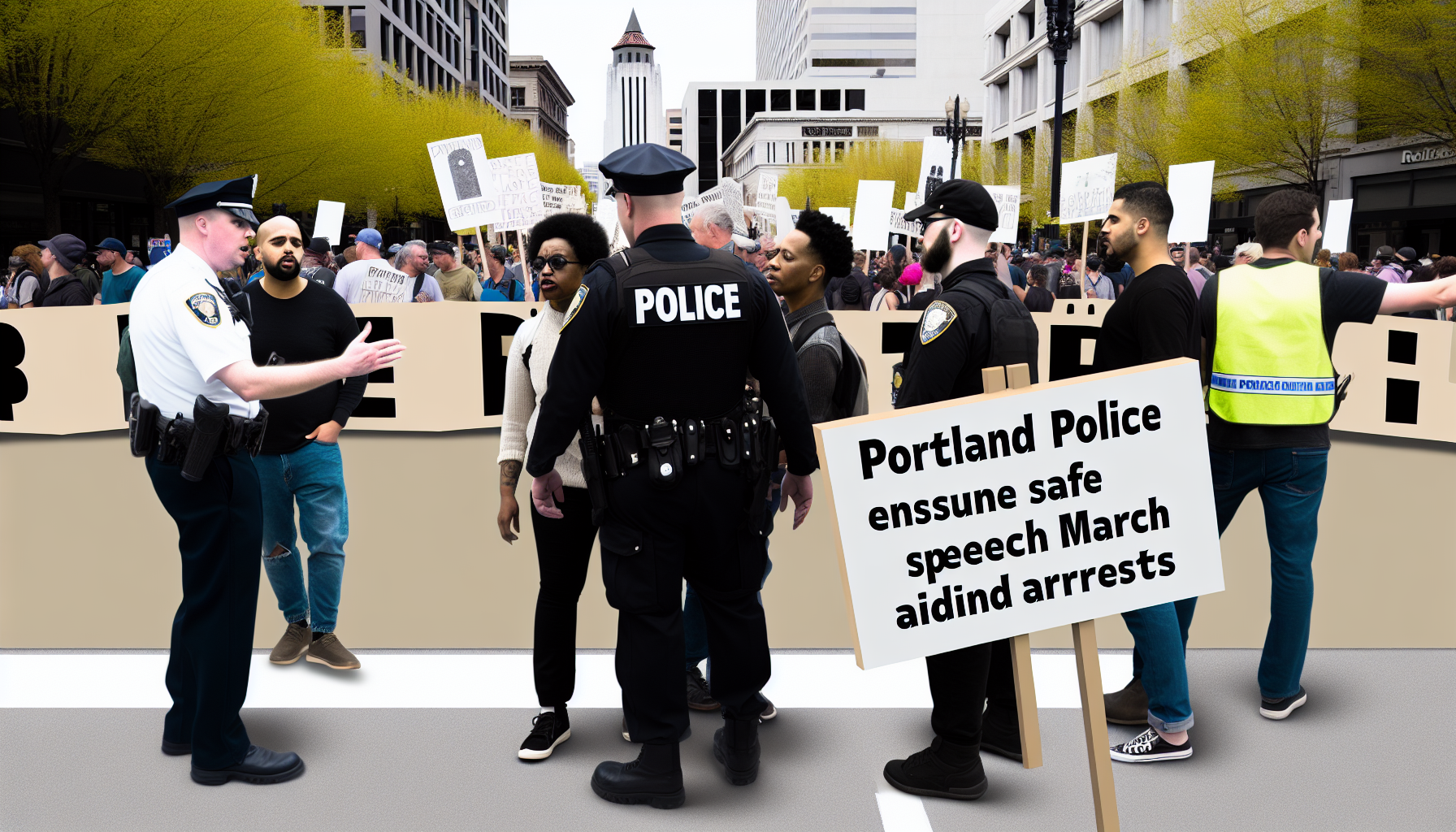
On March 28, 2026, the Portland Police Bureau (PPB) facilitated a significant free speech gathering and march, emphasizing the importance of lawful expression while maintaining public safety. The event turned tense as evening protests took place near an Immigration and Customs Enforcement (ICE) facility in the South Waterfront area, leading to the arrest of three individuals.
Context of the Gathering
The event was organized to express dissent against ICE policies, which have been a focal point of controversy in Portland and across the nation. Activists have consistently rallied to highlight issues surrounding immigration enforcement and its impact on communities. This march follows a series of similar protests since mid-2025, which have seen a rising tide of public sentiment against the agency.
Arrests Made During Evening Protests
Despite the PPB’s efforts to ensure a peaceful demonstration, tensions escalated during the evening hours, prompting police action. The PPB reported three arrests, marking a significant moment in ongoing protests against ICE in the region. The individuals taken into custody include:
- Isiah A. Lee, 26 years old, charged with Criminal Mischief in the First Degree and Criminal Trespass in the Second Degree.
- Isaias Laguna, 21 years old, charged with Criminal Mischief in the Second Degree, Disorderly Conduct, and Criminal Trespass.
- Robert Stoms, 37 years old, charged with Criminal Mischief in the Second Degree.
These incidents add to a growing tally of arrests related to ICE protests, bringing the total to 89 since June 2025, a period marked by heightened activism against immigration enforcement policies.
The Role of the Portland Police Bureau
The PPB has consistently emphasized its commitment to facilitating safe environments for free speech. By implementing strategies aimed at managing large crowds, the Bureau seeks to balance the rights of protesters with community safety. In the lead-up to the event, the PPB collaborated with organizers to establish guidelines for the gathering, aiming to minimize potential conflicts.
Chief of Police, Chuck Lovell, stated, “Our goal is to support the constitutional right to free speech while ensuring the safety of all participants and community members. We are prepared to respond appropriately should any laws be broken during these gatherings.” This proactive approach underscores the Bureau’s recognition of the delicate nature of protests, particularly those centered around contentious issues such as immigration.
Public Reaction and the Broader Impact
The arrests during the March 28 gathering have sparked discussions within the community about the implications of law enforcement’s involvement in peaceful protests. Many supporters of the protesters argue that the arrests reflect a broader crackdown on dissenting voices, particularly those challenging the government’s immigration policies.
On social media, reactions have been mixed. Supporters of the arrests argue that they were necessary to uphold the law, while critics contend that they undermine the fundamental right to free speech. This dichotomy highlights the complexities surrounding protests in contemporary society, where differing viewpoints often clash.
Continued Activism Against ICE
The ongoing protests against ICE in Portland are part of a larger national movement advocating for immigration reform and the protection of immigrant rights. Activists are increasingly vocal about their opposition to ICE’s practices, which they claim contribute to family separations and community fear.
Following the March 28 protest, organizers have vowed to continue their efforts, indicating that demonstrations will persist until significant changes are made regarding immigration policies. This commitment reflects a broader trend among grassroots movements across the United States, as activists unite to challenge systemic issues related to immigration enforcement.
Conclusion
The events surrounding the free speech gathering on March 28 serve as a reminder of the ongoing tensions between law enforcement and activists in the context of immigration policy. While the PPB’s role in facilitating peaceful protests is commendable, the arrests highlight the challenges that arise when free speech intersects with public safety concerns. As Portland continues to grapple with these issues, the voices of activists remain a critical component of the dialogue surrounding immigration reform in America.
As the situation evolves, it remains essential for both law enforcement and community members to engage in constructive conversations about the right to protest, public safety, and the complexities of immigration policy. The future of activism in Portland will undoubtedly be shaped by these ongoing discussions and the actions taken by all stakeholders involved.


