

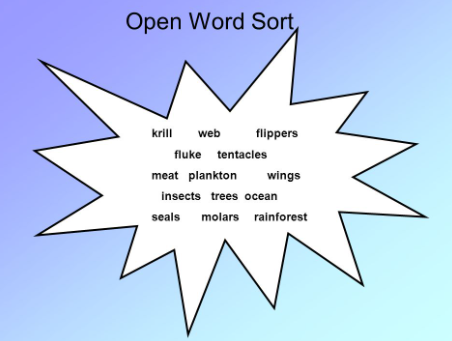
Open word sorting is a research technique used in user experience (UX) design, information architecture, and cognitive psychology. It involves participants grouping words or concepts into categories that make sense to them, without predefined categories or limitations.
The process typically includes:
- Presenting participants with a set of words or concepts on cards or digital interface
- Asking participants to sort these items into groups based on their own logic
- Having participants name or describe the categories they’ve created
Key benefits of open word sorting include:
- Revealing users’ mental models and thought processes
- Identifying natural groupings and associations
- Informing the structure of websites, applications, or information systems
This method is particularly useful in:
- Designing navigation systems for websites
- Organizing content in user interfaces
- Understanding how users categorize and relate different concepts
Open word sorting differs from closed word sorting, where categories are predefined. The open approach allows for more organic and user-centered results, often revealing unexpected patterns or relationships.
Researchers and designers use the insights gained from open word sorting to create more intuitive and user-friendly information architectures, ensuring that the organization of information aligns with users’ expectations and mental models.


