

Kwanzaa, a week-long celebration honoring African American culture and heritage, is rich with meaningful terms and concepts. Understanding these key Kwanzaa terms is essential to fully appreciate the depth and significance of this holiday.
- Kwanzaa: The name itself comes from the Swahili phrase “matunda ya kwanza,” meaning “first fruits of the harvest.” Created by Dr. Maulana Karenga in 1966, Kwanzaa is celebrated from December 26 to January 1.
- Nguzo Saba: Meaning “Seven Principles” in Swahili, these are the core values of Kwanzaa:
- Umoja (Unity)
- Kujichagulia (Self-Determination)
- Ujima (Collective Work and Responsibility)
- Ujamaa (Cooperative Economics)
- Nia (Purpose)
- Kuumba (Creativity)
- Imani (Faith)
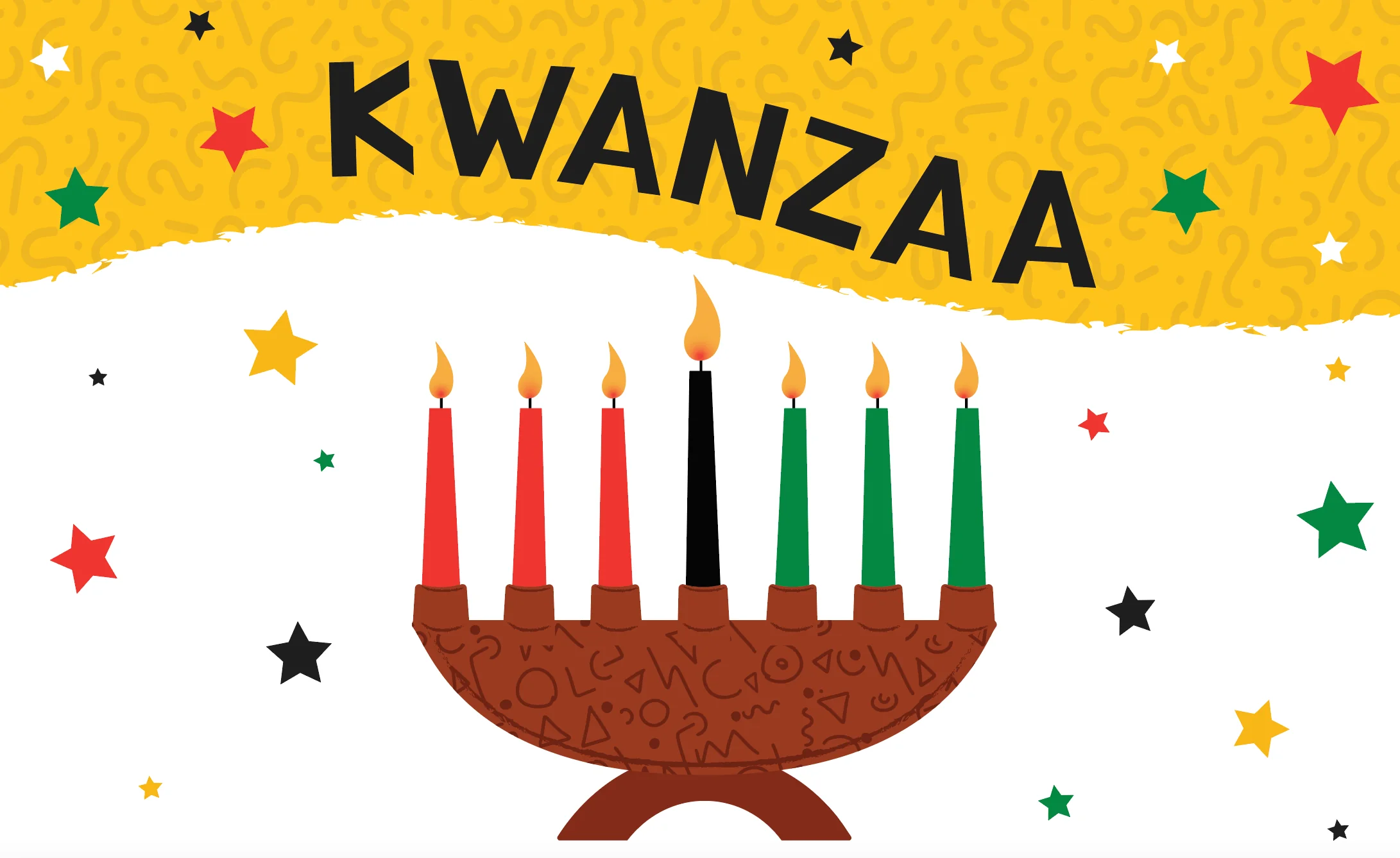
- Kinara: The candle holder used during Kwanzaa. It holds seven candles representing the Nguzo Saba.
- Mishumaa Saba: The seven candles placed in the Kinara. They include one black candle, three red, and three green.
- Mkeka: The straw mat on which the Kwanzaa symbols are placed, representing the foundation of African traditions.
- Mazao: The crops or fruits placed on the Mkeka, symbolizing African harvest celebrations and the rewards of productive labor.
- Muhindi: Ears of corn representing children and the future hopes of the family.
- Kikombe cha Umoja: The Unity Cup used to perform the libation ritual during Kwanzaa celebrations.
- Zawadi: Gifts given to children during Kwanzaa, usually emphasizing educational and cultural value.
- Karamu Ya Imani: The feast held on December 31, bringing family and community together to celebrate their cultural heritage.
- Bendera: The Kwanzaa flag, featuring the pan-African colors: black for the people, red for their struggle, and green for the future and hope.
- Kujichagulia: The principle of self-determination, emphasizing the right to define, name, create for, and speak for oneself.
- Ujima: Collective work and responsibility, stressing the importance of building and maintaining community together.
- Nia: Purpose, encouraging individuals to set personal goals that benefit the community.
- Kuumba: Creativity, urging the community to leave the world more beautiful and beneficial than inherited.
These terms form the linguistic and conceptual framework of Kwanzaa. They reflect African cultural values and principles, emphasizing community, personal growth, and cultural pride. By understanding and using these terms, participants in Kwanzaa celebrations can more deeply connect with the holiday’s meaning and the rich cultural heritage it represents.
Kwanzaa, while relatively young compared to other holidays, has become an important part of African American cultural expression. Its terms and concepts provide a vocabulary for discussing and celebrating African heritage, community values, and personal development, making it a meaningful and educational experience for families and communities.


