

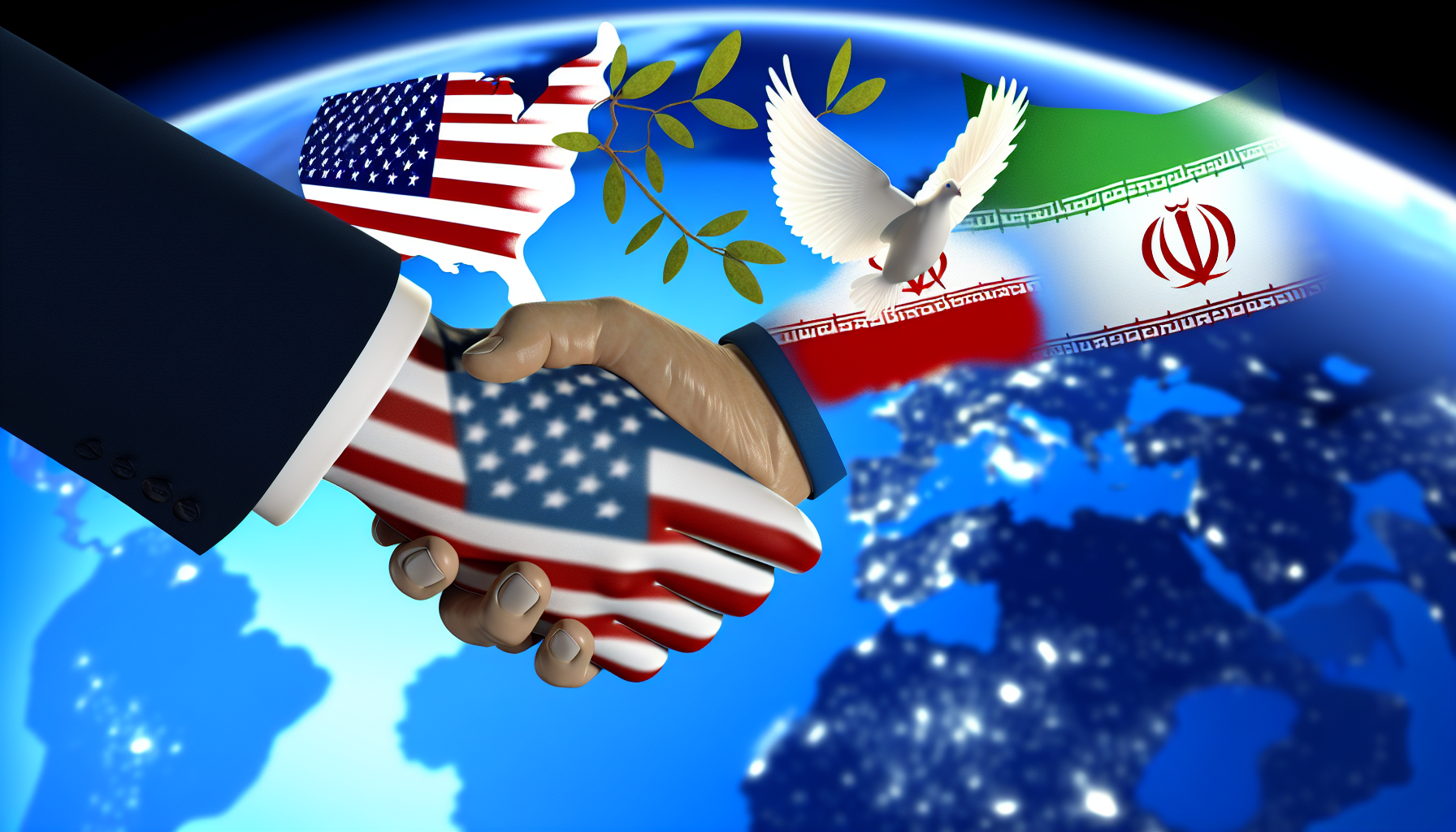
Historic Ceasefire Agreement Announced
On April 7, 2026, a significant diplomatic breakthrough was achieved as the United States, Israel, and Iran came together to announce a two-week ceasefire deal. This agreement marks a pivotal moment in a long-standing conflict, as it opens the door for negotiations between Tehran and Washington, with talks set to commence in Islamabad on Friday.
Trump’s Declaration: A ‘Big Day for World Peace’
In response to the ceasefire announcement, President Donald Trump took to social media to herald the day as a monumental step toward global stability. He characterized the ceasefire as a “big day for World Peace” and expressed optimism about the potential economic benefits that could arise from the agreement. Trump emphasized the U.S.’s commitment to assisting in the reopening of the Strait of Hormuz, a crucial maritime corridor for global oil shipments.
From Threats to Negotiations
Prior to the ceasefire announcement, Trump had escalated his rhetoric against Iran, warning of severe consequences if an agreement could not be reached. He had referred to Iran’s 10-point plan as fraudulent, threatening devastating military strikes that he claimed could lead to the end of Iranian civilization. However, following the announcement of the ceasefire, Trump appeared to pull back from these aggressive threats, signaling a willingness to engage diplomatically.
Support from Israeli Leadership
Israeli Prime Minister Benjamin Netanyahu expressed cautious support for the ceasefire, recognizing its potential to reduce immediate hostilities. However, he noted that the agreement does not extend to the ongoing conflict with Hezbollah in Lebanon, where the death toll has tragically surpassed 1,500 lives. Netanyahu’s comments underscore the complexity of the regional security landscape, where multiple conflicts intersect.
Bahrain Activates Missile Alerts Amid Rising Tensions
As tensions continue to simmer in the region, Bahrain has taken precautionary measures by activating missile alerts. This development highlights the fragile security situation and the potential for escalation, even as diplomatic efforts unfold. The activation of missile alerts indicates Bahrain’s concerns regarding the implications of the ceasefire and the broader geopolitical dynamics at play.
Implications for Regional Stability
The ceasefire agreement has far-reaching implications for regional stability. It provides a temporary reprieve from hostilities, allowing for dialogue and potential resolutions to longstanding issues between the U.S. and Iran. However, the exclusion of the conflict with Hezbollah poses significant challenges to achieving a comprehensive peace in the region.
Potential Economic Benefits
Trump’s assertion of economic benefits stemming from the ceasefire is significant. The Strait of Hormuz is a vital artery for global oil transportation, and any disruption can have cascading effects on the world economy. By facilitating negotiations and ensuring the security of this waterway, the U.S. could play a crucial role in stabilizing oil markets and fostering economic growth.
The Role of International Diplomacy
The announcement of the ceasefire has prompted discussions about the role of international diplomacy in resolving conflicts. The involvement of multiple parties, including the U.S., Israel, and Iran, illustrates the complexity of the situation and the necessity for collaborative efforts to achieve lasting peace. As negotiations commence in Islamabad, the international community will be watching closely to see if this truce can lead to a more comprehensive agreement.
Conclusion: A Step Towards Peace or a Temporary Fix?
While the two-week ceasefire represents a hopeful step towards peace, it is essential to recognize that it is merely a temporary measure. The underlying tensions between the U.S. and Iran, as well as the ongoing conflicts involving Hezbollah, remain unresolved. As the international community seeks to navigate this complex landscape, the true test will be whether this ceasefire can be extended and transformed into a lasting peace agreement.
In the coming days, the world will witness how the parties involved engage in negotiations and whether they can build upon this initial agreement to foster a more stable and peaceful Middle East. Related reading: Trump's outlook on Iran.


