

Introduction
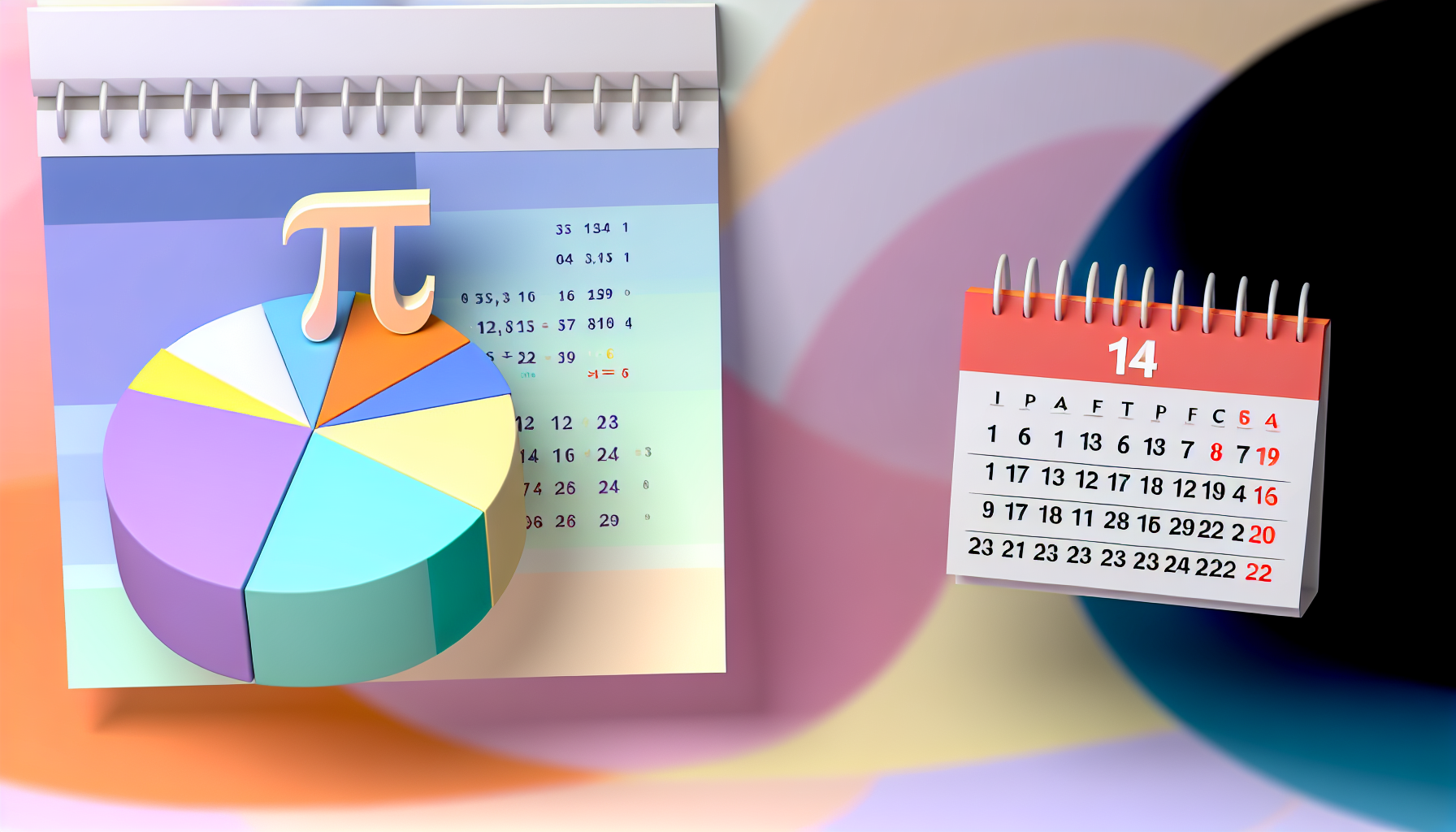
March 14 is marked as International Mathematics Day, a global observance dedicated to celebrating the vital role that mathematics plays in our world. This date is not only significant for its recognition of mathematical thought but is also famously linked to Pi Day, due to its numerical resemblance to the mathematical constant pi (π), which is approximately 3.14. The dual significance of March 14 offers a unique opportunity to explore the importance of mathematics in various fields, while also promoting educational initiatives aimed at enhancing mathematical literacy.
The Origin of International Mathematics Day
International Mathematics Day was established to acknowledge the profound impact that mathematics has on the development of modern society. The day serves as a reminder of how mathematical concepts underpin a wide range of disciplines, from science and technology to economics and the arts. The observance highlights not only the beauty of mathematics but also its critical application in addressing real-world challenges.
The Link to Pi Day
March 14 is also celebrated as Pi Day, a day dedicated to the appreciation of the mathematical constant π (pi). The correlation between the two observances arises from the date format, where March (the third month) and the 14th day correspond to the first three digits of pi (3.14). Pi Day was first celebrated in 1988 by physicist Larry Shaw at the San Francisco Exploratorium, where the significance of the number pi was highlighted through educational activities and pie-eating events.
Significance of Mathematics in Society
The importance of mathematics cannot be overstated. It is a universal language that transcends cultural barriers and is essential for scientific advancement and technological innovation. Mathematics is foundational to various fields, including:
- Science: Mathematics is critical in formulating scientific theories, conducting experiments, and analyzing data.
- Engineering: Engineers rely on mathematical principles to design and construct structures, machines, and systems.
- Economics: Mathematical models are employed to understand market behavior, optimize resources, and forecast economic trends.
- Medicine: Statistical methods are utilized in clinical trials and epidemiological studies to ensure effective healthcare solutions.
- Art: Artists and architects often apply mathematical concepts in their work, utilizing symmetry, proportion, and geometry to create visually appealing designs.
Educational Initiatives on International Mathematics Day
International Mathematics Day encourages educational institutions worldwide to engage students in mathematical activities that foster a deeper understanding of the subject. Schools and universities often organize events, workshops, and competitions to promote mathematical thinking. The day is an opportunity to:
- Host math-themed competitions that inspire students to solve challenging problems.
- Conduct workshops that demonstrate the real-world applications of mathematics.
- Encourage collaborative learning through group projects centered around mathematical concepts.
- Provide resources and materials for educators to enhance their teaching methodologies.
Global Recognition and Participation
International Mathematics Day is recognized globally, with participation from various countries and cultures. The observance serves as a platform for sharing mathematical knowledge and celebrating achievements in the field. It invites mathematicians, educators, and enthusiasts to unite in their appreciation for mathematics, emphasizing its role in shaping our understanding of the universe.
Future of Mathematics Education
As we move towards a more technologically advanced future, the demand for mathematical literacy continues to grow. International Mathematics Day serves as a reminder of the need to address the challenges in mathematics education, particularly in underrepresented communities. By promoting equitable access to quality math education, we can empower future generations to tackle complex problems with confidence and creativity.
Conclusion
March 14 is not just a date on the calendar; it is a celebration of the power and importance of mathematics in our lives. The connection between International Mathematics Day and Pi Day highlights the beauty of numbers and the critical role mathematics plays in various domains. As we observe this day, let us recognize and promote the significance of mathematics in shaping our world and inspiring future innovators.


