

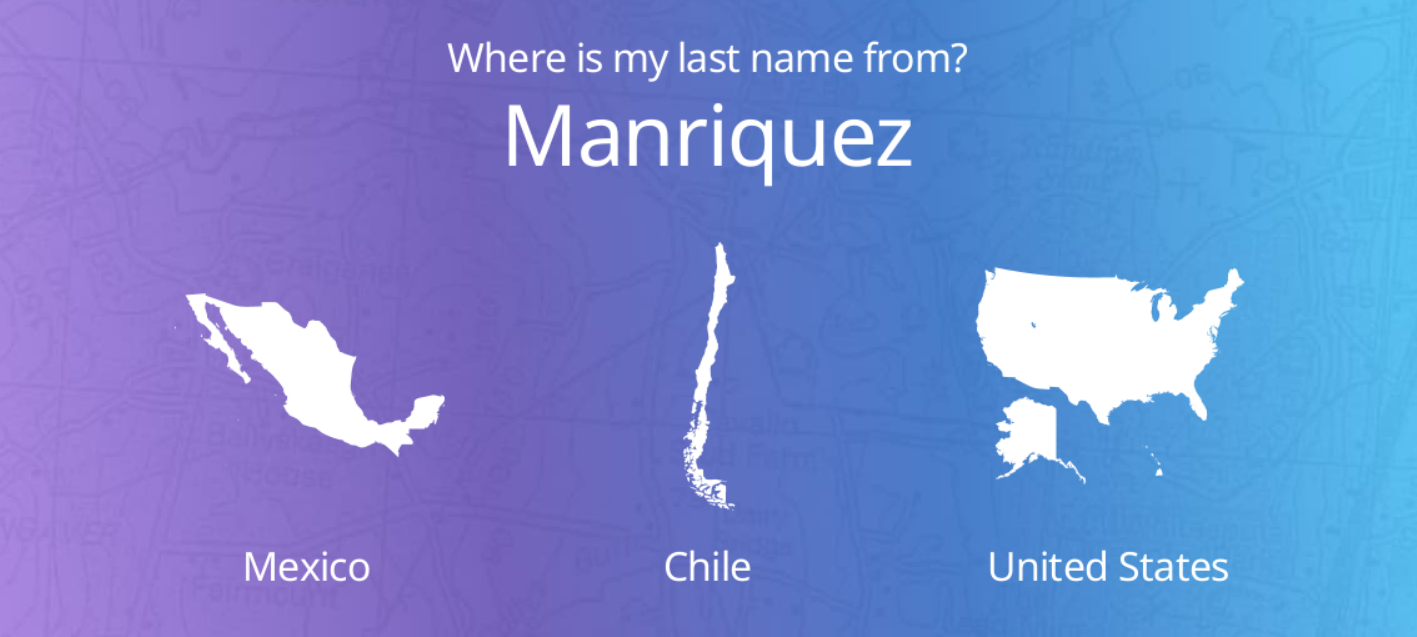
The surname Manriquez has a rich history rooted in Spanish and Portuguese heritage. It is a patronymic name, meaning it was originally derived from the given name of an ancestor. In this case, Manriquez is believed to have evolved from the personal name “Manrique.”
The name Manrique itself has Germanic origins, composed of two elements: “man” meaning “man” or “person,” and “ric” meaning “power” or “ruler.” Thus, the name Manrique can be interpreted as “powerful man” or “ruling person.”
As a surname, Manriquez would have originally meant “son of Manrique” or “descendant of Manrique.” This naming convention was common in medieval Spain and Portugal, where children often took their father’s given name as their surname, adding a suffix to indicate the relationship.
The Manriquez family name has a notable presence in Spanish nobility. The House of Manrique de Lara, a prominent noble family in medieval Spain, played significant roles in Spanish history and politics. This association with nobility may have contributed to the spread and prestige of the name.
Over time, as Spanish and Portuguese explorers and settlers traveled to the Americas, the Manriquez surname spread to various parts of Latin America. Today, it is found in countries such as Mexico, Colombia, and Chile, among others.
People bearing the Manriquez surname may take pride in its noble heritage and the strength implied by its meaning. However, it’s important to note that surnames can evolve and change over generations, and not all Manriquez families may be directly related to the noble house of the same name.
In contemporary usage, Manriquez serves as a reminder of the complex interplay between Germanic, Spanish, and Portuguese linguistic and cultural influences that have shaped many modern surnames in the Spanish-speaking world.


