

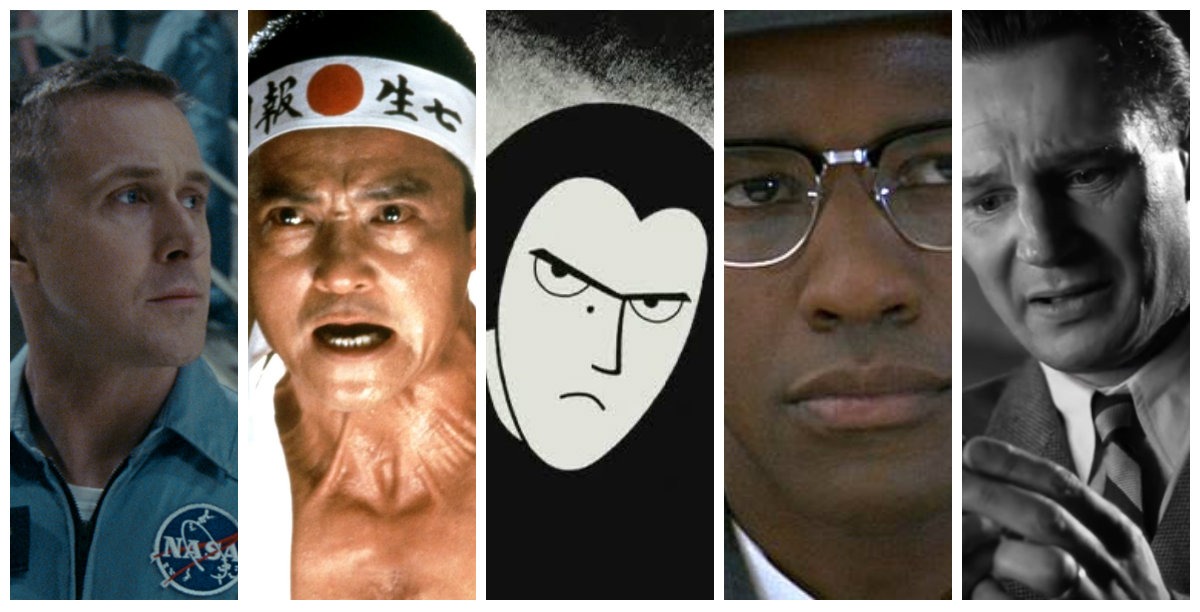
Biopics dramatize the life of a historical person, often balancing factual events with dramatic interpretation.
1. Lincoln (2012)
As the American Civil War continues to rage, America’s president struggles with continuing carnage on the battlefield as he fights with many inside his own cabinet on the decision to emancipate the slaves.
Why it’s great:
- Daniel Day-Lewis‘ transformative performance as Abraham Lincoln
- Steven Spielberg’s meticulous direction
- Insightful exploration of political maneuvering and moral leadership
2. The King’s Speech (2010)
The story of King George VI, his impromptu ascension to the throne of the British Empire in 1936, and the speech therapist who helped the unsure monarch overcome his stammer.
Why it’s great:
- Colin Firth‘s nuanced performance as King George VI
- Tom Hooper’s elegant direction
- Exploration of duty, friendship, and personal struggle
3. Walk the Line (2005)
A chronicle of country music legend Johnny Cash’s life, from his early days on an Arkansas cotton farm to his rise to fame with Sun Records in Memphis.
Why it’s great:
- Joaquin Phoenix and Reese Witherspoon’s powerful performances
- James Mangold’s authentic direction
- Compelling portrayal of Cash’s music and personal demons
4. The Aviator (2004)
A biopic depicting the early years of legendary director and aviator Howard Hughes’ career from the late 1920s to the mid 1940s.
Why it’s great:
- Leonardo DiCaprio‘s dynamic portrayal of Howard Hughes
- Martin Scorsese’s stylish direction
- Exploration of genius, ambition, and mental illness
5. Capote (2005)
In 1959, Truman Capote learns of the murder of a Kansas family and decides to write a book about the case.
Why it’s great:
- Philip Seymour Hoffman’s Oscar-winning performance as Truman Capote
- Bennett Miller’s restrained direction
- Insightful look at the creation of “In Cold Blood” and its ethical implications.


