

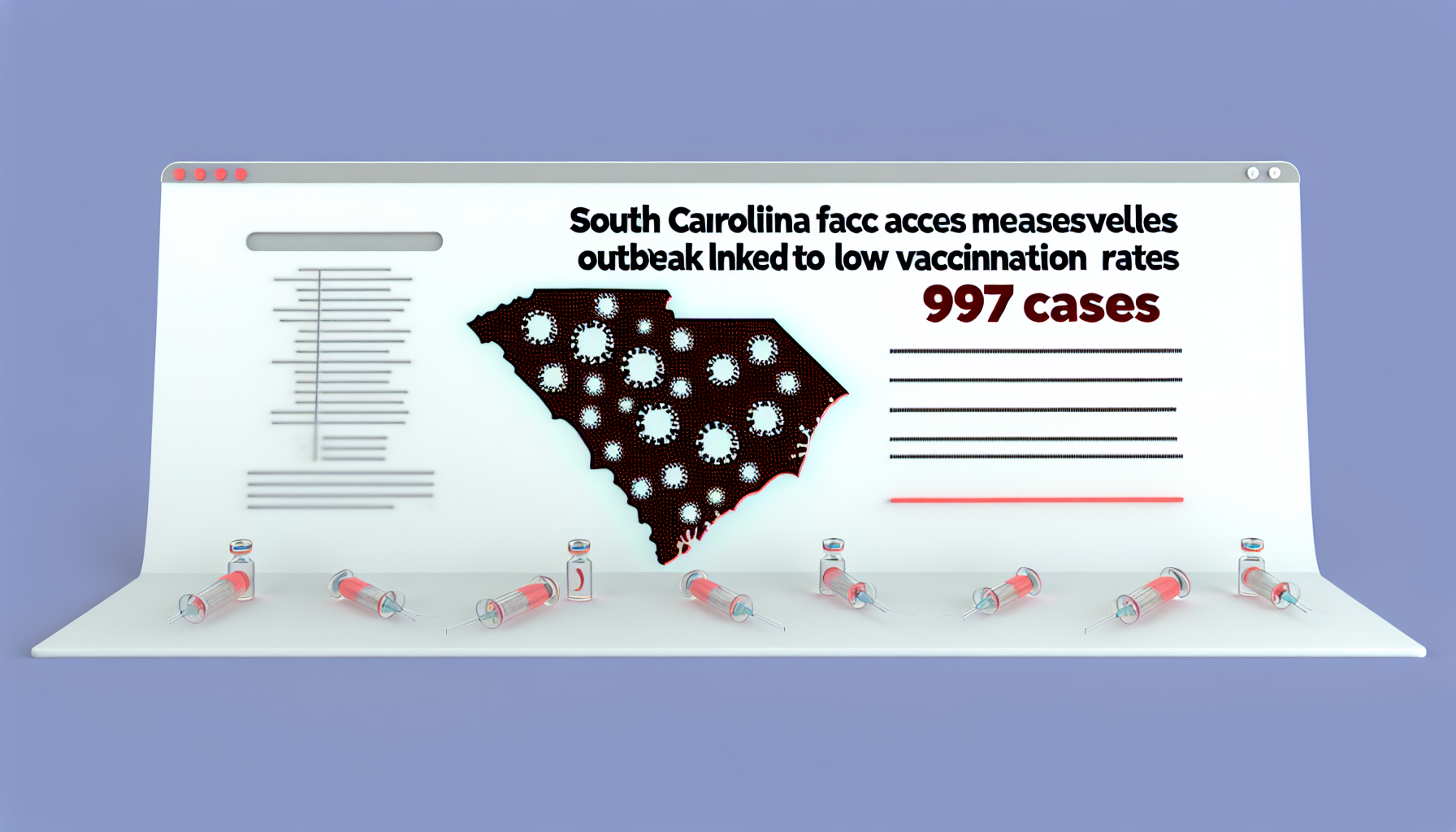
The ongoing measles outbreak in South Carolina has reached a concerning total of 997 confirmed cases, with health officials reporting only one new case in recent days. This recent development suggests that the outbreak, which has primarily affected the Upstate region, may be nearing containment. However, the situation underscores the persistent public health challenges posed by low vaccination rates in specific communities.
Background of the Outbreak
The outbreak began last October, primarily impacting private schools where vaccination rates have been alarmingly low. These institutions have been identified as hotspots for transmission, particularly following several significant exposures that occurred during the holiday season, including gatherings at local churches.
Measles, a highly contagious viral infection, can lead to severe complications, including pneumonia, encephalitis, and death. It spreads through respiratory droplets and can remain infectious on surfaces for several hours, making it crucial for communities to maintain high vaccination coverage to achieve herd immunity.
Vaccination Rates and Public Health Implications
The current situation in South Carolina highlights a worrying trend: certain communities have been hesitant to vaccinate their children, leading to clusters of unprotected individuals. The Centers for Disease Control and Prevention (CDC) recommends that at least 95% of a population be vaccinated against measles to prevent outbreaks. However, many private schools in the Upstate have reported vaccination rates significantly below this threshold.
- Low vaccination rates can lead to rapid spread of infectious diseases.
- Measles can be transmitted by individuals who are unaware they are infected.
- Community immunity is essential to protect those who cannot be vaccinated due to medical reasons.
As health officials work to contain the outbreak, they are also emphasizing the importance of public education regarding the safety and efficacy of vaccines. Misinformation surrounding vaccines has contributed to vaccine hesitancy, making it imperative for health educators to address these concerns directly.
Current Response Efforts
In response to the outbreak, local health departments have implemented various strategies to curb the spread of measles. These include:
- Vaccination Clinics: Free or low-cost vaccination clinics have been established to ensure that all children receive their measles, mumps, and rubella (MMR) vaccines.
- Public Awareness Campaigns: Campaigns aimed at educating the public on the importance of vaccinations are being conducted through social media, local news outlets, and community events.
- Collaboration with Schools: Health officials are working closely with private schools to assess vaccination records and encourage parents to vaccinate their children.
Moreover, authorities are urging families to consult with healthcare providers about the benefits of vaccination and the risks associated with measles infection. The goal is to dispel myths and provide factual information to empower parents to make informed decisions about their children’s health.
Looking Ahead: Challenges and Future Steps
As the outbreak appears to be stabilizing, the focus will shift towards long-term strategies to prevent future outbreaks. Experts warn that unless vaccination rates improve significantly, South Carolina could face similar situations in the future. Public health officials are calling for:
- Increased Access to Vaccines: Expanding access to vaccinations, particularly in underserved communities, is crucial.
- Legislative Support: Advocating for policies that promote vaccination and limit non-medical exemptions may be necessary to bolster community immunity.
- Ongoing Education: Continuous public health education initiatives will help combat misinformation and reinforce the importance of vaccination.
In conclusion, while the South Carolina measles outbreak has shown signs of containment, the underlying issues of vaccine hesitancy and low vaccination rates remain critical challenges. By addressing these issues head-on, communities can work towards a safer environment for all, protecting not just individual health but also public health as a whole.
As we move forward, it is essential to remember that vaccination is a community responsibility. Ensuring that children are vaccinated helps protect those who cannot receive vaccines and strengthens the overall health of the population.


