

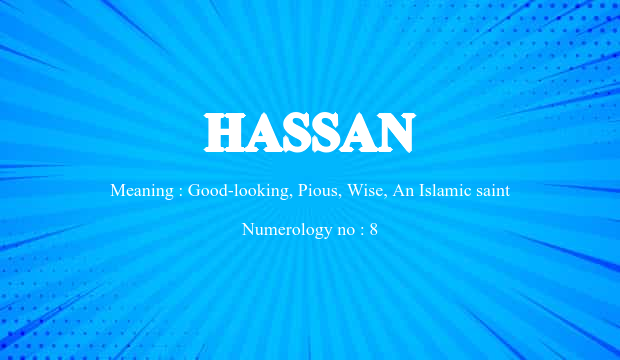
Hassan is a name rich in history and cultural significance, primarily associated with Arabic and Islamic traditions.
Origin: Hassan is of Arabic origin. It’s derived from the Arabic word “حسن” (hasuna), meaning “good” or “handsome.”
Meaning: The name Hassan literally translates to “handsome” or “good-looking.” It can also be interpreted more broadly to mean “good,” “kind,” or “beneficial.” In Islamic tradition, Hassan holds special significance as it was the name of one of Prophet Muhammad’s grandsons.
Popularity: Hassan is a widely popular name in Muslim communities worldwide. It’s particularly common in Middle Eastern, North African, and South Asian countries. In Western countries, its popularity has grown with increasing cultural diversity.
Historical and Cultural Significance:
- Hassan ibn Ali was the eldest son of Ali (the fourth caliph in Sunni Islam and the first Imam in Shia Islam) and the grandson of Prophet Muhammad.
- The name has been borne by numerous rulers, scholars, and notable figures throughout Islamic history.
- In literature, “Hassan” is sometimes used as a generic name for a Muslim man, similar to how “John Doe” is used in English-speaking countries.
Variations: The name has several variations across different cultures, including:
- Hasan (a common alternate spelling)
- Hasaan
- Hassane (French)
- Hasson
Inspiration for the Name:
- Religious significance: Many Muslim parents choose the name to honor the Prophet’s grandson and the Islamic heritage.
- Positive meaning: The name’s association with goodness and beauty makes it an attractive choice.
- Cultural identity: It’s often chosen to maintain a connection with Arabic or Islamic culture.
- Historical figures: Parents might be inspired by notable Hassans throughout history.
Hassan is a name that carries with it a sense of beauty, goodness, and rich cultural heritage. Its widespread use across various Muslim communities reflects its enduring appeal and significance. For parents considering this name, it offers a blend of positive meaning, cultural depth, and historical resonance.


