

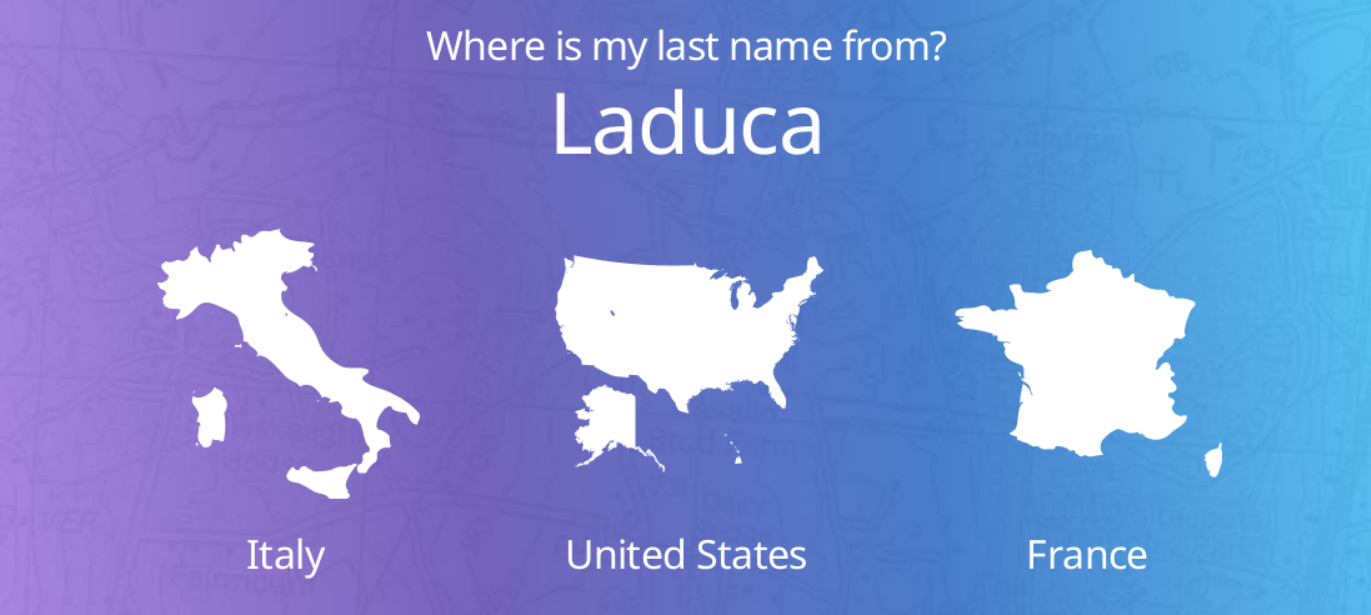
The name “La Duca” is an intriguing surname with Italian origins. While not as common as some other Italian surnames, it carries a rich history and interesting connotations.
Origin:
La Duca is an Italian surname that originates from the noble title “duca,” meaning “duke” in English. The prefix “La” is the feminine definite article in Italian, which might suggest that this surname originally referred to “the duchess” rather than “the duke.”
Meaning:
The literal translation of La Duca is “the duchess.” This suggests that the name may have originated from an association with nobility or aristocracy. It’s possible that ancestors of those bearing this name may have:
- Worked for a duchess
- Lived on land owned by a duchess
- Had some other connection to a noble family
Historical Context:
In medieval and Renaissance Italy, the title of duke (duca) was one of the highest ranks of nobility, second only to prince or king. Duchesses, as the wives or female holders of a duchy, held significant power and influence.
The surname La Duca might have emerged during a time when family names were becoming hereditary and often reflected a person’s occupation, status, or relationship to important figures in society.
Variations:
While La Duca is the specific form, there are related surnames that stem from the same root:
- Duca
- Del Duca (meaning “of the duke”)
- Lo Duca (another form meaning “the duke”)
Geographic Distribution:
La Duca is most commonly found in Italy, particularly in Sicily. However, due to Italian emigration, the name can now be found in various parts of the world, including the United States, Argentina, and other countries with significant Italian diaspora populations.
Cultural Significance:
Surnames that reference nobility, like La Duca, often carry a sense of prestige or historical importance. However, it’s important to note that having such a surname doesn’t necessarily indicate noble ancestry, as names could be adopted for various reasons throughout history.
In contemporary usage, La Duca serves as a unique and distinctive surname that connects its bearers to Italian heritage and potentially to an interesting historical narrative involving nobility and social structures of medieval and Renaissance Italy.


